If you sell products on Amazon, you’ve likely come across the term Amazon Frustration-Free Packaging (FFP). However, many sellers still have questions about how the program works, the certification process, and the packaging standards required for compliance.
This guide explains everything you need to know about Amazon’s Frustration-Free Packaging program, including its requirements, certification process, packaging guidelines, and the benefits of becoming certified.
What Is Amazon Frustration-Free Packaging?
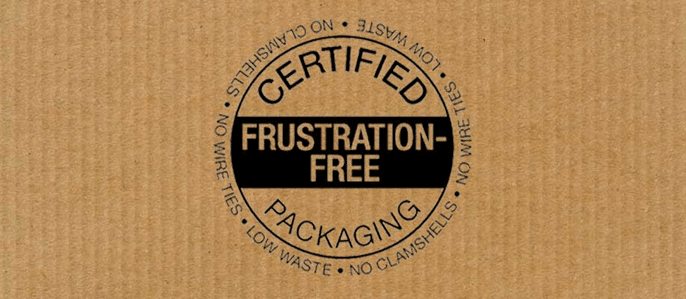
Amazon introduced the Frustration-Free Packaging (FFP) program in November 2008 as part of a long-term initiative to improve the customer unboxing experience. The program first focused on toy products before expanding to multiple product categories over the years.
Its primary goal is to eliminate excessive packaging while making products easier to open, safer to ship, and more environmentally friendly.
The program is built around four key principles:
- Protective packaging
- Cost-efficient packaging
- Easy-to-open packaging
- Reduced packaging waste
By following these principles, brands can deliver products in packaging that protects the item while creating a better experience for customers and reducing unnecessary waste.
Evolution of Amazon’s Packaging Certification Program
As more businesses recognized the financial and environmental advantages of optimized packaging, Amazon expanded the initiative further.
In January 2014, the company introduced the E-Commerce Ready Packaging (ECR) certification program. This certification validates products that can safely ship in their own packaging without requiring an additional Amazon shipping box.
The certification program is available to manufacturers, vendors, distributors, and sellers that meet Amazon’s packaging standards.
Amazon Frustration-Free Packaging Requirements
Amazon evaluates Frustration-Free Packaging based on four essential criteria.
1. Protective Packaging
Packaging must provide adequate protection throughout every stage of the fulfillment process.
Products should remain undamaged while:
- Being transported to Amazon fulfillment centers
- Moving within Amazon warehouses
- Shipping to the end customer
Strong packaging helps reduce product damage, returns, and customer complaints.
2. Cost-Effective Packaging
Amazon encourages sellers to use packaging that is ready for shipment without requiring additional protective materials.
This concept is known as Ships In Own Container (SIOC).
Packaging should also include important identification information such as:
- Product descriptions
- Regulatory markings
- Scannable barcodes
Using optimized packaging lowers shipping expenses while improving fulfillment efficiency.
3. Easy-to-Open Packaging
The packaging should be simple for customers to open without excessive effort or unnecessary materials.
Amazon recommends avoiding:
- Plastic inserts
- Blister packs
- Clamshell packaging
- Packaging peanuts
- Wire ties
- Shredded paper
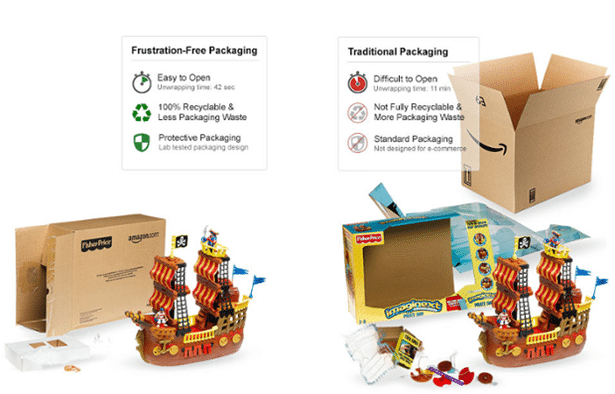
Customers should be able to remove the product and all included accessories within 120 seconds.
4. Low-Waste Packaging
Amazon places significant emphasis on sustainability.
To qualify for Frustration-Free Packaging, materials should be recyclable whenever possible. Sellers are also encouraged to include recycling information such as recycled-content statements or “Please Recycle” labels.
Additionally, packaging should closely fit the product and avoid unnecessary empty space. Ideally, the shipping container should not exceed approximately 2 inches of excess packaging material around the product.
Amazon FFP Qualification Checklist
Before applying for certification, sellers can use a simple checklist to determine whether their products are eligible.
General Requirements (ECR & FFP)
Your packaging should:
- Be free from windows or cut-out sections.
- Withstand standard courier transportation without damage.
- Remain durable during handling by carriers such as FedEx, UPS, and USPS.
Additional Requirements for FFP
For Frustration-Free Packaging certification, products must also meet these criteria:
- Customers should be able to unpack the product within 120 seconds.
- Packaging materials should be recyclable.
- The package should not include plastic inserts, blister packs, wire ties, shredded paper, clamshell packaging, or packaging peanuts.
Amazon Frustration-Free Packaging Certification
Obtaining Amazon’s packaging certification confirms that your products meet the standards for either Frustration-Free Packaging (FFP) or E-Commerce Ready Packaging (ECR).
The certification process is managed through Seller Central or Vendor Central and involves technical reviews along with packaging performance testing.
Amazon’s packaging experts evaluate the submitted packaging before conducting transit testing through Amazon’s Packaging Certification Laboratory or an ISTA-certified testing facility.
The certification process includes three primary stages.
Enrollment
Register the product through Seller Central or Vendor Central by submitting the required packaging information.
Laboratory Review
Provide packaging images for evaluation and send product samples for laboratory transit testing.
Amazon verifies whether the packaging can safely withstand shipping and handling conditions.
ASIN Certification
After successfully passing all testing requirements, Amazon certifies the product ASIN under either FFP or ECR.
Products certified as Frustration-Free Packaging may also receive additional merchandising opportunities, including eligibility for Amazon’s Frustration-Free Packaging storefront and other promotional benefits.
Benefits of Amazon Frustration-Free Packaging Certification
Obtaining Amazon’s Frustration-Free Packaging (FFP) certification offers more than just compliance with packaging standards. It can help businesses reduce operational expenses, improve shipping efficiency, and enhance the overall customer experience.
Amazon recognizes three packaging certification tiers:
- Tier 1 – Frustration-Free Packaging (FFP)
- Tier 2 – Ships In Own Container (SIOC)
- Tier 3 – Prep-Free Packaging (PFP)
While each certification offers different advantages, FFP and SIOC provide the greatest long-term value for brands selling through Amazon.
1. Lower or Eliminate Amazon Prep Chargebacks
One of the biggest advantages of certification is avoiding unnecessary preparation fees.
When an ASIN receives FFP Tier 1, SIOC Tier 2, or PFP Tier 3 certification, Amazon recognizes that the product already meets its packaging standards. As a result, additional prep work at Amazon fulfillment centers is typically unnecessary, helping vendors reduce or eliminate prep-related chargebacks.
This can lead to noticeable cost savings, especially for businesses shipping large volumes of inventory.
2. Reduce Packaging Costs
Traditional retail packaging is often designed to stand out on store shelves using oversized boxes, glossy finishes, transparent windows, and decorative graphics.
While these features may attract shoppers in physical stores, they add little value to online customers who are primarily interested in receiving their products safely.
By simplifying packaging, businesses can:
- Lower packaging material costs
- Reduce unnecessary printing and design expenses
- Minimize waste
- Improve sustainability efforts
Optimized packaging creates a more efficient supply chain while helping brands lower overall operating costs.
3. Lower Transportation Expenses
Efficient packaging doesn’t just save material costs—it also reduces shipping expenses.
Since FFP-certified packaging is designed to fit products more accurately, it occupies less space throughout the supply chain. Smaller packages allow businesses to:
- Fit more products onto pallets and trucks
- Improve warehouse storage efficiency
- Reduce inbound transportation costs
- Lower shipping expenses to customers
These savings benefit both Amazon and sellers, making optimized packaging a cost-effective solution for everyone involved.
Amazon Packaging Certification Requirements
To qualify for Amazon’s packaging certification program, products must meet several structural and performance standards.
1. Packaging Construction
Amazon recommends using durable packaging capable of protecting products throughout shipping and handling.
Ideally, packaging should have a sturdy six-sided rectangular design that can withstand parcel delivery or Less-than-Truckload (LTL) transportation.
Although rigid envelopes and padded mailers may be acceptable for certain products, corrugated cardboard cartons are generally the preferred option.
Additionally, packaging should:
- Have flat, uninterrupted surfaces
- Avoid cut-outs and display windows
- Exclude large protrusions
Small hand holes or access openings are permitted but must remain within Amazon’s specified size limits.
2. Minimum Package Dimensions
Products certified under FFP (Tier 1) or SIOC (Tier 2) must meet Amazon’s minimum size requirements.
The package should measure at least:
- Length: 9 inches (228.6 mm)
- Width: 6 inches (152.4 mm)
- Height: 0.375 inches (9.5 mm)
Packages smaller than these dimensions generally qualify only for Prep-Free Packaging (Tier 3), as Amazon may need to add an outer shipping box for protection.
3. Proper Package Sealing
Every package must remain securely sealed throughout the fulfillment process.
All open edges should be properly closed using approved sealing methods to protect the product during transportation.
Amazon discourages using staples as the primary sealing method, although staples used on manufacturer glue joints are generally acceptable.
If the package includes locking tabs, they should also be secured with tape or adhesive.
For oversized shipments, tightly fitted non-metal straps or bands may be used to reinforce the outer packaging. However, bundling multiple packages together using straps is not permitted.
4. Package Identification and Labeling
Every certified package must display clear product information and handling instructions.
Packaging should include all required identification elements, such as:
- Product details
- Shipping information
- Regulatory markings
- Scannable barcodes
These labels help Amazon fulfillment centers process inventory efficiently while minimizing shipping errors.
5. HAZMAT Products
Currently, Amazon does not provide Frustration-Free Packaging certification for hazardous materials.
Products classified as hazardous goods—including ASINs with UN numbers or transportation-regulated warning symbols—are generally excluded from the certification program.
6. Product-to-Package Ratio
Amazon also evaluates how efficiently products utilize their packaging space.
The Product-to-Package Ratio compares the product’s total volume with the total volume of its packaging.
Formula:
Product Volume ÷ Package Volume
For example:
| Measurement | Product | Package |
| Length | 20 in | 22 in |
| Width | 9 in | 10 in |
| Height | 6 in | 8 in |
| Total Volume | 1,080 cu in | 1,760 cu in |
Box Utilization Score = 1,080 ÷ 1,760 = 61%
Amazon recommends maintaining:
- More than 30% utilization for fragile products
- More than 50% utilization for non-fragile products
Efficient packaging reduces wasted space while lowering shipping costs.
Products commonly classified as fragile include:
- Glass
- Ceramics
- Porcelain
- Clay products
- Sensitive electronics
- Liquids and semi-liquids
- Products that may melt or change state during transportation
7. Recyclable Packaging
Sustainability plays a major role in Amazon’s Frustration-Free Packaging program. To qualify for FFP Tier 1 certification, packaging should be made from recyclable materials that minimize environmental impact.
Amazon accepts several recyclable packaging materials, including:
- Paper-based packaging
- Corrugated cardboard
- Plastic components identified with SPI recycling codes #1 (PET), #2 (HDPE), and #5 (PP)
Sellers operating in the United States should ensure their packaging complies with the FTC Green Guides, while those selling in Europe should follow the applicable packaging and packaging waste regulations established by the European Union.
Additional Packaging Recommendations
Amazon also permits certain materials under specific conditions, including:
- Plastic bags or protective films when needed to prevent dust, contamination, or surface damage
- Plastic films labeled with approved SPI recycling codes
- Twist ties used solely for cable organization
- Silica gel packets for moisture protection
- Flexible barrier packaging that preserves product quality
Using recyclable and responsibly sourced materials not only supports certification but also aligns with Amazon’s sustainability goals.
8. Easy-to-Open Packaging
An important requirement of Tier 1 Frustration-Free Packaging is ensuring customers can open their products quickly without frustration.
Packaging should require little to no use of scissors, knives, or box cutters.
Amazon discourages the use of:
- Plastic inserts
- Blister packaging
- Welded clamshells
- Packaging peanuts
- Shredded paper
Customers should be able to remove both the product and its accessories from the packaging within 120 seconds.
Simple, user-friendly packaging improves the unboxing experience while reducing unnecessary waste.
Important Amazon Packaging Update
Amazon introduced updated packaging requirements effective August 1, 2019.
Products meeting either of the following conditions are expected to be certified as Ships in Own Container (SIOC) or Frustration-Free Packaging (FFP):
- Products weighing more than 20 pounds
- Products measuring more than 18 × 14 × 8 inches
This update encourages brands to design packaging that is shipment-ready without requiring additional Amazon over-boxing.
Which Products Are Affected?
Amazon’s Ships in Own Container (SIOC) and Frustration-Free Packaging chargeback policies generally apply to products that:
- Have not received Tier 1 (FFP) or Tier 2 (SIOC) certification.
- Exceed 20 pounds in weight or 18 × 14 × 8 inches in dimensions.
Although certain product categories may be exempt from these requirements, sellers should regularly review Amazon’s latest packaging policies to remain compliant and avoid unnecessary fees.
Products Currently Exempt
Some ASINs are presently excluded from Amazon’s Frustration-Free Packaging requirements.
These generally include:
- Amazon Fresh products
- Prime Pantry items
- Media products
- Hazardous material (Hazmat) ASINs, including products containing lithium-ion batteries
- Products with dimensions smaller than Amazon’s minimum packaging requirements
- ASINs that have been active for at least eight months and shipped 250 units or fewer during the previous 12 months
Since Amazon periodically updates its packaging policies, sellers should monitor the latest requirements to determine whether their products remain exempt.
Amazon Packaging Certification Guidelines
In addition to meeting certification standards, Amazon provides detailed packaging guidelines that help ensure products move efficiently through its fulfillment network.
1. Envelope Requirements
Envelopes are acceptable for lightweight, flat products and documents, provided they meet Amazon’s minimum size standards.
To improve automated sorting during fulfillment, Amazon recommends avoiding plain or unbleached paperboard envelopes.
Minimum envelope dimensions vary by marketplace:
| Marketplace | Minimum Size |
| United States | Larger than 6.5 × 4.5 × 0.375 inches |
| Europe | Larger than 7.7 × 4.9 × 0.63 inches |
| Japan | Larger than 10.24 × 7.8 inches |
| China | Larger than 6.5 × 4.5 × 0.375 inches |
These dimensions ensure enough space for shipping labels and automated processing.
2. Ships In Own Container (SIOC)
A product qualifies as Ships In Own Container (SIOC) when its retail packaging is strong enough to be shipped directly to customers without an additional Amazon shipping box.
Only certified products are eligible for SIOC status.
Because these products travel through the delivery network without an outer carton, minor cosmetic wear on the retail packaging may occur during transit. However, the product itself should remain fully protected throughout the shipping process.
3. Recommended Package Shape
Amazon recommends using packaging that is easy to handle, stack, store, and transport.
The preferred design is a sturdy rectangular box with squared corners, as this shape improves warehouse efficiency and reduces the likelihood of shipping damage.
Choosing a practical package design not only helps meet certification requirements but also supports smoother fulfillment operations across Amazon’s logistics network.
Amazon Packaging Chargeback Fees
Amazon may apply packaging chargebacks to products that do not meet its packaging certification standards.
Currently, the standard chargeback fee is $1.99 per unit for eligible products that fail to comply with the required packaging guidelines.
To help vendors understand the financial impact before certification is completed, Amazon may temporarily display these chargebacks in a waived status. This allows sellers to identify affected ASINs and take corrective action before actual fees are enforced.
How to View Packaging Chargebacks
You can review packaging-related chargebacks by following these steps in Vendor Central:
- Navigate to Operational Performance.
- Open the SIOC section.
- Review the applicable chargeback information.
For a detailed breakdown of affected ASINs:
- Go to Operational Performance.
- Select Total Chargebacks.
- Click View Defect List.
- Search for SIOC and apply the filter.
This report helps identify products that require packaging improvements or certification.
Best Practices to Maintain Amazon Packaging Compliance
Meeting Amazon’s packaging requirements is not a one-time process. Sellers should continuously review their packaging to remain compliant with evolving standards.
Some best practices include:
- Design packaging that protects products throughout the shipping journey.
- Eliminate unnecessary packaging materials whenever possible.
- Choose recyclable and environmentally friendly materials.
- Keep packaging compact to reduce shipping costs.
- Ensure customers can easily open packages without excessive tools.
- Regularly monitor Amazon’s packaging policy updates and certification requirements.
Following these practices can help reduce operational costs while improving customer satisfaction.
Why Frustration-Free Packaging Matters
Amazon’s Frustration-Free Packaging initiative goes beyond reducing waste—it creates a better experience for both customers and sellers.
For customers, simplified packaging means:
- Faster and easier unboxing
- Less packaging waste to dispose of
- Better product protection during delivery
For sellers and brands, optimized packaging can result in:
- Lower packaging expenses
- Reduced shipping and fulfillment costs
- Fewer damaged products and returns
- Improved operational efficiency
- Greater sustainability
As eCommerce continues to evolve, efficient packaging has become an important factor in delivering a positive customer experience while keeping logistics costs under control.
Conclusion
Amazon’s Frustration-Free Packaging (FFP) program is designed to make product packaging simpler, stronger, and more sustainable. By meeting Amazon’s packaging standards, businesses can reduce unnecessary materials, lower transportation costs, minimize product damage, and provide customers with a more convenient unboxing experience.
Whether you’re pursuing Frustration-Free Packaging (Tier 1) or Ships In Own Container (Tier 2) certification, investing in compliant packaging can offer long-term operational and financial benefits. Staying informed about Amazon’s latest packaging requirements and regularly reviewing your packaging strategy will help maintain compliance while improving overall fulfillment performance.
Optimized packaging is no longer just an environmental initiative—it’s a smart business decision that enhances efficiency, reduces costs, and supports a better shopping experience for Amazon customers.