As competition continues to grow on Amazon, sellers need effective ways to help their products stand out. While optimizing product listings and running Amazon Ads remain important, promoting products through external marketing channels can help businesses reach potential customers beyond the marketplace.
Facebook Ads, managed through Meta Ads Manager, offer Amazon sellers an opportunity to introduce their products to relevant audiences, generate interest, and attract potential buyers. With the right strategy, these campaigns can support product discovery, increase qualified traffic, and contribute to long-term brand growth.
In this guide, we’ll explore how Amazon sellers can use Facebook Ads effectively, avoid common advertising mistakes, build a marketing funnel, and develop campaigns that support their business goals while respecting Amazon’s policies.
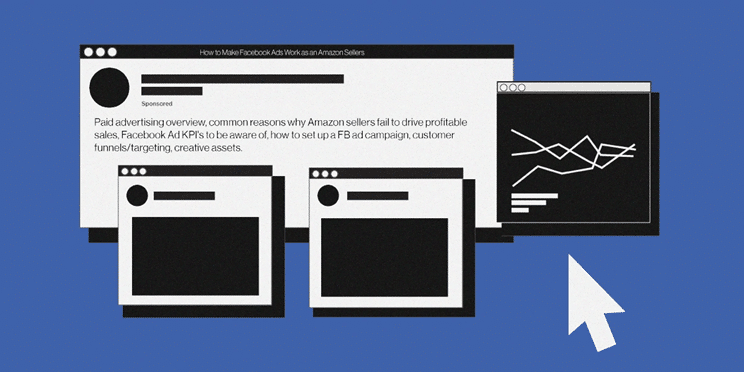
Why Should Amazon Sellers Use Facebook Ads?
Facebook Ads can help Amazon sellers connect with audiences who may be interested in their products but have not started actively searching for them on Amazon. Instead of relying exclusively on marketplace searches, sellers can introduce their offerings to potential customers through social media.
There are two major advantages to consider.
1. Access to a Broad Audience
Facebook and Instagram provide businesses with opportunities to reach people through feeds, Stories, Reels, and other available advertising placements. These channels allow sellers to showcase product benefits, demonstrate how items work, and introduce their brands to prospective customers.
For example, a seller offering kitchen accessories can create a video demonstrating how a product simplifies everyday cooking. Similarly, a fitness accessories brand can use lifestyle imagery to show how its products fit into an active routine.
This approach helps generate interest before customers begin searching for a particular product on Amazon.
2. Audience Targeting Capabilities
Meta Ads Manager offers targeting and audience-building tools that can help advertisers reach people based on available demographic information, interests, behaviors, and previous interactions.
Amazon sellers can use these options to experiment with different customer segments and identify which audiences respond most positively to their advertisements.
For instance, a seller promoting gardening tools could test creative content against audiences interested in gardening, outdoor activities, and home improvement. Performance data can then guide future campaign adjustments.
When used thoughtfully, Facebook Ads can support customer acquisition, website retargeting, and brand awareness. However, results depend on factors such as product demand, audience relevance, advertising costs, listing quality, and the effectiveness of the campaign itself.
Common Facebook Advertising Mistakes Amazon Sellers Should Avoid
Even well-designed advertisements can underperform when the strategy behind them is weak. Before investing heavily in external traffic, sellers should address the following common mistakes.
Mistake #1: Promoting Poorly Optimized Amazon Listings
Sending visitors to an incomplete or unconvincing product listing can waste advertising money. An engaging Facebook advertisement may encourage someone to click, but the Amazon listing must provide enough information and confidence to encourage a purchase.
Before launching a campaign, review the listing’s title, bullet points, product description, images, pricing, and other relevant content. Make sure the main benefits are easy to understand and that the listing answers common customer questions.
High-quality images and videos are particularly useful because they help shoppers understand the product’s appearance, functionality, size, and potential uses. Relevant keywords also help Amazon understand the product and connect it with suitable searches.
Inventory availability and competitive pricing deserve attention as well. If a product is unavailable or the offer is less attractive than competing options, even highly relevant traffic may not produce satisfactory results.
A strong listing gives your advertising campaign a better foundation, although it cannot guarantee conversions or higher organic rankings.
Mistake #2: Sending Every Visitor Directly to Amazon
Directing Facebook traffic straight to an Amazon product page can be a practical approach, especially when the goal is to make purchasing as straightforward as possible. However, social media users may not be ready to buy when they first encounter an unfamiliar product.
Someone browsing Instagram might be interested in an advertisement without having enough information to make an immediate purchasing decision. Sending that person directly to a product listing may not provide the additional context needed to move forward.
A landing page can help bridge this gap. It provides space to explain product benefits, display demonstrations, answer questions, and present a clear link to the Amazon listing.
A landing page can also support website measurement and retargeting through appropriately configured tracking tools. These capabilities are not available by simply adding a Facebook Pixel to an Amazon product page.
Direct-to-Amazon advertising and landing-page campaigns serve different purposes. Test both approaches where practical, then use measurable results to decide which fits your product and audience.
Building a Facebook Advertising Funnel for Amazon Products
A marketing funnel helps guide potential customers from their first interaction with an advertisement toward a purchase. For Amazon sellers, this process can include an advertisement, an optional landing page, and the relevant Amazon product listing.
A well-structured funnel can provide several benefits.
Qualify incoming traffic: A landing page gives visitors an opportunity to learn about the product before proceeding to Amazon. This may help shoppers make more informed decisions and reduce irrelevant clicks.
Present a clear offer: Where suitable, a landing page can explain an eligible promotion or direct customers to an available Amazon coupon. Make the promotion’s terms clear and avoid misleading claims.
Measure campaign activity: Tracking tools on a seller-controlled landing page can help measure visits and other permitted website actions. Eligible sellers may also use Amazon Attribution to measure how certain external marketing efforts contribute to Amazon activity and sales.
Support future advertising: With appropriate consent, permissions, and privacy controls, website visitor audiences may be used for retargeting where platform rules allow. This gives sellers another opportunity to reach people who showed interest but did not complete a purchase.
Collecting email addresses for a separate newsletter or marketing program requires an appropriate sign-up process and compliance with applicable privacy requirements. Do not assume that customer information obtained through Amazon orders can automatically be used for off-platform advertising or marketing.
A sales funnel should make the buying process easier for customers rather than add unnecessary steps. Keep the experience relevant, provide useful information, and measure whether each stage contributes to the campaign’s objectives.
Structuring Facebook Ads Campaigns for Better Results
Once your listing and customer journey are prepared, the next step is to build campaigns that provide reliable performance data. A structured approach makes it easier to identify effective advertisements and control unnecessary spending.
Run Meaningful A/B Tests
Testing is an important part of Facebook advertising because an advertisement that works well for one audience may not perform as effectively for another.
Create variations to test elements such as audience selection, images, video formats, headlines, ad copy, calls to action, and landing-page designs. Whenever possible, change one major variable at a time so you can understand what contributed to the difference in results.
For example, suppose you want to determine whether a product demonstration video performs better than a lifestyle image. Keep the audience, offer, and other campaign settings as consistent as possible while testing the two creative formats.
Changing the creative, audience, budget, and offer simultaneously makes it difficult to identify the reason for improved or declining performance.
Use Meta Ads Manager’s available testing and reporting features to compare results. Evaluate meaningful measures such as click-through rate, landing-page visits, cost per result, conversion rate, and cost per acquisition, depending on the campaign objective.
Do not select a winning advertisement based on clicks alone. An advertisement may attract considerable attention without generating profitable sales. Compare results with your actual business objectives and the cost of fulfilling customer demand.
Start With a Clear Campaign Objective
Before launching an advertisement, decide what you want it to achieve. Increasing awareness, attracting potential customers, generating landing-page visits, and producing purchases are different goals that require different approaches.
If the primary objective is sales, build the campaign around a clear product benefit and a straightforward path to purchase. If you are introducing a new brand, educational content or product demonstrations may help establish awareness before customers are ready to buy.
Choose the campaign objective, conversion measurement, and optimization settings that best match your intended outcome. Monitor results regularly and adjust spending according to reliable performance data rather than assumptions.
Using Different Audience Types for Amazon Advertising
Meta provides several ways to build and refine audiences. The exact options available may vary with campaign settings, account eligibility, and platform changes.
1. Demographic and Interest-Based Audiences
Interest and demographic targeting can help sellers reach people who may be relevant to a product category.
For example, a seller offering travel organizers could test audiences interested in travel, luggage, and trip planning. A seller advertising home office equipment might explore audiences interested in remote work, productivity, and office organization.
These selections should be treated as starting points rather than proof that every person in an audience is ready to buy. Compare different segments and evaluate their performance to determine which ones provide the most relevant traffic.
Avoid narrowing an audience too aggressively before you have enough data to understand how potential customers respond.
2. Custom Audiences
Custom Audiences can help advertisers reconnect with eligible people who have previously interacted with their business. Depending on the setup, this may include website visitors or customer-list audiences for which the advertiser has the necessary rights, permissions, and lawful basis.
For example, visitors who viewed a product information page without proceeding to the Amazon listing may be suitable for a permitted retargeting campaign.
Customer-list advertising requires particular care. Never assume that names, locations, or other information from an Amazon order or shipment report can be uploaded to an external advertising platform. Use only data you are authorized to disclose and use, and follow Amazon’s applicable terms, Meta’s Customer List Custom Audiences Terms, and relevant privacy requirements.
Retargeting should also respect user choices and applicable consent requirements. Review the information collected by your website, how it is used, and which audiences can be created from it.
3. Lookalike Audiences
Lookalike Audiences have traditionally allowed advertisers to reach people with characteristics similar to an eligible source audience. Availability and audience-building options can change, so review the current tools offered in your advertising account.
A suitable source audience may help a seller explore new customer groups beyond existing website visitors or customers whose data can lawfully be used.
For example, a seller with a permitted audience of people who have engaged with a brand may test an audience expansion strategy to discover other potential buyers.
Test different audience approaches against each other and compare their cost, conversion quality, and sales contribution. A broader audience can provide more reach, but additional reach does not automatically translate into better results.
Match Your Offer to Your Advertising Goal
The offer in your advertisement should reflect the product’s value and the action you want customers to take.
Discounts and coupons can give shoppers a reason to consider a product, especially when they are unfamiliar with the brand. Other options include product bundles, seasonal promotions, demonstrations, or content that explains how the item solves a specific problem.
Before promoting an offer, calculate the impact of the discount on your profit margin. Consider product costs, Amazon fees, advertising expenses, fulfilment costs, and any other relevant business expenses. A promotion that produces additional sales may still be unprofitable if the total costs exceed the revenue generated.
You should also distinguish between a sales promotion and a customer review strategy. Never offer discounts, refunds, free products, or other incentives in exchange for Amazon reviews. Do not ask only customers who had a positive experience to leave reviews or attempt to influence their feedback.
Amazon provides approved methods for requesting unbiased reviews, including the Request a Review feature in Seller Central. Review the current Amazon product review guidelines before developing a review-generation process. A successful campaign should focus on attracting suitable customers and providing a good product experience. Genuine customer feedback should be earned independently of promotional incentives.

Track Performance and Improve Your Campaigns
Facebook Ads require regular monitoring because audience behavior, competition, and advertising costs can change over time.
Review performance at both the advertisement and business levels. Metrics such as impressions, clicks, landing-page visits, conversion rates, and cost per acquisition can help you identify where a campaign may be losing potential customers.
For instance, strong click-through rates but few purchases may indicate a mismatch between the advertisement and the product listing, an unclear offer, or friction in the buying process. Low engagement may suggest that the creative, message, or audience needs further testing.
Where available, use Amazon Attribution to connect eligible external campaigns with relevant Amazon activity. Combine this information with your advertising costs and profit calculations to evaluate the overall contribution of each campaign.
Avoid making major decisions based on limited data or short-term fluctuations. Give controlled tests enough time to produce useful results, then move budget toward the strategies that demonstrate stronger business performance.
Final Thoughts
Facebook Ads can be a useful addition to an Amazon seller’s marketing strategy. They provide opportunities to introduce products to new audiences, test different creative approaches, and bring relevant visitors to product listings or dedicated landing pages.
The best results come from combining advertising with well-optimized listings, relevant offers, thoughtful audience selection, and consistent performance measurement. A structured testing process can help sellers understand which messages and audiences are worth investing in, while a carefully designed funnel can improve the customer journey.
Above all, focus on sustainable growth rather than expecting external advertising to produce automatic ranking improvements. Protect customer privacy, follow Amazon’s review and customer-data rules, and measure success by the value your campaigns contribute to the business.
By making informed decisions and continually improving your approach, you can use Facebook Ads to explore additional growth opportunities for your Amazon products.