
Over the past several years, Amazon has strengthened its dominance in the global e-commerce space. With powerful seller-focused programs like Fulfillment by Amazon (FBA) and Seller Fulfilled Prime (SFP), the platform has attracted millions of merchants worldwide who want to access a larger customer base and scale their businesses efficiently by Amazon FBA Onsite.
This article explains what Amazon FBA Onsite is and how sellers can take advantage of it. The strategies discussed here are practical and tested. Introduced as an experimental logistics feature around 2018, Amazon FBA Onsite emerged as part of Amazon’s continuous effort to refine fulfillment solutions and support sellers while solving its own operational challenges.
What Is Amazon FBA Onsite?
Amazon FBA Onsite is a fulfillment solution designed to reduce costs for sellers while helping Amazon manage logistics more efficiently. While this brief description may sound vague, understanding FBA Onsite requires first looking at two well-known Amazon fulfillment models sellers are already familiar with.
Amazon FBA and Seller Fulfilled Prime
For most Amazon sellers, earning the Amazon Prime badge is a major milestone. This small badge carries significant influence, as customers tend to trust Prime listings due to benefits like free two-day shipping, hassle-free returns, and reliable delivery. Additionally, Prime-eligible products often rank higher in Amazon search results.
For a long time, joining Amazon FBA was the only way sellers could qualify for the Prime badge. Under the FBA model, sellers send their inventory to Amazon fulfillment centers, where Amazon handles storage, packing, shipping, and even customer support. While convenient, these services come with various FBA-related fees.
Amazon FBA quickly became one of Amazon’s most successful seller programs. However, as more sellers enrolled, Amazon began facing warehouse capacity issues. Managing and storing massive volumes of inventory across fulfillment centers became increasingly challenging.
To address this issue, Amazon introduced Seller Fulfilled Prime (SFP). This program allows sellers to store inventory in their own warehouses while still offering Prime shipping to customers.
Seller Fulfilled Prime (SFP)
Seller Fulfilled Prime gives sellers the opportunity to earn the Prime badge without using Amazon’s warehouses. Instead, sellers handle storage and fulfillment themselves while meeting Amazon’s strict delivery and performance standards.
Although SFP was a major innovation, qualifying for it is far from simple. Sellers must pass a trial period that can last anywhere from five to ninety days. During this time, they must meet Amazon’s demanding requirements for shipping speed, order accuracy, and customer satisfaction.
Even after approval, many sellers face higher shipping costs due to reliance on third-party logistics providers. To further improve fulfillment efficiency and reduce risks, Amazon eventually developed a hybrid model—Amazon FBA Onsite.
What Makes Amazon FBA Onsite Different?
Amazon FBA Onsite blends the strengths of FBA and Seller Fulfilled Prime into a single system. It allows sellers to keep inventory in their own warehouses while Amazon plays a direct role in optimizing operations and managing delivery.
The program focuses on eliminating traditional FBA storage fees, lowering operational overhead, and speeding up order fulfillment by solving common shipping and logistics challenges.
How Does Amazon FBA Onsite Work?
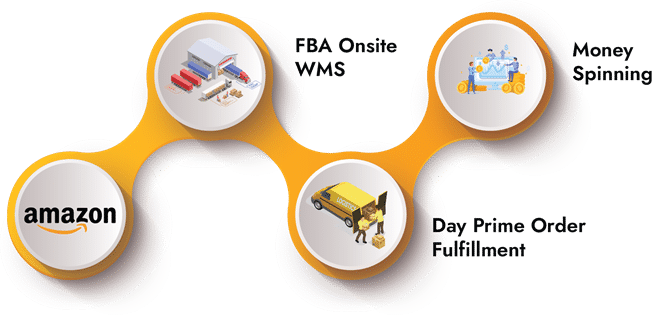
Amazon FBA Onsite works as an advanced extension of Seller Fulfilled Prime. Sellers store products in their own warehouses, but Amazon sends its warehouse specialists to optimize those facilities. This includes improving storage layout, inventory organization, and order processing workflows.
Amazon then uses its transportation network or approved third-party carriers to handle deliveries. This approach allows Amazon to maintain control over shipping quality while sellers retain ownership of their inventory locations.
To simplify the process, imagine you are a seller already fulfilling orders from your own warehouse. With FBA Onsite, Amazon steps in to enhance your warehouse setup and selects reliable carriers to deliver orders on time. Your facility effectively functions like an Amazon fulfillment center, supported by Amazon’s warehouse management software.
In addition, Amazon monitors delivery performance and customer experience, allowing sellers to focus more on growth, product development, and business expansion.
Key Advantages of Amazon FBA Onsite
Because Amazon FBA Onsite combines features from both FBA and SFP, it delivers benefits from both fulfillment models.
Warehouse Optimization by Amazon Experts
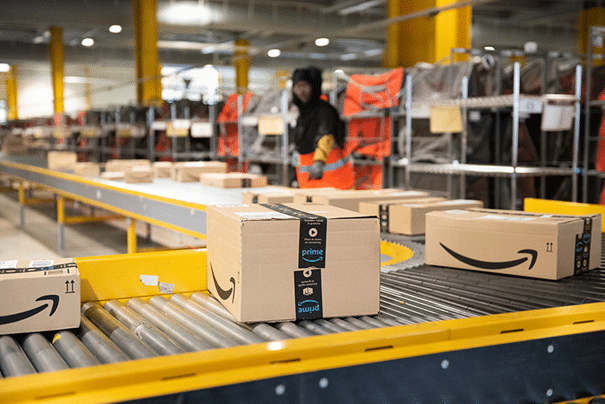
Amazon manages millions of shipments daily, making warehouse efficiency one of its strongest capabilities. Through FBA Onsite, Amazon applies the same optimization techniques to sellers’ warehouses.
Amazon’s team helps improve warehouse layout, inventory storage methods, picking and packing processes, and order prioritization. Sellers also benefit from advanced warehouse management software that improves tracking and operational accuracy.
Simplified Delivery Process
FBA Onsite simplifies shipping by allowing sellers to store products in their own facilities while Amazon handles carrier selection and delivery execution. Sellers no longer need to worry about choosing logistics providers that meet Prime standards.
Improved Shipping Options
Products enrolled in Amazon FBA Onsite qualify for Prime shipping benefits, including nationwide two-day delivery and flexible same-day shipping options. This increases customer trust and enhances product visibility.
Additional benefits include:
- Prime eligibility for hazardous materials
- Amazon-managed customer service
- Easy and streamlined returns
How Can Sellers Join Amazon FBA Onsite?
As of its initial rollout, program has been available only through invitation. Sellers must be selected by Amazon to participate in the program.
Since this model is still evolving, Amazon continues to test and refine it with a limited number of sellers. More updates and broader availability may be introduced as Amazon gathers performance data and improves the system.
Sellers are encouraged to stay informed about new developments, as future changes could open the program to a wider audience.
Final Thoughts
This program offers a smart solution to warehouse congestion by shifting storage responsibility to sellers while maintaining Amazon’s fulfillment standards. In exchange, Amazon manages shipping and delivery—something it already excels at.
For sellers, this means reduced storage costs, lower fulfillment expenses, Prime eligibility, and improved delivery performance—all without sending inventory to Amazon warehouses.
While the long-term success of FBA Onsite remains to be seen, the concept shows strong potential. As Amazon continues to refine this model, it could become a valuable fulfillment option for sellers looking to scale efficiently.