Shipping products from China to Amazon FBA is one of the most widely used and profitable strategies among Amazon sellers today. With China being the world’s largest manufacturing hub, sourcing products at competitive prices has become easier than ever.
Although the process may sound intimidating at first, it’s far from complicated. That said, it does involve much more than asking your supplier to attach a shipping label and send your products to Amazon.
In this guide, we’ll break down the available shipping options from China to Amazon FBA and highlight the most critical things you must understand before placing your first sourcing order.
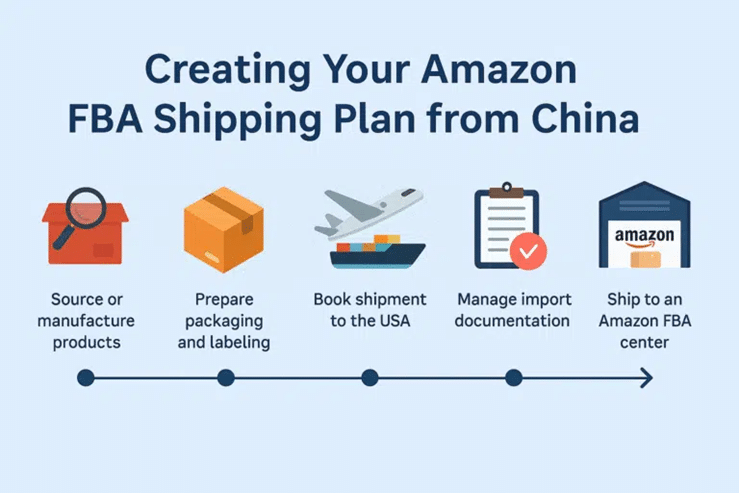
Top Options for Shipping From China to Amazon FBA
When planning how to move your inventory from China to Amazon’s fulfillment centers, sellers typically choose between two methods:
- Shipping products directly from China to Amazon FBA
- Shipping products to yourself or a third-party service before sending them to FBA
Each option has its own benefits and challenges, depending on your experience level and business goals.
Option 1: Shipping Directly From China to Amazon FBA
One of the biggest challenges when working with Chinese manufacturers is communication. Language barriers and misunderstandings can easily cause mistakes, especially during your first shipment. While many suppliers are now familiar with Amazon FBA requirements, you should never assume they fully understand your expectations.
If you ship products first to your local location (such as the US or UK), you get a chance to personally inspect the inventory and verify that it meets Amazon’s packaging, labeling, and quality standards.
Before shipping directly from China to FBA, several important questions should be answered:
- How do you choose a profitable product?
- Which shipping method should you use—air or sea freight?
- How do you negotiate the best buying price?
- How do you build long-term relationships with suppliers?
- Which products sell best on Amazon?
- What pricing strategy helps win the Buy Box?
Pros and Cons of Shipping Directly From China to Amazon FBA
Advantages of Direct Shipping
One of the biggest benefits of direct shipping is faster inventory movement. Products reach Amazon warehouses sooner, allowing you to start selling more quickly.
Another advantage is cost savings. By eliminating middlemen, you reduce inspection and handling fees that can add up over time.
Challenges of Direct Shipping
Amazon often splits shipments across multiple fulfillment centers instead of one single location, which complicates logistics.
Import duties, taxes, and freight costs must be paid before your inventory reaches Amazon, increasing upfront expenses.
Most importantly, you lose the opportunity to physically check product quality before it arrives at FBA. Any packaging or labeling mistakes can lead to rejected shipments.
Option 2: Shipping to a Middleman or to Yourself
Another popular approach is shipping inventory from China to a third party or your own warehouse before sending it to Amazon. These services are commonly known as prep centers, pick-and-pack providers, or third-party logistics (3PL) companies.
These middlemen specialize in receiving bulk inventory, inspecting it, preparing it according to FBA guidelines, and forwarding it to Amazon warehouses.
Pros and Cons of Using a Middleman
Benefits of a Middleman
- Products can be shipped from China in bulk, reducing per-unit shipping costs.
- You gain the ability to inspect product quality, packaging, and labeling before the items reach Amazon.
- Your sales strategies and business details remain confidential from manufacturers.
- There’s a significantly lower risk of shipment rejection at Amazon fulfillment centers.
Drawbacks of a Middleman
- Using third-party services comes at an additional cost.
- The overall delivery time is longer compared to direct shipping.
- You must either manage the process yourself or pay someone to handle it.
Direct Shipping vs Using a Middleman: Which Is Better?
When Using a Middleman Makes Sense
A middleman is often the best choice if you’re placing your first order or launching a new product.
If you’re new to Amazon FBA, consolidating shipments through a prep center can reduce risk.
When working with limited capital, consolidated shipping can help lower costs.
When Direct Shipping Is the Better Option
Direct shipping is ideal when speed is critical and you want inventory live on Amazon as quickly as possible.
If you have a strong working relationship with your supplier and fully trust their compliance with FBA requirements, direct shipping can be more cost-effective.
What You Must Know Before Your First China Sourcing Order
A large percentage of products sold on Amazon are manufactured in China. Thanks to platforms that connect global buyers with suppliers, even small Amazon sellers can now compete in the marketplace.
However, successful sourcing requires careful preparation. Below are the most important steps you should follow before placing your first order.
Step 1: Ensure Products Meet Your Country’s Regulations
Before importing any product, confirm that it complies with legal and safety standards in your target market. This includes product safety rules, trademark restrictions, and patent regulations.
Suppliers in China are not legally obligated to verify intellectual property rights for your country. If your shipment violates regulations, you—not the supplier—will be held responsible.
If issues arise after importation, the entire inventory may need to be destroyed, resulting in major losses. Always research trademarks and existing brand protections before proceeding.
Step 2: Confirm How Long the Quoted Price Is Valid
Suppliers usually specify how long a quoted price remains valid. This protects buyers from sudden price increases due to rising raw material or production costs.
Many new sellers focus only on product cost and overlook expenses such as shipping, packaging, customs duties, and taxes—which can sometimes make up half of total costs.
Buying from public marketplaces also means competitors can source the same product and undercut your pricing on Amazon.
Step 3: Never Assume Suppliers Are Trustworthy by Default
Being listed on a supplier directory does not guarantee reliability. Supplier verification is critical before placing your first order.
Since visiting factories in person is often impractical, you must take extra care to verify business legitimacy and production capability.
Returning or reworking poor-quality goods is usually not an option, making due diligence essential.
Step 4: The Manufacturer Isn’t Always the Best Choice
While buying directly from manufacturers seems cost-effective, large factories often prioritize big buyers.
Smaller Amazon sellers may receive better attention and service from agents or intermediaries who specialize in export logistics and quality control.
Experienced agents can simplify communication, handle shipping details, and reduce costly mistakes.
Step 5: Understand How the Product Is Made
Amazon sellers should thoroughly understand their products, including how they function and what materials are used.
Personally testing products helps identify potential defects early and prepares you for customer feedback, returns, or warranty claims.
This step is especially important for electronic products, where issues may appear weeks or months later.
Step 6: Always Request Product Samples
Before placing a large order, request prototypes or samples. This allows you to evaluate quality firsthand and compare future shipments to the approved sample.
Getting honest feedback from friends or colleagues can reveal issues you might overlook and help decide whether the product is market-ready.
Step 7: Don’t Assume Quality Means the Same Thing Everywhere
Quality standards vary by country. Make sure the supplier understands exactly what level of quality you expect.
Shipping samples back and forth may increase costs, but it’s far cheaper than reworking or replacing rejected inventory.
Also, verify branding and trademarks to avoid accidental violations that could lead to listing removal.
Step 8: Never Pay the Full Amount Upfront
Avoid paying the entire order value in advance. A partial upfront payment with the remaining balance paid after production is standard practice.
For initial samples, secure payment methods may be used, even if fees are higher. Always factor in shipping and customs costs when calculating your total investment.
Step 9: Explore Supplier Sources Beyond One Marketplace
Supplier platforms vary in focus. Some cater mainly to small and medium businesses, while others attract larger manufacturers.
Exploring multiple sourcing platforms can help you find better pricing and more reliable partners.
Step 10: Don’t Leave Shipping Entirely to the Supplier
Shipping costs make up a significant portion of your total expenses. Leaving logistics fully in the supplier’s hands often leads to higher costs and limited control.
Working with your own freight forwarder allows better oversight and flexibility, especially during peak seasons.
Step 11: Production and Delivery Take Time
Manufacturing timelines depend heavily on the product. Production alone can take four to twelve weeks, followed by shipping and customs clearance.
Failure to plan for these timelines can result in stock shortages and lost sales.
Always factor production and delivery time into your inventory planning well before stock levels drop too low.
Final Thoughts
Shipping from China to Amazon FBA can be extremely profitable when done correctly. The key lies in planning, supplier verification, proper logistics management, and understanding Amazon’s requirements.
Approach your first sourcing project with caution, patience, and attention to detail—and you’ll set your Amazon business up for long-term success.