
Amazon sellers, take note—Amazon has continually refined its buyer-seller messaging policies to improve transparency and protect customer experience. These communication rules play a critical role in how sellers interact with buyers before and after a purchase.
To remain compliant and avoid potential account issues, it’s essential to understand what is allowed, what is restricted, and how to communicate effectively under Amazon’s updated guidelines. This guide walks you through Amazon’s buyer-seller messaging policy in detail, helping you stay informed and confident when communicating with customers in 2026.
Let’s break it all down step by step.
Amazon Customer Communication Updates: Key Timeline
Amazon routinely updates its Seller Terms of Service, including policies related to customer communication. One of the most impactful revisions to the buyer-seller messaging policy was introduced in late 2020 and has since been reinforced and clarified through ongoing enforcement.
These changes were rolled out to address concerns raised by third-party sellers and software providers who found Amazon’s communication policies unclear or inconsistent. Over time, Amazon refined its rules to make expectations more transparent and reduce misuse of buyer messaging.
Two critical clarifications introduced and still enforced today include:
- Sellers are allowed to request customer reviews
- Sellers may use approved third-party tools available in the Amazon Marketplace to send review requests
These rules remain central to compliant communication practices in 2026.
Types of Amazon Buyer-Seller Messages That Are Allowed
Amazon categorizes buyer-seller messages into two major groups: Necessary permitted messages and Proactive permitted messages. All permitted messages must be sent within 30 days of the order date.
Permitted messages are communications required to complete an order or respond directly to a buyer’s inquiry. These messages are allowed only when the buyer initiates contact regarding their purchase.
Proactive Permitted Messages Explained
Proactive permitted messages are initiated by the seller and are not direct replies to customer questions. These messages must still be related strictly to the buyer’s order and follow Amazon’s content standards.
Sellers can send proactive messages using the following approved methods:
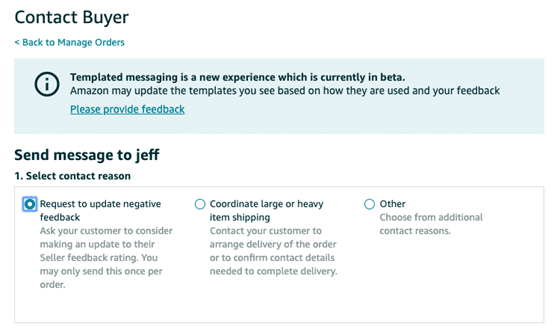
- Amazon Seller Central’s templated messaging system
- The “Request a Review” feature in order details
- Amazon Seller API
- Third-party applications listed in the Amazon Marketplace
When Sellers Can Use Proactive Messages
Sellers may send proactive permitted messages within 30 days of order completion for valid, order-related reasons such as:
- Resolving fulfillment or shipment issues
- Sending invoices
- Confirming custom or personalized order details
- Requesting missing order information
- Communicating about returns or replacements
- Requesting product reviews or seller feedback
- Scheduling deliveries for bulky items
- Coordinating Amazon Home Services appointments
All messages should be sent in the buyer’s preferred language and must include the relevant 17-digit order ID.
Important Things Sellers Should Remember
Requesting reviews and feedback is still permitted under Amazon’s current messaging rules. However, sellers must be careful about timing, language, and intent when sending these requests.
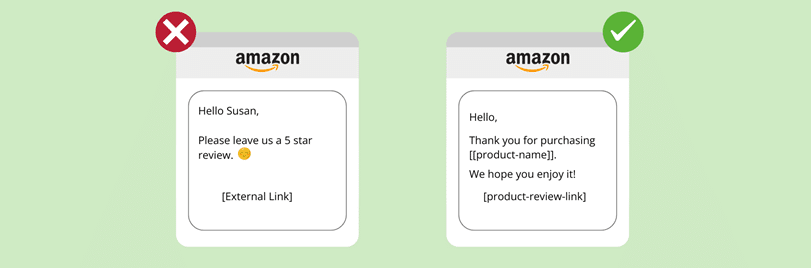
Messages should remain neutral, non-incentivized, and non-repetitive. Any attempt to influence the buyer’s opinion or selectively request reviews based on customer satisfaction can lead to violations.
Amazon Messaging Policy: What Is Not Allowed
Amazon strictly prohibits the following types of messages:
- Shipping or order confirmation messages (Amazon handles these)
- Messages that only say “Thank you” or offer generic assistance
- Promotional or marketing content, including discounts or coupons
- Requests to change, delete, or revise existing reviews
- Asking for reviews only after a positive experience
- Language encouraging positive reviews or feedback
- Repeated review or feedback requests for the same order
These restrictions are actively enforced in 2026.
Amazon Permitted Message Content Guidelines
Even when sending allowed messages, sellers must avoid including:
- External links unless required to complete the order
- Attachments other than invoices, manuals, or warranty documents
- Brand logos that redirect customers off Amazon
- Requests for buyers to opt out of messaging
- Email addresses or phone numbers
- Sensitive, explicit, or offensive content
- Tracking pixels or unrelated images
Amazon previously allowed emojis and GIFs in buyer messages, but these are no longer permitted under current standards.
Message Formatting Rules Sellers Must Follow
Amazon enforces strict formatting and accessibility rules for buyer-seller messages. Avoid including:
- Emojis or GIFs
- Custom fonts, colors, or excessive styling
- More than three font sizes
- Unsecured images (non-HTTPS)
- Grammar or spelling mistakes
- Excessive margins or spacing
Forced text alignment overrides
📌 Multiple line breaks in a row
📌 Accessibility violations per W3C guidelines
Poor formatting can trigger warnings or messaging restrictions.
Order Status and Return-Related Messages
Amazon allows limited order status communication when necessary.
Order Problem Messages:
If an item cannot be shipped or there is an unexpected issue, sellers are expected to notify buyers promptly using Amazon’s messaging system.
Return-Related Messages:
All returns should be managed through Seller Central. However, sellers may message buyers to request additional information or propose partial refunds when required to process a return.
These messages must remain strictly order-related and sent through official Amazon channels.
How Amazon Communicates With Buyers
Amazon automatically provides buyers with order updates through the “Your Account” section. This includes shipping confirmations, delivery tracking, and refund processing notifications.
Since customers expect fast and accurate updates, sellers should promptly confirm shipments and refunds to maintain trust and avoid disputes.
Final Thoughts
Amazon continues to tighten its buyer-seller communication policies to prevent manipulation and ensure a consistent customer experience. While the rules may feel restrictive, the buyer-seller messaging system remains a powerful tool for resolving issues and delivering excellent customer service.
By following Amazon’s guidelines carefully, sellers can communicate professionally, stay compliant, and build long-term trust with customers—without putting their accounts at risk.