
Amazon Business has transformed how companies buy and sell products online by focusing on the needs of B2B transactions. The platform makes both purchasing and selling more streamlined for companies. One of the biggest advantages is that sellers can offer their products not only to everyday retail shoppers but also to business buyers through the same marketplace.
Industry reports indicate that Amazon Business was projected to exceed $115 billion in gross sales by 2025. This rapid growth has made it one of Amazon’s fastest-expanding divisions. As a result, many brands and sellers are now exploring this channel to expand their reach.
With more than one million business customers, Amazon Business has become a powerful platform for manufacturers, distributors, and online merchants. For brand owners and sellers, creating a solid B2B strategy on Amazon can open the door to significant growth opportunities. In this guide, we’ll explore why selling through Amazon Business may be worth considering.
What is Amazon Business?
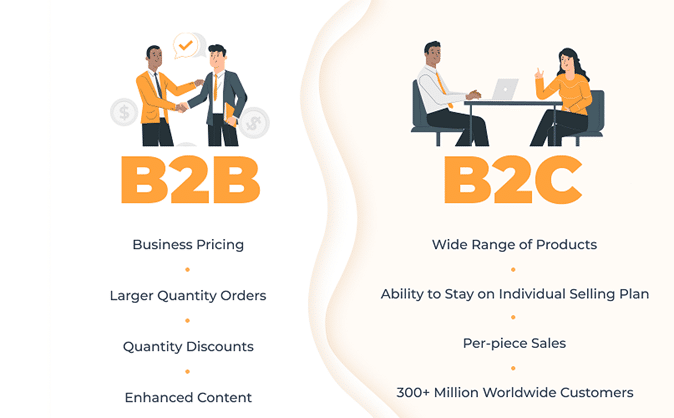
Amazon Business is the B2B-focused version of Amazon’s traditional e-commerce marketplace. It is designed specifically for companies that require features such as multiple user accounts, flexible payment methods, credit options, and business-specific purchasing tools.
In addition to these features, business customers still benefit from Amazon’s competitive pricing, large product selection, and fast delivery options. The goal of Amazon Business is to create a marketplace that meets the purchasing needs of companies while allowing sellers to manage both consumer and business sales in one place.
Another advantage is that sellers can customize their offerings for business buyers. This includes providing different pricing structures, bulk discounts, and product variations that are tailored specifically for corporate customers.
Should You Explore Amazon B2B Opportunities?
Because of its massive customer base and high website traffic, Amazon Business is highly attractive to many sellers. Businesses benefit from Amazon’s easy purchasing experience and reliable delivery network, which can also complement an existing B2B e-commerce store.
However, the platform may not be the ideal fit for every seller. Success depends on factors such as the niche you operate in, the level of competition in your industry, your business model, and your ability to comply with Amazon’s seller policies and requirements.
For some businesses, Amazon Business can significantly expand revenue opportunities. For others, the competitive nature of the platform may present challenges. Therefore, it’s important to carefully evaluate your market before committing to a B2B strategy on Amazon.
Do Existing B2B Businesses Need Amazon Business?
For most Amazon sellers, increasing sales is always a priority. Many businesses already sell to both individual customers and corporate buyers through traditional channels. However, Amazon Business can help you reach an even larger audience.
Some organizations prefer to purchase exclusively through Amazon Business due to internal procurement policies. This means that if your products are suitable for business use, you could miss valuable sales opportunities by not listing them on the platform.
Amazon’s marketplace has already become a primary shopping destination for consumers. Likewise, the Amazon Business platform is widely used by companies ranging from small businesses to large enterprises, including Fortune 100 organizations.
Before diving in, sellers should carefully review the advantages and potential challenges of selling on Amazon Business to determine whether it aligns with their long-term goals.
Discovering Product Opportunities
Amazon Business provides valuable reports that help sellers identify potential product opportunities within the marketplace.
One of these reports highlights items that already have strong demand within categories and brands you currently sell. This helps you identify which products might perform well with business buyers.
Another report focuses on products that Amazon Business customers are requesting but are not yet widely available on the marketplace. These insights can help sellers discover new product opportunities that may face less competition.
How These Reports Help Sellers
Amazon analyzes various demand signals to generate these insights. These signals include purchasing patterns, customer requests for new products, and trends emerging from the growing Amazon Business customer base.
The platform combines this data with your own selling history to create personalized product recommendations. By studying these insights, sellers can make better decisions about expanding their product offerings for the B2B market.
How to Start Selling on Amazon Business
Getting started with Amazon Business is relatively simple whether you are a new seller or already active on the marketplace.
First, you need to create a Professional Seller account through Amazon Seller Central. If you are already selling on Amazon, you can simply enable the Business Features option within your account settings.
Like regular Amazon selling, you will still be responsible for account fees, fulfillment costs, referral fees, and other applicable charges.
Next, create a detailed Business Profile. This profile should include information about your company, certifications, credentials, and other relevant details that business customers may want to see.
After that, upload your product catalog. Amazon Business allows sellers to include additional information such as product manuals, safety certifications, instruction guides, and technical documentation.
Once everything is set up, you can begin marketing your products using tools such as sponsored advertising, bulk discounts, and optional services like product installation if applicable.
Sellers must also maintain strong performance metrics. This includes processing tax exemptions properly, providing shipment tracking for every order, and including a packing slip with the customer’s purchase order number.
Advantages of Selling on Amazon B2B
Joining Amazon Business offers several benefits for sellers beyond simply increasing sales.
Large Market Opportunities
Amazon Business has developed a massive customer base that includes major corporations as well as small and medium-sized businesses. As the platform continues to grow, sellers can gain exposure to a wide range of business buyers.
Companies often prefer purchasing many different products from a single platform. These purchases can range from office supplies and furniture to electronics, tools, and safety equipment.
By listing your products on Amazon Business, you increase your visibility among these high-value buyers.
Recurring Orders
Business customers frequently purchase the same items on a regular basis. Amazon Business supports this purchasing behavior through features such as Business Prime, which allows buyers to automate recurring orders.
For sellers offering products that are used regularly—such as equipment parts, office supplies, or safety gear—this can create a consistent stream of repeat purchases.
Easy Setup
Starting a B2B operation through Amazon Business requires minimal setup. Sellers can launch their accounts quickly without needing to invest heavily in building their own e-commerce infrastructure or website.
This lowers the barrier to entry for companies looking to expand into online B2B sales.
Dedicated Amazon Business Support
Amazon Business provides a range of tools designed specifically for corporate buyers. These include multi-user account access, flexible payment methods, and account management features.
Sellers also benefit from Amazon’s fulfillment infrastructure, which can handle shipping, returns, customer service, and complaint management.
Additionally, Amazon offers technical support during account setup, along with educational resources and a large community of sellers who share insights and solutions.
Another major advantage is the ability to leverage Amazon’s advertising tools to promote your products, which can be especially helpful for new sellers entering the marketplace.
Trust in the Amazon Brand
One of the strongest advantages of selling on Amazon is the trust associated with the platform. Business buyers often hesitate to work with unknown vendors, especially when placing large orders.
Because transactions occur through Amazon’s trusted ecosystem, companies may feel more confident purchasing from new suppliers on the platform.
As a seller, you benefit from the credibility and reputation that Amazon has already established.
How to Increase Sales on Amazon Business
Growing B2B sales on Amazon often follows similar principles as increasing B2C sales. However, business buyers typically have different expectations.
Many companies follow structured procurement processes, which may include approval workflows, vendor qualification standards, and specific certification requirements.
Business buyers also rely heavily on data when making purchasing decisions. They typically require detailed product information before committing to large orders.
Because of this, sellers should provide comprehensive product details such as technical specifications, instruction manuals, brochures, and demonstration videos—especially for complex or high-value items.
Offering both individual units and bulk purchase options can also make your listings more attractive to business customers.
Final Thoughts
Selling through Amazon Business can provide significant growth opportunities for sellers of all sizes. Companies that already purchase many of their supplies through Amazon create a strong demand for B2B products on the platform.
For sellers who already operate in the B2B space and meet Amazon’s requirements, joining Amazon Business can be a highly strategic move. With the right product selection and optimization strategy, it can become an important revenue channel for your online business.