
Running a successful e-commerce business can be challenging. From unpredictable supply chains to rapidly changing customer preferences and intense competition, online sellers constantly face new obstacles.
Because of this, having a reliable demand forecasting strategy has become essential for modern e-commerce brands.
Demand forecasting allows sellers to determine which products customers are likely to purchase during specific periods. With these insights, businesses can manage inventory more efficiently, avoid overstocking or running out of stock, and deliver a better shopping experience to customers.
Whether you are launching a new online store or scaling an established brand, staying ahead of customer demand helps you take advantage of opportunities, prepare for challenges, and steadily grow your business.
In this guide, we’ll explore what e-commerce demand forecasting is and how it can help your business succeed.
What Is E-Commerce Demand Forecasting?
E-commerce demand forecasting is the process of predicting future product demand by analyzing factors such as past sales data, market trends, customer behavior, seasonality, economic conditions, and other relevant variables.
In earlier stages of online selling, a simple sales forecast was often enough. However, with the rapid expansion of e-commerce platforms and multiple sales channels, businesses now require more advanced forecasting methods and predictive analytics.
By forecasting demand accurately, companies can make smarter decisions about inventory management, marketing strategies, and long-term business planning.
For example, imagine an online retailer that sells winter clothing. If they notice that sales of hats and scarves consistently increase during October and November, they can reasonably predict a similar trend in the following year.
Using this insight, the brand can increase production or inventory levels ahead of the season to ensure products remain available when demand rises.
Why Is E-Commerce Demand Forecasting Important?
Regardless of whether you are a new seller or an established brand, demand forecasting should be a key part of your e-commerce strategy.
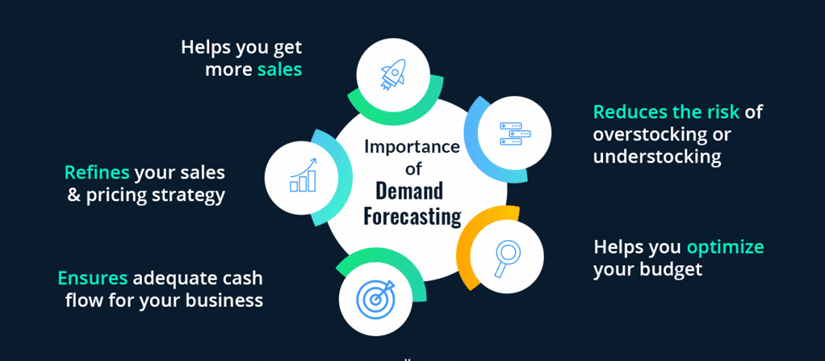
It not only helps minimize risks but also allows businesses to optimize inventory management and improve customer satisfaction.
Below are some major advantages of using demand forecasting in e-commerce.
Reduces Risk
One of the most common problems faced by online retailers is either having too much inventory or running out of stock. Both situations can lead to lost revenue and operational inefficiencies.
Demand forecasting helps businesses maintain the right inventory levels. It ensures that high-demand products remain available while preventing excessive stock of items that may not sell.
For instance, imagine a sports brand that observes a significant increase in football sales during major tournaments like the World Cup.
By studying these patterns, the company can estimate future demand and stock the appropriate number of units, reducing the chances of stock shortages or unnecessary surplus.
For businesses that sell perishable products, forecasting becomes even more important. Predicting the average sales rate helps prevent products from expiring before they are sold, reducing waste and financial losses.
Helps Optimize Your Budget
Demand forecasting also plays a major role in managing business expenses effectively.
When sellers can estimate future demand accurately, they avoid spending too much money on excess inventory or slow-moving products.
Reducing unnecessary inventory costs frees up funds that can be invested in other growth areas such as advertising campaigns, marketing strategies, or product development.
Ensures Healthy Cash Flow
Poor cash flow can cause serious operational issues for businesses. Late payments to suppliers or vendors may damage relationships and disrupt the supply chain.
Demand forecasting helps businesses anticipate high- and low-demand periods, allowing them to plan their finances more effectively.
For example, companies can prepare by reserving funds in advance or arranging credit terms with suppliers to ensure operations continue smoothly even during fluctuating demand periods.
Improves Sales and Pricing Strategy
Demand forecasting is not only useful for inventory planning but also for refining pricing strategies.
If data shows declining demand for a product, businesses can reduce prices or offer discounts to clear existing stock.
On the other hand, when demand is high, sellers may increase prices strategically to maximize profit margins.
Prevents Lost Sales Opportunities
Running out of stock can negatively impact both revenue and customer trust.
When shoppers find that a product is unavailable, they often turn to competitors and may continue purchasing from them in the future.
Accurate demand forecasting helps ensure products remain available, preventing lost sales and maintaining customer loyalty.
Types of Demand Forecasting
Demand forecasting methods vary depending on the business objective. However, most companies use one or more of the following forecasting approaches.
Quantitative Demand Forecasting
Quantitative forecasting relies on historical data to identify patterns and predict future sales.
By analyzing previous performance, businesses can estimate how products will perform over time.
Some commonly used metrics include:
Average Monthly Sales
This method calculates the average number of units sold during a specific time period.
For example, if a clothing store has sold an average of 100 units per month over the last six months, it may expect similar demand in the upcoming months unless seasonal factors change.
Moving Averages
Moving averages calculate sales data across a rolling time frame, such as the last three or six months.
This approach helps businesses identify trends and adjust forecasts according to seasonal changes.
If sales have steadily increased over the past several months, the company may anticipate continued growth in the near future.
Qualitative Demand Forecasting
When historical data is limited, qualitative forecasting methods can be used to estimate demand.
This approach is commonly used when launching new products or entering new markets.
Some common qualitative forecasting techniques include:
Expert Opinion
Businesses may consult industry specialists, analysts, or consultants to gather professional insights about potential product demand.
For example, a company launching a new smartphone might seek predictions from technology experts.
Delphi Method
This technique gathers forecasts from a panel of experts anonymously. Their responses are analyzed and shared with the group multiple times until a general consensus is reached.
The Delphi method helps reduce bias and encourages more balanced predictions.
Sales Force Composite
In this method, companies collect demand forecasts from their sales team and combine them into an overall estimate.
Consumer Surveys
Businesses can also conduct surveys to understand customer preferences and estimate interest in a new product.
Although qualitative forecasting can provide valuable insights, it is generally less precise than quantitative methods and works best when combined with other forecasting techniques.
Macro-Level Demand Forecasting
Macro-level forecasting focuses on large-scale industry and economic trends that influence product demand.
This method is especially useful for companies entering new markets or launching new product categories.
For example, a company planning to introduce wearable technology may analyze fashion trends, consumer behavior, and economic conditions to evaluate potential demand.
Micro-Level Demand Forecasting
Micro-level forecasting focuses on internal business data and specific product performance.
Companies analyze factors such as past sales, product profitability, production costs, and supply chain efficiency to identify opportunities and potential risks.
Long-Term Demand Forecasting
Long-term forecasting analyzes demand over extended periods, typically between 12 and 24 months, and sometimes even longer.
This method helps businesses plan future investments, product development, and expansion strategies.
Short-Term Demand Forecasting
Short-term forecasting focuses on shorter periods, usually between three and twelve months.
This approach allows businesses to respond quickly to market changes and adjust inventory, staffing, and production accordingly.
Challenges in E-Commerce Demand Forecasting
Although demand forecasting offers significant advantages, it also comes with several challenges.
The Dynamic Nature of Retail
The retail and e-commerce industries are constantly evolving. Numerous factors can influence product demand, making predictions more difficult.
Changes such as product mix adjustments, geographic expansion, competitor strategies, seasonal shifts, geopolitical instability, supplier pricing changes, or new marketing campaigns can all affect demand patterns.
Even a single change can influence multiple aspects of a business, from production planning to inventory levels.
Using the Wrong Forecasting Method
Each forecasting method has its strengths and limitations. Selecting the wrong approach may result in inaccurate predictions and inefficient use of resources.
Businesses must carefully evaluate their available data and objectives before choosing the most appropriate forecasting method.
Insufficient or Inaccurate Data
Reliable data is essential for accurate forecasting.
If businesses lack sufficient historical data or rely on inaccurate information, the predictions they generate may lead to poor decisions and operational challenges.
Many online marketplaces provide limited data insights, making it difficult for sellers to build comprehensive forecasts.
Ignoring Economic Conditions
Economic conditions also play a major role in influencing consumer demand.
Global events, supply chain disruptions, transportation delays, labor shortages, or inflation can significantly affect product availability and customer purchasing behavior.
Businesses must consider these external factors when developing demand forecasts to improve decision-making and profitability.
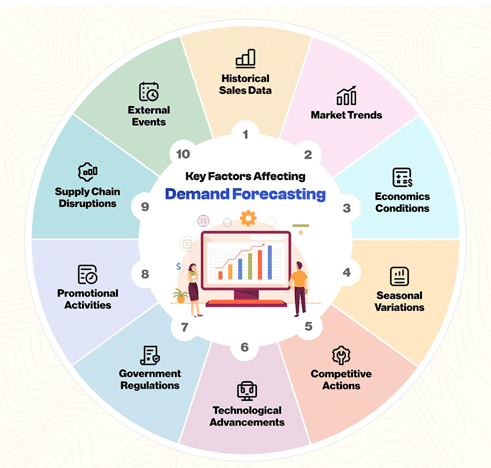
Factors That Influence Customer Demand
Several external variables can impact product demand and should be considered during forecasting.
Seasonal Trends
Seasonal trends refer to predictable periods of higher or lower demand during specific times of the year.
Events such as holiday shopping seasons or major sales events can dramatically increase product demand in certain categories.
Market Size and Demographics
Market size and customer demographics also influence demand forecasting.
Different regions often have unique consumer preferences, purchasing habits, and cultural influences that affect product popularity.
For example, snack brands often create region-specific flavors to match local tastes.
Product Categories
Different product categories follow different demand patterns.
High-priced items such as electronics typically have slower sales cycles, meaning forecasts may need to span longer periods.
In contrast, fast-moving consumer goods require more frequent forecasting due to higher sales velocity.
Competition
Competition also plays a significant role in shaping demand.
If a new competitor enters the market or an existing brand launches an aggressive marketing campaign, it may reduce demand for your products.
To remain competitive, businesses should focus on differentiating their products, improving customer experience, and strengthening brand value.
Running targeted advertising campaigns can also help increase visibility and maintain sales performance.
Five Steps to Create an E-Commerce Demand Forecast
Now that we understand the importance and challenges of demand forecasting, let’s look at the basic steps involved in building an effective forecasting process.
1. Define Business Goals
The first step in forecasting demand is clearly defining your business objectives.
Before analyzing any data, you should determine what you want to achieve both in the short and long term.
Examples of common goals include reducing slow-moving inventory, preventing stock shortages, or reaching specific sales targets for new products.
Once goals are defined, establish realistic timelines to help guide your strategy.
2. Collect Relevant Data
After setting goals, the next step is gathering relevant business data.
Important internal metrics include:
Daily revenue, which shows how product performance changes over time.
Average monthly sales, which helps determine typical demand levels.
Average order value (AOV), calculated by dividing total revenue by the number of orders. This metric indicates how much customers typically spend per purchase.
Return rate, which helps identify product quality or service issues that may influence demand.
Net sales, which represent total revenue after accounting for discounts, reimbursements, and other deductions.
These metrics provide valuable insights into overall business performance.
3. Build the Demand Forecast
Once sufficient data has been collected, businesses can begin building demand forecasts and adjusting inventory or budgets accordingly.
For example, if demand for a product declines during a seasonal period, businesses may temporarily pause inventory orders and focus on promoting higher-demand products instead.
Demand forecasting should be performed regularly—monthly, quarterly, and annually—to identify new patterns and trends.
It is also important to account for current inventory levels and maintain a small safety stock to handle unexpected demand increases or supply chain disruptions.
Final Thoughts
E-commerce demand forecasting ultimately revolves around using data to anticipate future customer demand.
When done correctly, it allows businesses to optimize inventory management, improve operational efficiency, and deliver a better customer experience.
In addition, accurate forecasting can reduce risks, improve pricing strategies, increase order values, and support long-term growth.
Now that you understand the process, it’s time to start building your own demand forecasting strategy—no crystal ball required.