Starting an online business has never been easier. If you’re planning to enter the eCommerce space, two of the most popular models you’ll encounter are dropshipping and Amazon FBA.
Both options offer unique advantages and challenges, and choosing the right one depends on your goals, budget, and risk tolerance.
By the end of this guide, you’ll have a clear understanding of both models and be able to decide which one suits your business best.
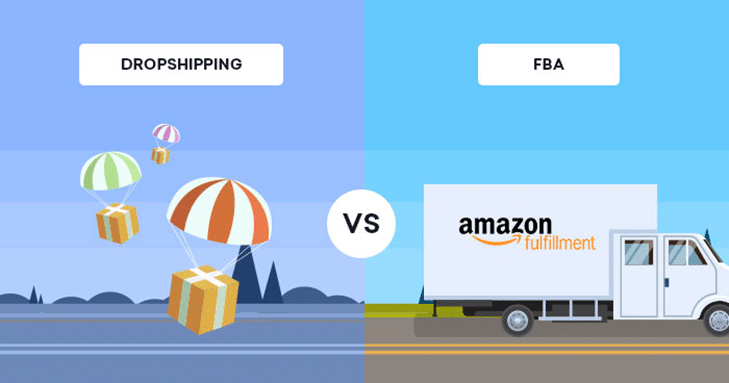
What Is Dropshipping?
Dropshipping is an eCommerce model where you sell products without holding any inventory. Instead, when a customer places an order, you forward it to a supplier who ships the product directly to the buyer.
This setup eliminates the need for warehousing and simplifies logistics, making it one of the quickest ways to start an online business. It also requires minimal upfront investment compared to traditional retail models.
You can list your products on platforms like Shopify, Amazon, or eBay, and sell items that are stocked by third-party suppliers.
Once an order is placed, the supplier handles fulfillment while the customer believes the product came from you. You only pay for the product after receiving payment from your customer, making cash flow management easier.
Although dropshipping is often promoted as an easy way to make money, it still requires planning, supplier coordination, and effective marketing to succeed.
What Is Amazon FBA?
Amazon provides sellers with multiple fulfillment options, including FBA (Fulfillment by Amazon) and FBM (Fulfillment by Merchant).
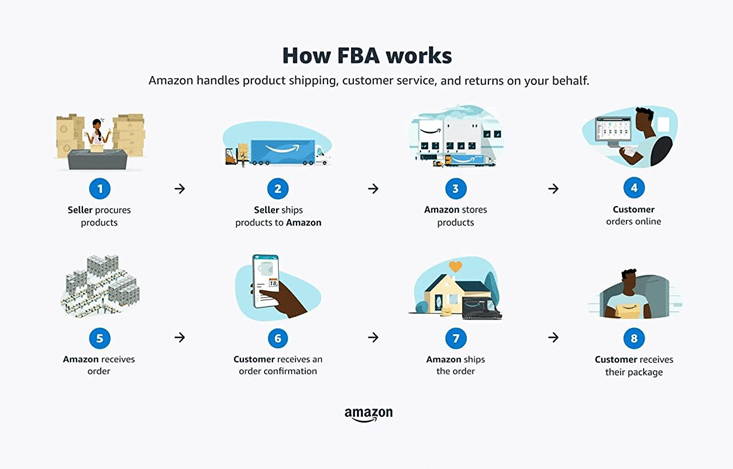
With Amazon FBA, you send your inventory to Amazon’s warehouses. When a customer orders your product, Amazon handles picking, packing, shipping, customer service, and returns on your behalf.
This model is ideal for sellers aiming to scale quickly and reach a massive audience. It allows you to leverage Amazon’s infrastructure and reputation to grow your business efficiently.
Amazon FBA vs Dropshipping – Quick Comparison
Here’s a simplified overview of how both models differ:
- Risk: Dropshipping has lower risk, while FBA involves higher financial commitment
- Investment: Dropshipping requires minimal capital; FBA needs significant upfront investment
- Profit Margins: Lower in dropshipping, higher in FBA
- Customer Interaction: Direct in dropshipping, limited in FBA
- Customer Reach: Smaller in dropshipping, much larger with FBA
- Shipping Risks: Higher in dropshipping, minimal in FBA
- Store Customization: Flexible in dropshipping, restricted in FBA
- External Traffic: Harder for dropshipping, easier with FBA
Pros and Cons of Dropshipping
Advantages of Dropshipping
1. Low Startup Costs
Dropshipping is budget-friendly since you don’t need to purchase inventory upfront. This makes it ideal for beginners with limited capital.
2. Easy to Manage
You don’t have to worry about storage, packaging, or shipping. The supplier handles most of the operational tasks.
3. Reduced Financial Risk
Since you only purchase products after making a sale, your financial exposure is minimal. Your main expense is maintaining your online store.
4. Wide Product Selection
You can offer a large variety of products without investing heavily, allowing you to test multiple niches easily.
5. Time Efficiency
Without the burden of logistics, you can focus more on marketing and growing your business.
6. Location Independence
Dropshipping allows you to run your business from anywhere, as long as you maintain communication with suppliers and customers.
Disadvantages of Dropshipping
1. Lower Profit Margins
While startup costs are low, profits are also relatively smaller due to high competition and pricing pressure.
2. Customer Service Challenges
Since fulfillment depends on suppliers, delays or errors can affect your customer experience.
3. Limited Marketing Flexibility
Thin margins make it harder to offer discounts or invest heavily in paid advertising campaigns.
4. Intense Competition
Many sellers use the same model, making it difficult to stand out in crowded markets.
5. Limited Product Knowledge
Incomplete information from suppliers can make it challenging to answer customer queries confidently.
Pros and Cons of Amazon FBA
Advantages of Amazon FBA
1. Easier Scaling
Amazon takes care of logistics and customer service, allowing you to focus on growth strategies.
2. Massive Customer Base
With millions of active users, Amazon provides access to a vast audience, increasing your sales potential.
3. Strong Brand Building Tools
Features like enhanced content and brand storefronts help you create a professional brand presence.
4. Hassle-Free Returns
Amazon manages returns and replacements, ensuring a smooth experience for customers.
5. Higher Profit Potential
With better visibility and trust, you can achieve higher sales volumes and improved margins.
Additionally, driving external traffic is more effective with FBA due to Amazon’s strong authority and built-in audience.
Disadvantages of Amazon FBA
1. High Competition
The popularity of FBA means you’ll face strong competition, especially in saturated niches.
2. Product Selection Challenges
Not every product performs well on Amazon, so careful research is essential.
3. Platform Dependency
Your business heavily relies on Amazon, and account suspensions can disrupt operations.
4. Limited Customer Access
You don’t get direct access to customer data, which limits your ability to build long-term relationships.
5. Higher Investment Requirements
FBA requires upfront costs for inventory, storage, and service fees, making it less accessible for beginners.
Final Thoughts
Both dropshipping and Amazon FBA offer viable paths to building a successful eCommerce business. The right choice depends on your financial situation, risk tolerance, and long-term goals.
If you prefer a low-risk, low-investment approach, dropshipping is a great starting point. On the other hand, if you’re ready to invest and scale a brand, Amazon FBA can deliver stronger long-term results.
In some cases, combining both models can also be a smart strategy, provided you have the resources to manage them effectively.
Carefully evaluate your options and choose the model that aligns best with your vision.
Happy selling!