Amazon FBA is essentially a powerful logistics system designed to simplify selling. It allows sellers to send their inventory directly to Amazon’s warehouses, where products are stored, prepared, packed, and shipped to customers on their behalf.
Think about the amount of time you can reclaim when you no longer have to manage fulfillment yourself. Handling daily logistics can be exhausting, and as a business owner, your focus should be on improving your products and growing your brand—not packing boxes.
By using FBA, you hand over fulfillment responsibilities to Amazon, freeing up your time to concentrate on scaling your business and increasing profitability.
Which Products Are Hardest to Prepare for FBA?
If you imagine the inside of an FBA warehouse, you’ll likely picture a fast-paced environment filled with constant movement, strict deadlines, and performance targets.
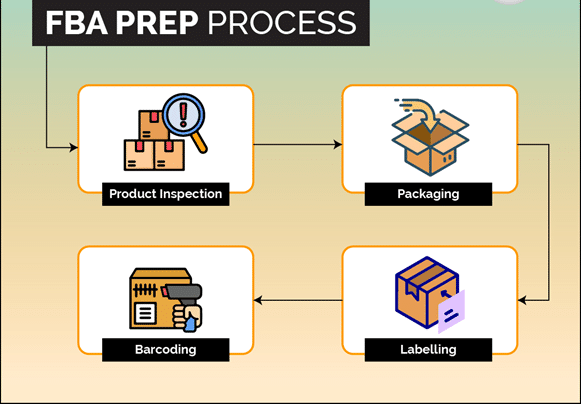
Certain types of products require extra care before being sent to Amazon. These include fragile items, oversized or heavy products, hazardous materials, and grocery items with expiration dates.
When preparing your inventory, always prioritize safety, efficiency, and consistency. Following Amazon’s packaging guidelines is essential to avoid issues during processing.
Why Packaging Compliance Is Critical
Packaging plays a major role in your success with FBA. Failing to meet Amazon’s requirements can lead to serious consequences.
Non-compliant shipments may be rejected, returned, or even disposed of. In more severe situations, repeated violations can result in account suspension or financial penalties.
To protect your business, always ensure your packaging meets Amazon’s standards before shipping inventory.
Can You Use a Non-Partnered Carrier?
In many cases, sellers can use non-partnered carriers to ship inventory to Amazon, although Amazon’s discounted shipping options are usually more cost-effective.
Shipping rules can vary by region. For example, in Canada, non-partnered carriers are limited to parcel shipments, while in the U.S., Amazon’s partnered carriers handle both parcel and LTL shipments.
However, certain products—such as oversized or hazardous items—may require alternative shipping solutions. In such situations, working with a third-party logistics provider (3PL) can help you secure better rates and smoother delivery.
What Is a UPC?
A UPC (Universal Product Code) is required for listing most products on Amazon. These codes are typically purchased from authorized providers like GS1.
While it may be tempting to use cheaper, recycled UPCs, doing so violates Amazon’s policies. This can lead to serious consequences, including account suspension due to suspected fraudulent activity.
What Is an ASIN?
An ASIN (Amazon Standard Identification Number) is a unique 10-character code assigned to each product listed on Amazon.
You receive an ASIN once your product listing is created. This identifier allows Amazon to track and manage products within its marketplace.
It’s a fundamental part of selling on Amazon, as every product listing is tied to its own ASIN.
What Is an FNSKU?
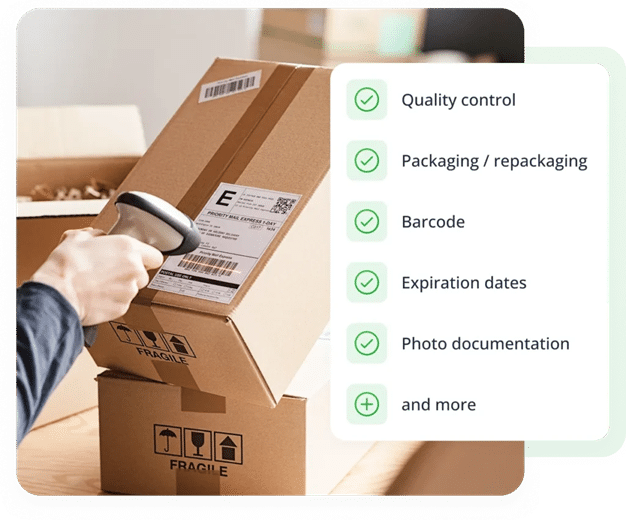
The FNSKU (Fulfillment Network Stock Keeping Unit) is a unique identifier used by Amazon to track products within its fulfillment network.
Unlike a UPC, the FNSKU links your inventory directly to your seller account. It ensures that your products are correctly identified and assigned to you within Amazon’s system.
Only products fulfilled through FBA require an FNSKU.
UPC vs FNSKU: Which Is Better?
Both UPCs and FNSKUs are accepted by Amazon, but the FNSKU is often the safer option.
Because it is unique to Amazon, the FNSKU reduces the risk of confusion and ensures that your inventory is accurately matched to your listings.
Can Manufacturers Handle FBA Labeling?
In some cases, manufacturers can apply FBA labels if you provide clear instructions and they understand Amazon’s requirements.
However, many manufacturers are unfamiliar with Amazon’s strict guidelines. Mistakes in labeling or packaging can lead to delays, penalties, or even account health issues.
To minimize risk, many sellers prefer using a 3PL to inspect and prepare inventory before it is sent to Amazon.
Can a 3PL Manage Labeling?
Working with a reliable 3PL can significantly improve your operations. These service providers specialize in preparing, labeling, and shipping products to Amazon.
They can also handle tasks like carton forwarding and case forwarding, ensuring that your inventory meets Amazon’s standards before it arrives at the warehouse.
Their expertise reduces errors and helps avoid delays caused by improper preparation.
What to Look for in an FBA Prep Service
Choosing the right prep service is a crucial decision for any Amazon seller.
Look for providers with strong experience in Amazon logistics, attention to detail, and responsive communication. A solid reputation and helpful educational resources are also good indicators of reliability.
Even small mistakes in preparation can be costly, so working with a knowledgeable partner is essential.
How Does Product Bundling Work?
Bundling allows sellers to combine multiple items into a single product offering, creating new opportunities to stand out in the marketplace.
However, bundling requires careful preparation. Factors like packaging thickness, labeling requirements, and proper sealing all need to be considered.
If you lack experience, prep centers can assist with bundling, as they specialize in assembling products according to Amazon’s standards.
Does Bundling Require New Codes?
Yes, bundled products require new identifiers, including a UPC, ASIN, and FNSKU.
Each bundle must be treated as a unique product, even if it consists of items that already exist individually on Amazon.
Why Are Shipments Rejected by Amazon?
Although rare when done correctly, shipments can be rejected for several reasons.
Common issues include incorrect labeling, exceeding weight limits, non-compliant pallets, missing documentation, or using unapproved shipping carriers.
Ensuring accuracy in every step of the process helps prevent costly mistakes.
What Happens If a Shipment Is Rejected?
If Amazon rejects your shipment, it may be returned or disposed of.
Returns—especially for large shipments—can be expensive due to high freight costs. This makes it essential to follow all guidelines carefully to avoid unnecessary losses.
How to Improve Inventory Limits
Amazon imposes inventory limits based on performance and demand.
To increase your limits, focus on improving your Inventory Performance Index (IPI) score and maintaining strong sales velocity. Working with a 3PL can also help manage inventory more effectively.
What Impacts Your IPI Score?
The IPI score measures how well you manage your inventory. It ranges from 0 to 1000 and is updated weekly.
Key factors include increasing sales, reducing excess inventory, and ensuring that all products are available for purchase.
Maintaining a healthy IPI score is essential for scaling your business.
SPD vs LTL: Which Shipping Method Is Better?
Small Parcel Delivery (SPD) is ideal for smaller shipments and is handled by carriers like UPS or FedEx.
Less Than Truckload (LTL) shipping is better suited for larger shipments, especially when sending multiple cartons or oversized items.
Your choice depends on your shipment size and overall logistics strategy.
What If a Carrier Loses Your Shipment?
Although rare, shipments can be lost or damaged in transit.
If this happens, you should file a claim with Amazon as soon as possible. You’ll need documentation such as shipment IDs and proof of ownership.
Working with experienced logistics partners can reduce the likelihood of such issues.
Should You Consider FBM Instead of FBA?
Fulfilled by Merchant (FBM) offers flexibility that FBA does not. Sellers using FBM can continue selling even when inventory limits are reached.
It can also be more cost-effective for larger or heavier items. Additionally, FBM provides diversification, which is especially useful during peak seasons when fulfillment networks are under pressure.
Final Thoughts
Amazon FBA simplifies logistics, but success depends on proper preparation and compliance.
Understanding key concepts like labeling, packaging, shipping methods, and inventory management can help you avoid costly mistakes and build a scalable business.
By combining FBA with the right strategies and support systems, sellers can maximize efficiency and focus on long-term growth.