
Amazon Rufus AI can best be described as a brilliant innovator. While it’s not human, its ability to think, analyze, and respond makes it feel like a highly intelligent shopping companion.
This newly introduced assistant on Amazon is rapidly gaining attention—and for good reason. It’s proving to be a major shift in how people shop online.
At its core, Rufus understands what shoppers are actually looking for. It goes beyond basic search by analyzing product details, customer reviews, and even brand credibility to deliver highly relevant suggestions. While Rufus is transforming search behavior, Amazon’s A10 algorithm still plays a role, meaning sellers must now optimize for both systems.
Although Rufus doesn’t always get everything perfect—especially when referencing past queries—it does a strong job of identifying the most suitable options for shoppers. This makes it especially valuable for sellers aiming to dominate their categories. So how can you fully leverage this innovation? Let’s explore.

What is Rufus on Amazon?
Amazon designed Rufus AI to act as a combination of a shopping assistant, product expert, and research tool.
It successfully delivers on that goal by helping customers make faster, more informed buying decisions backed by real data.
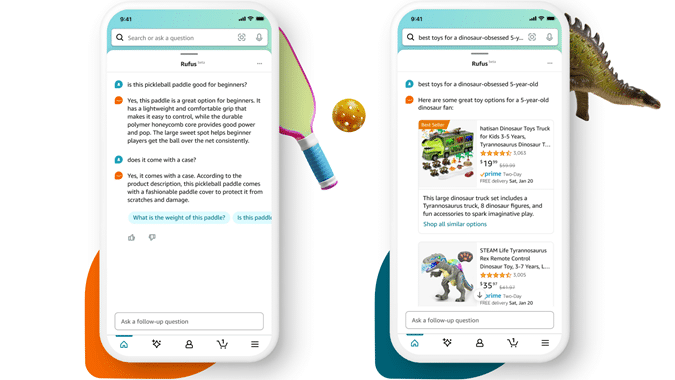
Unlike traditional search systems, Rufus gathers information from across Amazon and even external sources. It evaluates product descriptions, customer Q&As, and reviews to provide answers tailored to each user’s question.
For example, if someone searches for a “hula hoop for a 7-year-old,” Rufus considers factors like age, size, and usability before suggesting options.
On the other hand, broader queries like “Scandinavian bedroom decor ideas” prompt Rufus to first understand the design style before recommending suitable products.
It can even answer very specific product questions. If a product description lacks certain details—like whether a milkshake contains soy—Rufus can check external sources such as brand websites to provide clarity. This makes well-structured product listings more important than ever.
Of course, like any evolving AI, it has limitations. Occasionally, it may misinterpret queries or provide slightly irrelevant results, especially when dealing with future-based questions. However, these issues are expected to improve over time.
One interesting aspect is that Rufus doesn’t aggressively push purchases. Instead, it focuses on helping users understand their options, making the experience more informative rather than sales-driven.
Why is it Called Rufus?
The name “Rufus” has a meaningful backstory.
It was inspired by a Welsh Corgi who belonged to an early Amazon engineer. The dog was a well-known presence in Amazon’s early office culture, often attending meetings and becoming part of the company’s identity.
Naming the AI after Rufus reflects Amazon’s intention to make the assistant feel approachable, helpful, and familiar.
What is Rufus Used For?
Rufus is designed to assist users with quick product research, recommendations, and comparisons.
It appears in multiple areas of the Amazon platform, including the homepage and product pages.
From the homepage, users can ask for general recommendations. On product pages, Rufus allows deeper exploration—such as comparing products or analyzing reviews.
How Does Amazon Rufus AI Work?
Using Rufus feels similar to chatting with a virtual assistant. You can ask questions, verify details, or request recommendations in a conversational way.
For sellers, this means their products can appear in responses if their listings align with customer queries. Optimizing for Rufus can therefore improve product visibility significantly.
To understand how Rufus delivers answers, it’s important to look at the technology behind it.
Understanding Query Intent with Semantic Analysis
Rufus uses semantic understanding rather than simple keyword matching.
Traditional search engines rely heavily on matching exact words. Rufus, however, focuses on the meaning behind a query.
For instance, if someone asks how to clean shoes, Rufus recognizes the intent and provides both instructions and relevant cleaning products.
For sellers, this highlights a key shift: context matters more than keywords.
Learning from Customer Behavior
Rufus continuously learns from user activity, including:
- Daily search patterns
- Click behavior
- Purchase decisions
- Preferences across demographics
This makes its recommendations more personalized compared to standard search results.
If a product listing doesn’t align with what users typically engage with, it may struggle to appear—even if it’s optimized using older SEO practices.
Visual Understanding Through Images
Rufus also evaluates product images using visual recognition technology.
It can interpret objects, text, and layout within images, making visuals an essential part of product optimization.
High-quality images, lifestyle shots, and informative graphics now play a crucial role in visibility.
How Rufus is Changing Amazon Selling
Rufus shifts the focus from traditional metrics like CTR to deeper factors such as context, relevance, and customer feedback.
Detailed, natural descriptions are becoming more important, especially those that reflect real-life use cases.
Long-tail keywords and product variations are also essential to ensure listings match different types of customer queries.
Additionally, Rufus considers reviews from multiple platforms, making overall brand reputation more important than ever.
Sellers should actively analyze customer feedback and incorporate key benefits into their listings to improve relevance.
Competitor analysis is also critical. Understanding why competing products are being recommended can help refine your own strategy.
How to Optimize Listings for Rufus AI
Provide Rich, Contextual Data
To improve visibility, listings should include a variety of keyword types, such as:
- Intent-based phrases
- Solution-driven keywords
- Descriptive attributes
- Comparison-focused terms
- Question-based queries
All content—from titles to backend keywords—should be detailed and context-rich.
Focus on Reviews
Customer reviews are a major ranking factor for Rufus.
Positive, authentic feedback increases the likelihood of being recommended. It’s important to actively request reviews and address customer concerns.
Rufus may also summarize customer sentiment, so maintaining a strong reputation is essential.
Highlight Your Unique Value
Rufus prioritizes products that best match a customer’s needs.
Clearly explaining your product’s advantages—such as seasonal relevance or specific benefits—can improve your chances of appearing in recommendations.
Use FAQs Effectively
Adding FAQs to product listings is a smart strategy.
They help answer common questions while providing additional context, making it easier for Rufus to understand and recommend your product.
Challenges of Using Rufus AI
While promising, Rufus does present some challenges.
Adapting to New Strategies
Traditional SEO methods alone are no longer enough. Sellers must now focus on context-driven optimization.
Misinterpretation of Queries
Sometimes Rufus may misunderstand intent, leading to inaccurate recommendations.
Need for Continuous Updates
Listings must be regularly updated to match evolving search trends and user behavior.
Impact on Paid Advertising
Currently, Rufus does not heavily feature ads, but this may change in the future.
As AI-driven shopping evolves, ads may become more integrated into conversational recommendations.
This could lead to:
- More intent-driven ad placements
- Increased competition among brands
- New advertising models focused on AI visibility
Availability of Rufus AI
Rufus is already available in several countries, including the U.S., U.K., India, and parts of Europe.
Amazon plans to expand it to more marketplaces, although full details are yet to be announced.
Rufus vs Alexa
While Alexa handles general voice commands and smart home tasks, Rufus is specifically designed for shopping.
It focuses entirely on helping users discover, evaluate, and compare products.
User Experience So Far
Feedback on Rufus has been mixed.
Some users appreciate its recommendations and comparisons, while others report occasional inaccuracies.
Amazon is actively working to improve performance through user feedback.
Can You Disable Rufus?
Currently, there is no official way to turn off Rufus.
However, users can minimize its presence using browser extensions if needed.
Final Thoughts
Amazon Rufus AI introduces a new way of shopping—one driven by conversation, personalization, and context.
For sellers, this represents both a challenge and an opportunity.
Success will now depend on aligning product listings with how AI interprets customer needs.
As AI continues to shape online shopping, adapting to tools like Rufus will be essential for staying competitive.