
Are you still preparing for Amazon Q4 the same way you did a year or two ago? If so, you’re planning for a version of Q4 that no longer exists. The marketplace has changed dramatically.
Advertising costs have surged across most categories, profit margins have tightened even for well-established brands, and Amazon’s updated relevance system is far stricter than before.
On top of that, AI-powered listing audits, stricter deal approvals, and post-2024 shopping behavior shifts have completely redefined what Q4 readiness looks like.
Much of this transformation comes from Amazon’s own ecosystem upgrades. With AWD reshaping inventory management, ad placements favoring stronger trust signals, and event-focused AI predicting deal success, sellers now operate in a far more calculated environment.
This creates a major gap between perception and reality. Many sellers still believe traffic alone can carry weak listings or that deep discounts guarantee conversions. That approach no longer works.
Today’s Q4 is driven by algorithms, consistency, and reliability. Sellers who adapt early gain a strong competitive edge, while others struggle to keep up. This guide explores current trends and actionable strategies to help you scale effectively during Q4.

How to Prepare for Amazon Advertising in Q4
You cannot wait for Q4 traffic to spike before activating your ads. Many sellers learn this too late. Amazon’s advertising system rewards early preparation, not last-minute activity.
Successful brands prepare their campaigns well in advance and design them to perform under Q4 pressure.
1. Rethink ROAS Using Contribution Margin
Most sellers rely heavily on ROAS, but during Q4, it becomes misleading. As CPCs rise, ROAS naturally declines—even if campaigns are performing well.
Instead of reacting by cutting budgets, shift your focus to contribution margin. This reflects the actual profit remaining after fees, product costs, and ad spend.
This approach removes emotional decision-making and helps you scale confidently during peak demand. By focusing on profitability rather than surface-level metrics, you maintain visibility when it matters most.
2. Use Q4 as a Data and Relevance Accelerator
Q4 is more than just a revenue window—it’s a strategic opportunity.
Every interaction during this period strengthens your listing’s relevance. Metrics like click-through rate, conversions, and engagement signals all contribute to how Amazon evaluates your product.
Because traffic and intent are highest during Q4, even small improvements can significantly boost your long-term ranking.
These gains carry into the new year, helping you maintain visibility, reduce ad costs, and scale faster beyond the holiday season.
Additionally, Q4 provides valuable insights for product development. Sellers can identify demand gaps, discover bundle opportunities, and plan future variations based on real shopper behavior.
3. Align Strategy with Your Category
Not all categories perform the same during Q4, and your strategy should reflect that.
In repeat-purchase categories like beauty, pet care, and home essentials, aggressive or break-even strategies can be effective. Acquiring customers here leads to long-term value.
On the other hand, seasonal categories such as holiday décor or novelty gifts offer limited repeat purchases. In these cases, thin margins rarely pay off.
Electronics and toys require a more cautious approach due to higher return rates. Focusing on efficiency and protecting margins is key.
Understanding your category dynamics helps you avoid costly mistakes and build a more sustainable Q4 strategy.
4. Turn Q4 Traffic into Q1 Growth
One overlooked advantage of Q4 advertising is its impact on future performance.
Even when customers don’t convert immediately, they become part of your retargeting audience. This allows you to reach them later at lower costs with higher conversion rates.
As a result, Q1 campaigns often become more efficient and profitable.
5. Treat Customer Acquisition as a Long-Term Investment
Q4 success isn’t just about short-term profits—it’s about building a customer base.
The shoppers you acquire during this period can return for repeat purchases, bundles, and future product launches.
By shifting your mindset from immediate gains to long-term value, you make smarter advertising decisions and build a stronger foundation for growth.
This also requires adjusting your funnel. Q4 shoppers behave differently, using broader search terms and exploring more options.
Expanding top-of-funnel discovery, strengthening mid-funnel targeting, and optimizing retargeting helps capture this demand effectively.
Automatic campaigns become especially valuable here. They uncover new and unexpected search terms that traditional keyword tools often miss.
Using these insights to refine manual campaigns allows you to capture real-time demand and sustain performance beyond Q4.
Inventory Strategy for Q4 Success
Inventory management becomes far more complex during Q4.
Receiving delays increase, restock limits tighten, and supply chain disruptions become common. A single mistake can impact your entire operation.
Successful sellers avoid relying on one fulfillment method and instead build flexible systems.
1. Choosing the Right Fulfillment Model
For consistent, high-volume sellers, AWD offers a streamlined solution managed by Amazon.
A 3PL provides more control over packaging, bundling, and operational flexibility.
However, the most effective approach for many brands is a hybrid model. Splitting inventory between Amazon and external partners reduces risk and improves adaptability.
2. Forecast Demand Using Data
Q4 inventory planning should be data-driven.
While historical performance provides a baseline, current trends and velocity changes must also be considered.
Identifying key demand spikes allows you to prepare in advance rather than react too late.
3. Plan Around Inbound Delays
Shipping delays follow a predictable pattern during Q4, typically starting in early November and peaking around major shopping events.
Shipments that normally take days can take weeks.
To avoid disruptions, send inventory earlier than expected and maintain backup stock through alternative fulfillment channels.
4. Prevent Buy Box Suppression
Stock availability alone isn’t enough. Pricing inconsistencies or competition can cause Buy Box suppression, reducing conversions during peak traffic.
Maintaining pricing stability and controlling your listings is essential to protecting performance.
Category-Specific Q4 Demand Insights
Each category behaves differently during Q4, and understanding these patterns is crucial.
Beauty products benefit from bundles and gifting appeal.
Home and kitchen items peak early, making October optimization critical.
Electronics require careful handling due to returns, with clear product information reducing risk.
Toys demand flexibility, where fast trend adaptation and backup fulfillment methods are key.
Apparel success depends on reducing return rates through clear sizing and product details.
Listing Optimization for Q4
Amazon now prioritizes trust signals over simple keyword optimization.
Listings must demonstrate reliability through consistent reviews, aligned branding, stable pricing, and strong relevance.
During Q4, performance expectations increase. If your click-through rate drops, your visibility can decline without warning.
Improving images, titles, and pricing before peak traffic ensures your listing remains competitive.
Strategic Pricing and Deal Structure
- Deep discounts are no longer the most effective strategy.
- Heavy markdowns can damage margins, weaken brand perception, and create pricing instability.
- Instead, successful sellers use layered promotions, such as combining coupons, limited-time deals, and event-based pricing.
This approach maintains profitability while still driving conversions.
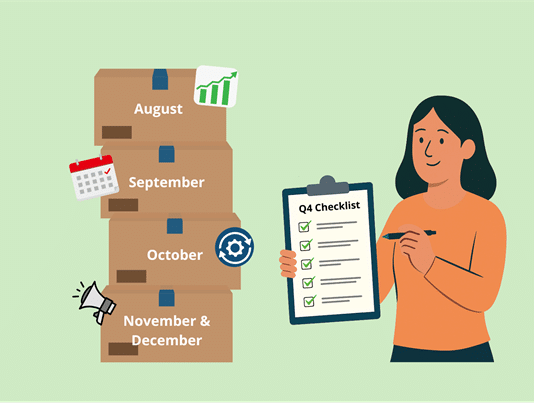
Major Q4 Risks to Prepare For
Sellers often underestimate key risks during Q4.
- Inbound delays can disrupt inventory flow and reduce ranking momentum.
- Payment reserves can strain cash flow, especially when ad spending remains high.
- Listing suppressions increase due to stricter compliance checks.
- Customer service demands rise, requiring faster response times and structured processes.
Preparing for these risks ensures smoother operations during peak season.
How Q4 Impacts Long-Term Growth
Q4 performance extends far beyond December.
The data collected during this period reveals customer behavior, product potential, and future opportunities.
Retargeting becomes more effective, product decisions become clearer, and marketing strategies improve.
January serves as a reset phase where sellers refine operations, optimize listings, and prepare for sustained growth.
Final Thoughts
Q4 is not just a sales season—it’s a strategic advantage.
Every interaction provides insights into customer preferences and market demand.
Sellers who approach Q4 with structured planning, strong data analysis, and long-term vision turn seasonal traffic into lasting growth.
Instead of chasing short-term wins, focus on building systems that sustain performance throughout the year.
That’s how Q4 becomes more than a spike—it becomes a foundation for the next 12 months.