If you sell on Amazon as a vendor, you already understand how critical it is to secure the Buy Box.
The Buy Box appears on the product detail page and allows shoppers to instantly add an item to their cart or proceed to checkout.
Amazon reports that nearly 82% of total purchases happen through the Buy Box — and on mobile devices, that percentage is even higher.
With competition becoming fiercer every year, many vendors struggle to consistently win it. And if you sell directly to Amazon as a 1P vendor, you might assume the Buy Box is automatically yours — but that isn’t always the case.
In this article, we’ll break down how the Buy Box works for vendors and share actionable strategies you can implement to improve your chances of winning it consistently.
Let’s get started.
What Is the Amazon Buy Box?
If you’ve ever shopped on Amazon, you’ve interacted with the Buy Box.
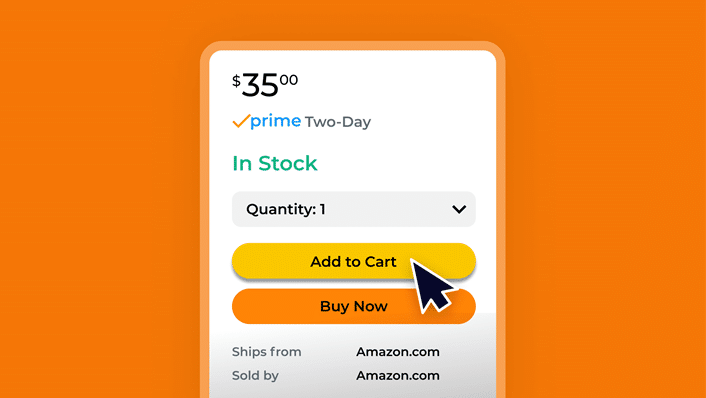
It appears on the right-hand side of the product listing and includes the “Add to Cart” and “Buy Now” buttons.
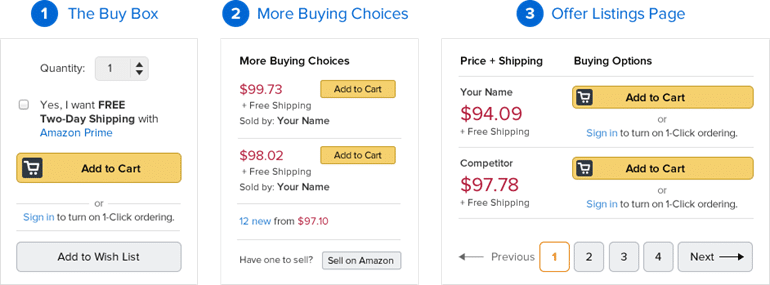
Because multiple sellers can list the same product, Amazon groups these offers under one listing. The platform then determines which seller earns the Buy Box based on specific performance criteria.
Amazon prioritizes customer experience above all else. That means vendors are evaluated carefully before being awarded the Buy Box.
Key factors Amazon considers include:
Availability – Whether the product is in stock and ready to ship immediately.
Pricing – Whether the price delivers strong value compared to competitors.
Convenience – Fast shipping options and hassle-free returns.
Beyond these elements, consistent performance and a strong reputation are also essential. Due to growing marketplace competition, securing the Buy Box has become increasingly challenging.
Even vendors who sell directly to Amazon do not automatically receive it every time.
Why Vendors Lose the Amazon Buy Box
Price plays a major role, but it isn’t the only reason vendors lose Buy Box placement.
Low Inventory Availability
If Amazon detects frequent stock shortages or inconsistent supply, Buy Box eligibility may be reduced or removed entirely.
Uncompetitive Pricing
Amazon’s algorithm actively compares offers. If your pricing appears too high relative to value, the Buy Box may be assigned elsewhere.
Weak Performance Metrics
Shipping speed, order accuracy, return rates, and customer feedback all influence vendor evaluation. Falling below Amazon’s standards can cost you the Buy Box — or worse, selling privileges.
Policy Violations
Amazon enforces strict compliance standards regarding authenticity, accurate listings, customer service, and intellectual property. Violations — including counterfeit products or review manipulation — can immediately remove Buy Box eligibility.
6 Proven Ways Vendors Can Win the Buy Box
Now that we understand what impacts Buy Box placement, here are six actionable strategies vendors can apply.
1. Optimize Your Pricing Strategy
Amazon rewards competitive pricing — but simply being the lowest isn’t always the best move.
Aggressively undercutting pricing may trigger profitability concerns and risk being placed on the CRaP list (Can’t Realize Any Profits). Products classified under this list receive reduced exposure and are unlikely to win the Buy Box.
Instead of slashing prices recklessly:
- Review your cost structure carefully
- Improve operational efficiency
- Reduce expenses without compromising product quality
This approach allows you to stay competitive while protecting margins.
2. Enforce Your MAP Policy
Implementing and strictly monitoring a Minimum Advertised Price (MAP) helps prevent unauthorized sellers from driving down product prices.
For instance, imagine you sell a premium microphone with a MAP set at $200. If a reseller advertises it below that threshold, you can notify Amazon and take corrective action.
Maintaining pricing consistency across sellers signals reliability to Amazon’s algorithm and can positively influence Buy Box eligibility.
However, MAP enforcement requires active monitoring and may not always provide a long-term solution without broader distribution control.
3. Avoid the CRaP List
Products that fail to generate reasonable profit for Amazon often lose visibility — and Box access.
Items at risk typically include:
- Heavy or oversized goods
- Frequently out-of-stock products
- Products with inconsistent online pricing
- Listings with unstable sales patterns
- Items priced poorly for e-commerce compared to retail
Warning signs include:
- Amazon stops actively marketing the item
- “Subscribe & Save” disappears
- Amazon reduces reordering frequency
If you see these signals, review your margins and cost structure immediately.
4. Strengthen Distribution Control
Many vendors blame algorithm changes when they lose the Buy Box, but distribution strategy often plays a bigger role.
Selling wholesale without clear agreements increases the risk of retailers undercutting each other. When third-party sellers aggressively drop pricing, Buy Box volatility increases.
As a brand owner, you control where your products are distributed.
Consider implementing:
- Selective Distribution Agreements (SDA)
- Strict MAP enforcement
- Revised discount and rebate programs
The more control you maintain over distribution, the more stable your Buy Box position becomes.
5. Improve Inventory Forecasting
Stock availability is one of Amazon’s most influential Buy Box factors.
Research shows that if in-stock rates drop from above 90% to below 30%, sales can decline by over 40%. Even a single day of being out of stock can disrupt sales momentum for several days.
To maintain strong Buy Box placement:
- Forecast demand accurately
- Maintain buffer inventory
- Align production with seasonal trends
Consistent inventory equals consistent eligibility.
6. Optimize Your Supply Chain
Amazon’s fee structures differ between 1P vendors and 3P sellers.
While third-party sellers typically pay a fixed referral fee plus FBA charges, vendor agreements are negotiated individually. If Amazon earns greater margin from a 3P seller, it may favor that offer.
Vendors can improve competitiveness by:
- Reducing logistics costs
- Using Direct Import programs
- Shipping full truckload or pallet quantities
- Enrolling in supply chain efficiency initiatives
By lowering operational costs, you improve total profitability — which can increase your stability.
If using Direct Fulfillment or Vendor Flex, ensure strict compliance with shipping timelines and confirmation requirements. Performance gaps can lead to 3P sellers gaining the advantage.
Lost the Place? Here is How to Recover
Even well-performing vendors can temporarily lose it.
The first step is accepting the situation calmly and evaluating data before reacting.
One major mistake to avoid: panic-driven price cuts. Aggressive price drops can permanently damage margins and make price recovery extremely difficult.
Instead, implement structured recovery strategies.
Short-Term Recovery Tactics
Activate Your Seller Account
If you have a seller account, list the product there temporarily. This maintains listing momentum and prevents sales collapse.
Offer Time-Limited Discounts
Rather than lowering base pricing, run short promotional campaigns. Controlled discounts can boost sales velocity without permanently impacting brand positioning.
Make sure profitability calculations support this decision.
Address Counterfeit or Unauthorized Sellers
Send cease-and-desist messages through Amazon to unauthorized sellers.
If necessary, track serial numbers or supply chain leakage to identify unauthorized distribution sources. Strengthening distribution agreements helps mitigate future issues.
Long-Term Recovery Strategy
Sustainable success depends on operational excellence.
Focus on:
- Better inventory planning
- Improved logistics coordination
- Stronger distribution oversight
- Cost-efficient supply chain management
When operations are stable and predictable, stability follows naturally.
Final Thoughts
Regaining — and maintaining — the Amazon Box requires patience and structure, not impulse decisions.
By staying disciplined with inventory, pricing, and distribution control, you can significantly improve your chances of consistent Buy Box success.
There is no shortcut. But vendors who prioritize operational efficiency and brand control build long-term Buy Box resilience.