Amazon offers two powerful display advertising solutions that help brands reach shoppers both on and off the Amazon ecosystem:
- Sponsored Display Ads
- Amazon DSP Ads
Both advertising formats appear across Amazon-owned properties and third-party platforms such as Fire TV, Kindle, and various apps. They help brands improve visibility, strengthen awareness, and stay competitive in crowded marketplaces.
Although these ad types share several similarities, they serve different business needs. Understanding how Amazon DSP differs from Sponsored Display ads can help you select the right option and build a more effective advertising strategy.
In this guide, we’ll break down Amazon DSP vs. Sponsored Display ads, explain how each works, and help you decide which solution best fits your business goals.
What Are Amazon Sponsored Display Ads?
Amazon Sponsored Display ads are a self-service display advertising option designed to help businesses reach shoppers throughout their buying journey, both on and off Amazon.
These ads allow brand-registered sellers to retarget shoppers who have viewed their listings within the last 30 days, helping brands stay top of mind during the consideration phase.
In addition to retargeting, Sponsored Display ads let advertisers target similar products, categories, and shopper interests based on previous browsing and shopping behavior.
Sponsored Display ads can appear in multiple placements, including Amazon product detail pages, customer review sections, mobile and desktop placements, and third-party websites and apps such as Twitch, ESPN, and BuzzFeed.
Note: Amazon has recently introduced Sponsored Display ads (beta) for brands that do not sell directly on Amazon. This allows non-Amazon sellers to access Amazon’s audience insights and premium inventory to grow visibility beyond the marketplace.
Pros and Cons of Amazon Sponsored Display Ads
Despite their advantages, Sponsored Display ads also come with certain limitations. Below is a balanced overview of their strengths and weaknesses.
Pros of Sponsored Display Ads
Sponsored Display ads have no minimum budget requirements, making them accessible for small and growing businesses.
They are easy to set up, especially for advertisers already familiar with the Amazon Advertising Console.
All Sponsored Display campaigns can be created, edited, and monitored directly within the Advertising Console, eliminating the need for separate logins.
Campaign management is simple, allowing easy adjustments to bids, budgets, and targeting.
These ads operate on a cost-per-click (CPC) model, aligning them with Sponsored Products and Sponsored Brands campaigns for consistent performance tracking.
Sponsored Display ads work well for newer or lower-volume products, even those with limited reviews or sales history.
Cons of Sponsored Display Ads
Targeting options are more limited compared to Amazon DSP, especially for advanced retargeting.
There is no option to exclude or negate audiences, reducing targeting precision.
Only one bid can be set per campaign, with no placement-specific or min/max bid adjustments.
Creative flexibility is limited, as advertisers can only modify select elements such as headlines and logos.
Reporting options are basic, offering fewer insights into placements and performance.
Advertisers cannot directly target competitors’ product listings, limiting competitive conquesting opportunities.
What Is Amazon DSP?
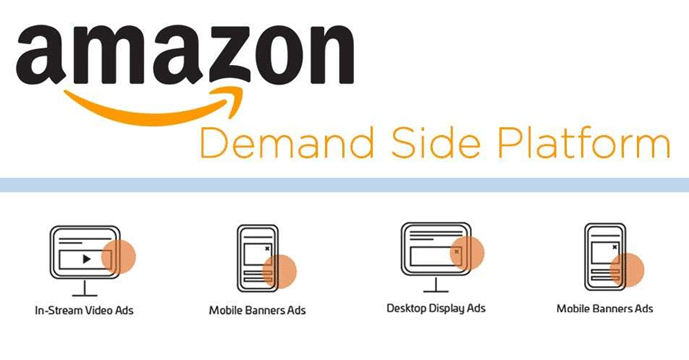
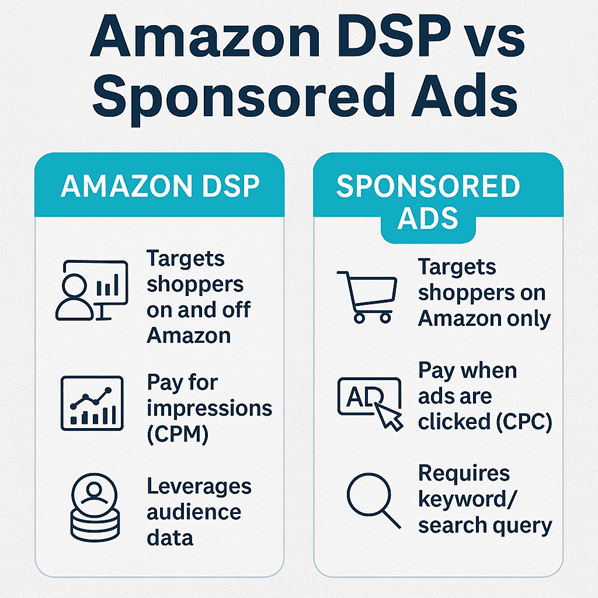
Amazon DSP (Demand-Side Platform) is a programmatic advertising solution that allows brands to purchase display, video, audio, and in-app ads both on and off Amazon.
DSP enables highly precise audience targeting. For example, advertisers can choose to show ads only to users in specific locations, such as a particular city, by bidding in real-time auctions when eligible users visit DSP-enabled sites.
Amazon DSP offers broad reach, with ad placements across Amazon search results, product pages, recommendation sections, and Amazon-owned sites like IMDB and Zappos, as well as third-party websites and apps.
This extensive placement network significantly increases brand visibility and audience exposure.
Amazon DSP Ad Formats
Amazon DSP supports a wide range of ad formats to meet various marketing objectives, including:
- Mobile banner ads
- Desktop display ads
- Mobile interstitial ads
- Text and image ads
- Streaming and in-stream video ads
Video ads allow brands to reach large audiences through platforms like Amazon Prime Video, Fire TV, and Twitch, potentially reaching over 100 million viewers.
Studies show that brands using streaming ads often experience higher purchase intent and conversion rates.
Amazon DSP also supports audio advertising, enabling brands to serve 10–30 second audio ads to users streaming music or podcasts through Alexa-enabled devices. This expands reach to audiences who may not be actively using screens.
Pros and Cons of Amazon DSP
Pros of Amazon DSP
Amazon DSP provides access to advanced audience targeting, including viewers, purchasers, and lifestyle-based segments, with customizable look-back windows ranging from 90 to 365 days.
Advertisers have full creative control, allowing them to run custom display and video ads tailored to specific audiences.
DSP enables pixel-based retargeting, allowing brands to re-engage shoppers who have previously interacted with their own websites.
Unlike Sponsored Display ads, DSP can drive traffic to external websites, including direct-to-consumer (DTC) stores.
Multiple optimization controls are available, including bid adjustments, frequency caps, and supply bidding.
DSP also allows advertisers to track conversions for specific ASINs, providing deeper insights into purchase behavior.
Cons of Amazon DSP
DSP generally requires a higher financial commitment, making it less accessible for smaller brands.
Campaign setup and management can be complex, especially for advertisers unfamiliar with programmatic advertising.
DSP is managed through a separate console, requiring additional learning and workflow adjustments. Products with low traffic may struggle to generate strong returns through DSP campaigns, as higher volume is often needed for effective optimization.
Key Differences Between Amazon DSP and Sponsored Display Ads
While both ad formats help brands expand their reach, several important differences set them apart.
Brand Eligibility and Traffic Destination
Sponsored Display ads always drive traffic back to Amazon listings, even when shown off Amazon.
Amazon DSP offers flexibility by sending traffic either to Amazon product pages or external websites, making it ideal for brands that don’t sell directly on Amazon.
Cost Structure
Sponsored Display ads use a CPC (pay-per-click) model, where advertisers pay only when users click.
Amazon DSP follows a CPM (cost-per-thousand impressions) model, focusing more on visibility and reach.
Minimum Investment
Sponsored Display ads have a low daily minimum spend, making them accessible to nearly all advertisers.
Amazon DSP typically requires significantly higher monthly investment to unlock advanced features and reporting.
Creative Control
Sponsored Display ads use automated creatives with limited customization.
Amazon DSP allows full creative customization and precise placement control across websites, apps, and streaming platforms.
Audience Targeting
Sponsored Display offers basic targeting based on interests, products, and shopping behavior.
DSP provides advanced targeting options, including demographics, lifestyle segments, lookalike audiences, remarketing, and custom audience creation.
Brand Safety
Amazon DSP includes brand protection tools that prevent ads from appearing in unsuitable environments.
Sponsored Display ads do not offer advanced brand safety controls.
Learning Curve
Sponsored Display ads are beginner-friendly and easy to manage.
Amazon DSP has a steeper learning curve and requires deeper knowledge of programmatic advertising strategies.
Choosing the Right Platform for Your Product Category
The right choice depends on your product type and marketing goals.
Niche products targeting specific audiences may benefit more from Amazon DSP, as it enables off-Amazon discovery and brand building.
Frequently purchased items, such as household or grocery products, often perform well with Sponsored Display retargeting, keeping brands visible during repeat buying cycles.
Final Thoughts
There is no universal advertising strategy that works for every brand. The key is understanding your objectives, audience behavior, and competition, then adjusting campaigns based on performance data.
Whether you choose Sponsored Display, Amazon DSP, or a combination of both, aligning the platform with your business goals will lead to stronger results over time.