Amazon PPC cost can quickly get out of hand if campaigns aren’t planned, monitored, and optimized properly. Every bid you place, every click you pay for, and every hour your ads run contributes to your overall spend. Without a clear strategy, your advertising costs can easily control you instead of the other way around.
Effective PPC success isn’t only about how much you spend, it’s about how strategically your budget is divided and managed.
Take a real-world campaign example from a growing nutrition brand. By dedicating only 30% of the total ad budget to in-market shoppers, recent searchers, and remarketing audiences, the brand was able to increase top-of-funnel visibility without overspending. The result was an ACoS that stayed below 12% while reach and performance continued to improve.
That’s the key difference between simply running ads and actively optimizing PPC costs.
Understanding Amazon PPC cost management is essential because it directly impacts profitability and return on investment—whether you’re scaling an established Amazon brand or launching your very first campaign.
From bid strategies and keyword segmentation to campaign structure and automation, this guide breaks down how to optimize Amazon PPC costs without compromising results.
Understanding Your Amazon PPC Daily Budget
At first glance, Amazon PPC budgeting seems simple. You set a daily limit and stick to it. But if that limit is set incorrectly, it can quietly sabotage your entire campaign.
Your Amazon PPC daily budget represents the maximum amount you’re willing to spend on ads within a single day.
When that budget runs out too early, your ads stop showing. That means lost impressions, missed sales opportunities, and stalled momentum. To avoid this, many sellers rely on PPC cost calculators to help balance visibility with profitability.
Your daily budget isn’t just a spending cap. It’s a strategic lever that determines how effectively your ads can compete throughout the day.
Now that we’ve covered budgeting, let’s take a step back and look at what you’re actually paying for.
What Is Amazon PPC Cost?
Amazon PPC cost refers to the price you pay every time a shopper clicks on your ad. This cost is not fixed and varies depending on several factors.
Amazon operates a real-time auction system. Your advertising cost is influenced by how much other sellers are bidding on the same keywords. In competitive categories, CPCs tend to rise. In lower-competition niches, advertisers often benefit from reduced costs.
However, clicks alone don’t guarantee results. High PPC costs with low conversions usually indicate issues with targeting, bidding, or campaign structure. That’s why experienced sellers often rely on advanced analytics and performance modeling to evaluate whether their spend is actually generating profitable returns.
How Much Does Amazon PPC Cost in Practice?
The actual cost of Amazon PPC varies widely by category.
In most industries, average cost-per-click falls between $0.70 and $3.00. However, in highly competitive spaces like supplements or consumer electronics, CPCs can easily exceed $5 per click. On the other hand, niche categories such as handmade goods or sustainable stationery often experience CPCs closer to $0.50–$1.00.
Even with a reasonable daily budget, poor campaign structure, inefficient placements, or lack of spending controls can result in significant budget leaks.
Frequent “out-of-budget” warnings, erratic visibility, and rising management costs are all signs that spending is happening without strategic scaling.
Ultimately, Amazon PPC cost reflects how efficiently your campaigns are designed to compete and convert.
Key Amazon PPC Metrics That Influence Cost
To properly estimate and control Amazon PPC costs, sellers must monitor the following metrics:
- CPC (Cost Per Click): Measures how much you pay for each click
- CTR (Click-Through Rate): Indicates how engaging your ads are
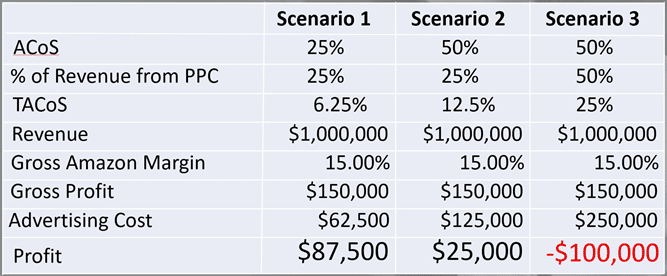
- ACoS (Advertising Cost of Sales): Evaluates ad efficiency
- TACoS: Measures overall advertising impact on total revenue
- CVR (Conversion Rate): Shows how well clicks turn into orders
- Break-Even ACoS: Defines the maximum sustainable ad spend
- Impressions: Tracks ad visibility
- ROAS: Measures return from ad spend
- Spend: Total investment in advertising campaigns
Each of these metrics plays a critical role in identifying inefficiencies and optimizing long-term advertising performance.
Key Factors That Affect Amazon PPC Costs
1. Keyword Competition & Market Demand
Keyword competition is one of the biggest drivers of PPC cost. High-demand categories often experience inflated bid prices due to aggressive competition.
Long-tail and highly specific keywords usually cost less and deliver better conversion rates when used strategically.
2. Bid Amounts & Match Types
Your bid directly impacts ad visibility. Higher bids increase placement potential but also raise costs, while overly low bids limit impressions.
For example, bidding far below the competitive average may keep costs low but severely restrict exposure, leading to stagnant sales.
Match types also matter. Broad match can drive discovery but risks irrelevant clicks. Phrase and exact match offer tighter control but less reach. Larger brands often leverage broad match for visibility-focused objectives, while smaller sellers prioritize efficiency.
3. Listing Quality & Relevance
Amazon favors ads that lead to positive shopper experiences. Optimized product listings with relevant keywords, strong visuals, competitive pricing, and good reviews improve ad performance and can reduce CPC over time.
Poor relevance or weak listings often lead to higher costs and lower returns.
4. Conversion Rate & Pricing Strategy
A low conversion rate means you’re paying for clicks that don’t generate revenue, increasing acquisition costs.
Competitive pricing and optimized listings improve conversion rates, allowing you to sustain profitability even at higher bids.
5. Campaign Structure & Targeting Precision
Poorly structured campaigns waste budget. Mixing unrelated keywords and products in a single campaign reduces clarity and performance.
Segmenting campaigns by intent, product category, or keyword themes helps identify what works and prevents budget drain. Limiting the number of targets per campaign ensures fair budget distribution and consistent testing.
6. Budget Caps & Spending Pacing
Oversized budgets without performance oversight often lead to wasted spend. The key is pacing—allocating budget based on shopper activity, peak hours, and demand cycles rather than constant spending.
7. Seasonality & Market Shifts
Major shopping events like Prime Day or seasonal trends significantly impact PPC costs. Increased competition during peak periods drives CPCs higher, even in well-optimized accounts. External factors such as supply chain changes, new competitors, or viral trends can also disrupt cost projections.

What Should Define Your Amazon PPC Costs?
Your advertising goals should determine how much you’re willing to spend.
- Brand Awareness: Higher costs due to premium placements
- Conversions: Investment in high-intent keywords
- Customer Loyalty: Lower long-term costs through remarketing and repeat purchases
Aligning PPC costs with clear objectives leads to more predictable and sustainable growth.
Amazon Ad Types & Budget Allocation
Why Sponsored Products Deserve Most of Your Budget
Sponsored Products should account for nearly 80% of your PPC spend. They provide the greatest control, the widest placements, and the strongest conversion potential.
The remaining budget can be allocated to Sponsored Brands and Sponsored Display campaigns for visibility and retargeting support.
Sponsored Product CPCs can range from a few cents to $10+, depending on category and competition.
How to Maximize Amazon PPC Cost Efficiency
Amazon PPC costs grow fast, so efficiency matters.
A full-funnel approach—combining conversion-focused ads with awareness and retargeting—creates a more sustainable growth loop. Beyond direct sales, PPC also supports organic rankings and long-term visibility.
Successful brands focus on redirecting spend to what performs best, maintaining profitability while scaling.
Final Thoughts
Amazon PPC cost will always fluctuate, but it doesn’t have to feel unpredictable. When monitored and optimized correctly, ad spend becomes a strategic lever rather than a risk.
The most successful brands aren’t always spending more—they’re spending smarter, adapting faster, and making data-backed decisions. Intentional spending is what protects margins while driving growth.
With the right strategy, Amazon PPC becomes an engine for scalable, profitable success.