
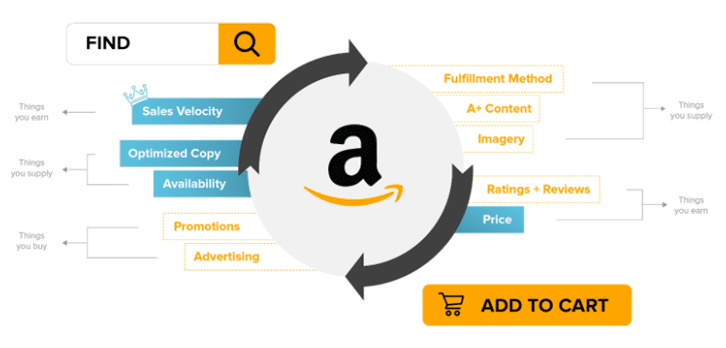
As competition on Amazon continues to intensify, getting your product listing in front of potential buyers has become increasingly challenging. Generating consistent sales is no longer as simple as launching a product and waiting for orders to arrive by amazon sales velocity.
One of the most important factors that influences how products rank on Amazon is sales velocity. Amazon’s algorithm pays close attention to how quickly and consistently a product sells when determining its position in search results.
Beyond rankings, higher sales velocity can also trigger positive signals within Amazon’s system. Products that sell quickly may earn badges such as the Best Seller badge, even if they don’t yet have a large number of reviews.
In this guide, we’ll explore practical strategies that can help sellers increase their sales velocity and improve overall performance on Amazon.
Maximize Conversions with Long-Tail Keywords
Many Amazon sellers overlook valuable keyword opportunities.
While it’s common to identify hundreds of keywords during product research, there are often many more relevant keywords available—especially long-tail keywords that are closely related to the main search terms.
These keywords tend to be more specific and targeted. Although they usually have lower search volume, they often convert better because shoppers using them already know what they’re looking for.
Finding and integrating these highly targeted keywords into your listing can significantly improve visibility and conversion rates.
Double Your Product Visibility with Optimized Listings
When browsing Amazon listings, it’s easy to notice common problems such as poorly written copy, spelling mistakes, excessive keyword stuffing, and descriptions that are difficult to read.
Correcting these basic listing issues is one of the fastest ways to improve performance and increase sales velocity.
In addition to fixing errors, sellers should focus on fully optimizing their listings with the following best practices.
Start by identifying high-converting keywords and naturally incorporating them throughout your listing title and description. This improves both search visibility and conversion potential.
Your product title should be detailed and informative. Ideally, it should include the brand name, product type, main keyword, key specifications, and possible use cases.
For example, a product title might look like this:
“NYC Chic Glow Tinted Lip Balm – Nude Radiance Infusion – Vitamin-Enriched Hydration – Subtle Luster Finish”
Next, create persuasive and informative bullet points that clearly explain your product’s features, benefits, and unique selling proposition (USP). These bullet points should also include relevant keywords without compromising readability.
If you are a registered brand owner, consider using Enhanced Brand Content (EBC) or A+ Content. These tools allow you to include visuals, additional text sections, comparison charts, and videos, helping shoppers better understand your product and increasing engagement.
Get More Clicks with High-Quality Product Images
For many shoppers, product images play a major role in the purchasing decision.
Because of this, it’s essential that your product photos are both visually appealing and clearly represent the item being sold.
Although sellers can take their own product photos, working with a professional product photographer can help create images that stand out from competing listings.
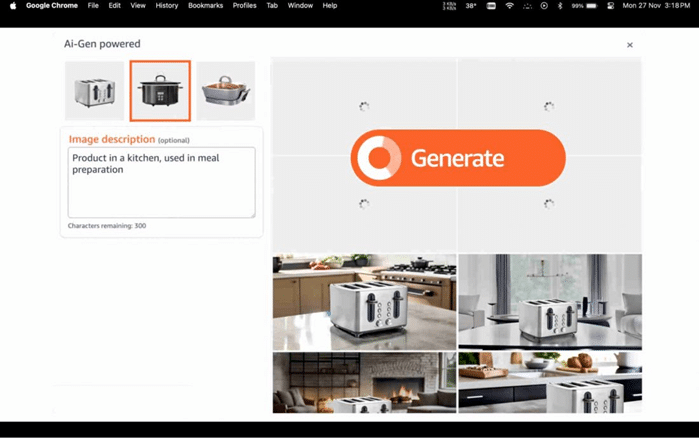
Additionally, Amazon has introduced an AI image generation tool that helps sellers produce professional-looking product images quickly and efficiently, even without advanced photography skills.
Win the Buy Box with Competitive Pricing
With numerous sellers offering similar products, pricing becomes a critical factor in improving conversion rates and winning the Buy Box.
From a shopper’s perspective, price often plays a major role—especially for everyday products that are not considered high-value purchases.
When multiple sellers offer similar items, many buyers naturally choose the option with the most attractive price.
For this reason, it’s important to monitor competitor pricing and keep your product competitively priced within the category.
However, pricing too low can also be risky. Extremely low prices may cause shoppers to question the product’s quality.
The goal is to maintain a price that remains competitive while still reflecting the product’s value and quality.
Build Customer Trust with More Reviews
Customer reviews are one of the most influential factors in converting shoppers into buyers.
Research shows that many customers read several reviews before deciding to purchase a product.
If your listing has very few reviews, you can explore Amazon programs designed to help new products gain early feedback.
For example, the Amazon Vine Program invites experienced reviewers to evaluate products and share detailed feedback with other shoppers.
Programs like this help new listings gather initial reviews, which can significantly improve trust and conversion rates.
However, sellers must always follow Amazon’s review policies. Reviews must remain honest and unbiased, and sellers should never attempt to manipulate feedback or request only positive reviews.
Violating review guidelines can lead to serious consequences, including account suspension.
Create Urgency with Promotions and Discounts
Promotions and discounts can be powerful tools for increasing sales velocity.
Offering incentives encourages customers to purchase sooner and sometimes even spend more per order.
For example, sellers can provide free shipping when customers spend above a certain amount, such as $50 or $100.
Another effective strategy is offering bundle deals or bulk discounts. Offers such as “buy one, get one free” or percentage discounts for larger orders can attract more buyers.
Encouraging customers to add complementary items to their cart can also increase the average order value. Accessories, add-ons, and related products often work well for this purpose.
Rewarding repeat customers with loyalty incentives such as points, cashback, or special offers can further increase customer retention and long-term sales.
Optimize Inventory to Improve Advertising Efficiency
Advertising plays a major role in driving Amazon sales. In many cases, the sellers who can afford to invest more in advertising gain greater visibility.
However, effective inventory management can help you maximize your advertising budget while still maintaining strong profit margins.
One key strategy is carefully monitoring inventory levels and sales trends. This helps avoid both overstocking and stockouts, which can negatively affect sales and increase storage fees.
Planning inventory orders in advance and selecting cost-effective shipping methods can also reduce operational costs.
By managing inventory efficiently, sellers can allocate more budget toward advertising and growth initiatives.
Re-Engage Shoppers with Retargeting Ads
When launching a new brand or entering a new market, many shoppers may not immediately recognize or trust your product.
Often, potential customers need to see a brand multiple times before making a purchase.
Retargeting campaigns can help achieve this by displaying ads to shoppers who have previously viewed or interacted with similar products.
These campaigns typically deliver higher returns because they target audiences who already show interest in related products.
Improve Listings Through A/B Testing
In eCommerce, even small adjustments can lead to meaningful improvements in performance.
Elements such as the product title, bullet points, images, and layout can all influence how shoppers interact with your listing.
The most reliable way to determine what works best is through A/B testing.
By testing different versions of a listing element while keeping everything else consistent, sellers can identify which variation performs better.
For example, you might test two different product titles. Run one version for a set period, then replace it with another version while maintaining the same advertising strategy.
Afterward, analyze metrics like click-through rate (CTR) to determine which title generates better results.
Testing each element individually allows you to gradually improve listing performance and increase sales over time.
Enhance Customer Experience with Fulfilled by Amazon (FBA)
Using Fulfilled by Amazon (FBA) can significantly improve the customer experience while also increasing product visibility.
Products fulfilled by Amazon often receive better placement in search results compared to merchant-fulfilled listings.
FBA also offers several additional benefits.
First, it provides faster delivery options through Prime shipping, which helps shorten the buying decision process.
Second, sellers can take advantage of Amazon’s negotiated shipping rates, often lowering logistics costs.
Third, Amazon handles customer service tasks such as returns, refunds, and exchanges, ensuring a smoother shopping experience.
FBA also allows sellers to store inventory within Amazon’s extensive fulfillment network, eliminating many storage and logistics challenges.
Finally, FBA opens the door to additional programs and global marketplaces that can expand a seller’s reach.
Drive External Traffic to Your Amazon Listings
External traffic can significantly improve both brand awareness and sales.
Many consumers discover new products through social media platforms, making them powerful marketing channels.
Running paid ads on social media can drive targeted traffic directly to your Amazon listings without competing with other products in Amazon search results.
Additionally, Amazon encourages sellers to bring external traffic to its marketplace, which can positively influence organic rankings.
With tools like Amazon Attribution, sellers can measure the effectiveness of their external marketing campaigns and optimize them based on real performance data.
Beyond paid social ads, several other strategies can help generate external traffic.
Email marketing allows sellers to nurture relationships with potential customers by sending promotions, product recommendations, and special offers.
Content marketing helps build brand awareness while driving organic traffic through blogs, guides, and educational content.
Influencer collaborations are another effective approach. Partnering with micro-influencers can help brands reach new audiences and improve credibility without requiring a large marketing budget.
Final Thoughts
Increasing sales is the ultimate goal for every Amazon seller.
The good news is that there are numerous strategies available to help boost your product’s performance and sales velocity.
By implementing the tactics outlined in this guide—such as optimizing listings, improving product images, managing inventory effectively, and leveraging advertising—you can create stronger momentum for your products.
Consistent sales growth not only improves your product rankings but also strengthens your brand’s presence within the Amazon marketplace.
With the right strategy and continuous optimization, sellers can steadily expand their reach, increase conversions, and build long-term success on Amazon.