
Unless someone has completely stayed away from technology for the last few years, they have likely heard about artificial intelligence at some point.
In 2026, AI has become deeply integrated into everyday life. From smart home devices to advanced security systems, artificial intelligence is influencing nearly every aspect of how people interact with technology.
When it comes to e-commerce, AI is playing a major role in transforming how businesses operate and serve their customers.
For example, several online retail platforms have started acquiring AI-driven applications to improve personalization and build more immersive shopping experiences.
Large retail companies are also investing in technologies such as virtual fitting rooms powered by AI and computer vision. These tools allow shoppers to see how clothing might look on different body types, giving them more confidence when buying online.
If you’re reading this article, chances are you’re exploring ways to improve your e-commerce business by leveraging the power of artificial intelligence.
This guide explains the advantages of AI in e-commerce and why it has become a game-changing technology for both businesses and online shoppers.
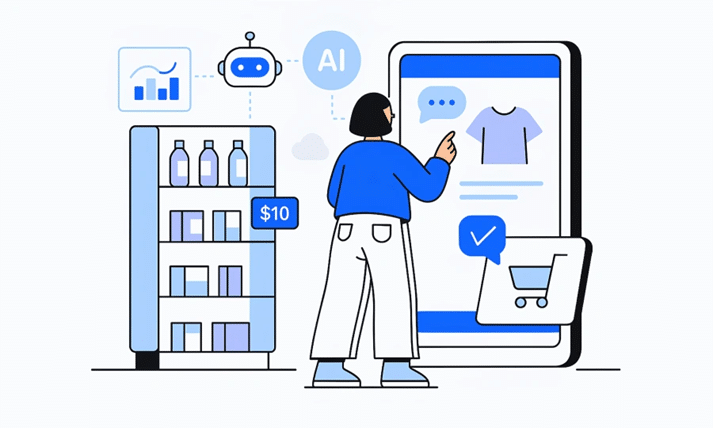
How AI Is Transforming E-commerce
The world of online retail continues to evolve rapidly, and artificial intelligence is at the center of this transformation. Businesses are now using AI to automate operations, improve customer experiences, and analyze large volumes of data more efficiently.
From AI-generated product images and automated content creation to intelligent testing tools that optimize software performance, artificial intelligence is quickly becoming a fundamental part of modern e-commerce.
Major online marketplaces are already using AI to strengthen their competitive advantage and streamline operations.
For instance, AI-powered voice assistants help platforms understand customer preferences and deliver personalized product recommendations. Research suggests that recommendation systems can contribute to a significant portion of total sales on large e-commerce platforms.
Similarly, many global marketplaces rely on AI-driven assistants and chatbots to handle customer inquiries. These systems can automatically respond to a vast number of written or spoken queries, improving efficiency while reducing the workload for human support teams.
AI is also widely used for product recommendations, enhanced search functionality, and optimized delivery routes.
Smart logistics systems powered by AI can reduce transportation distances and improve delivery efficiency, which ultimately lowers operational costs.
Some online marketplaces have even implemented AI-based shopping assistants that help customers find products through voice commands, text queries, or even uploaded images.
Benefits of Using Artificial Intelligence in E-commerce
Imagine an online store where the products displayed are perfectly aligned with your preferences and past purchases.
Or think about receiving product suggestions that match your taste so accurately that they feel almost intuitive.
This level of convenience is no longer a futuristic idea. With the rapid integration of AI into online retail, personalized and efficient shopping experiences have become a reality.
Artificial intelligence is reshaping the way people shop online by delivering greater speed, personalization, and convenience.
Below are some of the most impactful ways AI is improving the e-commerce experience.
Customized Visual Search Experiences
In the past, many shoppers found online product searches frustrating because results were often irrelevant.
Artificial intelligence is changing this by enabling visual search technology.
With AI-powered image recognition, customers can simply upload a photo of a product they like, and the system will display similar items available in the store.
For example, if a shopper notices someone wearing stylish shoes, they can take a picture and upload it to an online store’s search tool.
The AI system will then analyze the image and present visually similar products that the customer can browse and purchase.
This technology simplifies the shopping process and helps customers find products faster.
Improved Product Visuals
One of the biggest frustrations in online shopping occurs when the product received does not match the images shown on the website.
AI tools are helping sellers present products more accurately and attractively.
Using AI-powered image generation and editing tools, businesses can create high-quality visuals that include close-ups, lifestyle images, and interactive product displays.
These technologies allow sellers to automatically generate product images that showcase items in realistic settings, helping customers better understand how the product looks in real life.
The result is a more engaging shopping experience and fewer customer disappointments after delivery.
Smarter Retargeting Strategies
Retargeting plays a crucial role in converting potential customers who leave a website without completing a purchase.
Many e-commerce companies collect large amounts of customer data, but analyzing this data manually can be difficult.
Artificial intelligence simplifies this process by analyzing user behavior and identifying patterns that indicate purchase intent.
AI systems can then automatically deliver personalized ads or offers to customers who are most likely to return and complete their purchase.
This helps businesses focus their marketing efforts on high-value prospects while improving overall conversion rates.
Enhanced Customer Personalization
Providing personalized experiences has become a top priority for many brands.
Studies show that a large percentage of consumers prefer shopping with companies that offer customized experiences based on their interests and preferences.
Artificial intelligence makes this possible through conversational marketing and intelligent recommendation systems.
Chatbots and AI-driven assistants can interact with customers, answer questions, and recommend products based on their needs.
These personalized interactions strengthen customer relationships and increase engagement with the brand.
Additionally, businesses can use AI to analyze customer preferences and develop targeted campaigns that resonate more effectively with their audience.
Detecting and Filtering Fake Reviews
Online reviews have a strong influence on purchasing decisions, with most shoppers relying on them before buying a product.
However, fake reviews remain a major challenge for online marketplaces.
Artificial intelligence helps address this problem by identifying suspicious patterns in ratings and reviews.
AI systems analyze factors such as verified purchases, review timing, user behavior, and engagement metrics to detect potentially fraudulent feedback.
By filtering fake reviews, online platforms can maintain trust and ensure customers are making decisions based on authentic experiences.
Automated Inventory Management
Artificial intelligence is also transforming how online retailers manage their inventory.
With AI-driven analytics, businesses can study sales trends, seasonal demand patterns, and customer behavior to predict future product demand.
These insights help companies maintain optimal inventory levels and avoid both overstocking and stock shortages.
AI can also automate warehouse operations and improve logistics planning, reducing human workload and increasing operational efficiency.
As a result, businesses can deliver products faster while minimizing unnecessary costs.
AI-Powered Marketing Campaigns
Creating marketing campaigns that truly resonate with audiences can be challenging and time-consuming.
Artificial intelligence helps marketers develop more effective campaigns by analyzing audience data and predicting customer behavior.
AI tools can automatically optimize advertising strategies, adjust targeting parameters, and generate campaign performance reports.
This allows marketers to create personalized campaigns that deliver stronger engagement and higher return on investment.
Real-Time Pricing Optimization
Setting the right price for a product is often complicated because many factors must be considered.
These include competitor pricing, production costs, shipping expenses, and customer demand.
Artificial intelligence simplifies this process through a strategy known as dynamic pricing.
AI systems continuously monitor market conditions and automatically adjust product prices to remain competitive.
For example, if competitor inventory runs low, the algorithm may increase the price slightly to maximize profit.
Conversely, prices can decrease when competition becomes more intense.
Dynamic pricing helps businesses maintain profitability while remaining attractive to customers.

Fighting Counterfeit Products
Counterfeit goods have become a serious problem in the global e-commerce industry.
In many cases, fake products appear identical to genuine items in online listings, making them difficult for customers to detect before purchase.
Artificial intelligence helps address this issue through advanced technologies such as computer vision and deep learning.
These systems analyze product images, patterns, textures, and other details to identify subtle differences between genuine and counterfeit products.
AI-based anti-counterfeiting initiatives also use large datasets and machine learning models to identify suspicious listings and remove them from online marketplaces.
This protects both customers and legitimate sellers from fraudulent activity.
Final Thoughts
Artificial intelligence is rapidly becoming one of the most important technologies in the e-commerce industry.
From automating repetitive tasks to creating highly personalized customer experiences, AI offers powerful tools that can significantly improve business performance.
It can assist with everything from product recommendations and marketing campaigns to inventory management and counterfeit detection.
Generative AI tools are also opening new opportunities for businesses to interact with customers in smarter and more engaging ways.
Adopting new technology can feel overwhelming at first. However, in the fast-moving world of online retail, businesses that embrace innovation are far more likely to stay competitive.
By integrating AI into their operations, e-commerce brands can unlock new growth opportunities and deliver better experiences for their customers.