
Running Amazon PPC campaigns is one of the most effective ways to boost sales, increase product visibility, and strengthen organic rankings on Amazon.
However, one crucial question often gets overlooked: how much should you spend on ads before you actually start making money?
This is where break-even RoAS (Return on Ad Spend) becomes essential.
While standard RoAS shows how much revenue your ads generate, break-even RoAS goes a step further by factoring in your profit margins. This gives you a clearer picture of whether your campaigns are genuinely profitable or quietly draining your budget.
To help you make data-driven decisions, this guide breaks down how Amazon break-even RoAS works and how you can calculate it to build profitable ad campaigns—without guesswork.
What Is RoAS and Why Does It Matter?
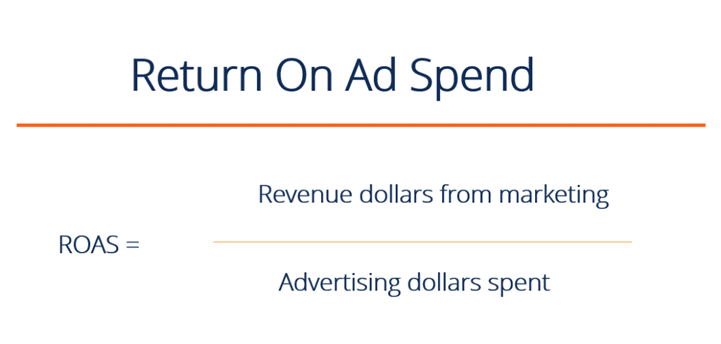
RoAS, or Return on Advertising Spend, measures how much revenue you earn for every dollar spent on advertising.
It’s a core metric for evaluating ad performance, estimating campaign revenue, and deciding when to optimize or scale your Amazon PPC efforts.
A higher RoAS generally indicates stronger ad efficiency, but it doesn’t always mean higher profitability—especially if costs aren’t considered.
How to Calculate RoAS
The basic formula for calculating RoAS is:
RoAS = Total Ad-Attributed Sales ÷ Total Ad Spend
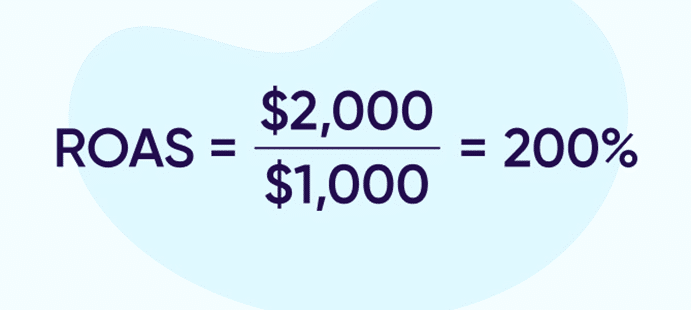
For example, if your Amazon ads generate $20,000 in sales in a month and you spend $5,000 on advertising, your RoAS would be:
RoAS = $20,000 ÷ $5,000 = 4
This means you earn $4 in revenue for every $1 spent on ads.
Advanced RoAS Calculation Formula
There’s also a more detailed way to estimate RoAS using performance metrics:
RoAS = (Average Order Value × Conversion Rate) ÷ Cost Per Click
For instance, if:
- Average Order Value = $50
- Conversion Rate = 5%
- Average CPC = $1
Then:
RoAS = ($50 × 0.05) ÷ $1 = 2.5
This means each advertising dollar generates approximately $2.50 in revenue.
Why RoAS Alone Doesn’t Tell the Full Story
RoAS focuses solely on revenue, not profit.
For example, if your RoAS is 2.5, it might look profitable at first glance. But if your profit margin is only 25%, that tells a different story.
On a $50 sale, a 25% margin means you earn just $12.50 in profit. To recover $100 in ad spend at this margin, you’d need $400 in revenue—without making any actual profit.
This highlights why calculating RoAS without profit margins is misleading and why break-even RoAS is so important.
What Is Break-even RoAS on Amazon?
Break-even RoAS identifies the minimum return you need from ads to cover all costs without losing money.
Unlike basic RoAS, it accounts for product costs, Amazon fees, and other expenses. This helps sellers understand how ad spend impacts true profitability.
To calculate it, you first need to determine your profit before advertising.
Calculating Profit Before Advertising
Use this formula:
Profit Before Advertising = Selling Price − Cost of Goods Sold (COGS)
For example:
- Selling Price = $50
- COGS = $20
Profit Before Advertising = $30
If you spend $10 on ads to generate one sale, you still earn $20 in profit.
If ad costs rise to $30 per sale, your profit becomes zero—this is your break-even point.
How to Calculate Break-even RoAS
Once you know your break-even advertising cost, use this formula:
Break-even RoAS = Product Sale Price ÷ Break-even Ad Cost
Using the previous example:
Break-even RoAS = $50 ÷ $30 = 1.67
This means you must earn at least $1.67 in revenue for every $1 spent on ads to avoid losses.
ACoS vs. RoAS: What’s the Difference?
RoAS and ACoS (Advertising Cost of Sale) are closely related but measure performance from opposite perspectives.
- RoAS shows how much revenue you generate per advertising dollar.
- ACoS shows how much you spend on ads to generate one dollar of revenue.
For example:
- $100 ad spend generates $500 in sales
- ACoS = 20%
- RoAS = 5
If sales increase to $700 with the same ad spend, ACoS drops to 14.2%, while RoAS rises to 7—indicating better ad efficiency.
Why Break-even RoAS Is So Valuable
Knowing your break-even RoAS helps you make confident advertising decisions.
- If your campaign RoAS is above break-even, the campaign is profitable and worth scaling.
- If it’s equal to break-even, you may need to optimize bids, keywords, or costs.
- If it’s below break-even, you’re losing money and should pause or refine the campaign.
That said, a low RoAS isn’t always negative—especially for brand awareness or product launches.
When a Low RoAS Can Still Make Sense
There are situations where running ads below break-even RoAS can be strategic.
For example:
- Increasing impressions and brand visibility
- Launching new products
- Gaining reviews
- Building long-term customer relationships
If advertising leads to repeat purchases, the long-term return may outweigh short-term losses.
How Customer Lifetime Value (CLV) Impacts RoAS
Customer Lifetime Value (CLV) represents the total revenue a customer generates over time.
On Amazon, repeat purchases are common, making CLV especially important when evaluating ad performance.
Spending more to acquire the first customer can be justified if it leads to multiple future purchases.
Ignoring CLV when analyzing RoAS can cause sellers to undervalue high-potential campaigns.
Calculating CLV-Adjusted Break-even RoAS
Consider this scenario:
You spend $10 on ads to generate a $20 sale—resulting in a RoAS of 2.
But if the customer makes five additional purchases later, total revenue becomes $100 from the same ad spend.
Now, your effective RoAS becomes 10.
To calculate CLV:
CLV = Average Order Value × Number of Orders × Retention Period
Then calculate CLV-adjusted RoAS:
CLV-Adjusted RoAS = CLV ÷ Total Ad Spend
This approach gives a much clearer picture of long-term profitability.
Final Thoughts
Break-even RoAS is a powerful metric for Amazon sellers who want to run profitable and sustainable ad campaigns.
It helps you:
- Control ad spend
- Identify winning products
- Reduce unnecessary losses
- Scale campaigns with confidence
By combining break-even RoAS with CLV insights, you can move beyond short-term results and build a stronger, more profitable Amazon business over time.