
If there is one company that has consistently pushed the boundaries of retail analytics, it is Amazon.
Amazon has developed highly sophisticated systems for analyzing customer behavior, product performance, purchasing patterns, and sales activity.
The company initially relied on basic analytics, such as traffic monitoring and straightforward tracking tools that helped beginners understand website activity.
Today, Amazon provides much more advanced analytics capabilities through detailed reporting systems and extensive business data.
In this guide, we will explore Amazon Retail Analytics, explain the differences between ARA Basic and ARA Premium, and examine how these reporting tools can help Amazon Vendors make better business decisions.
ARA Basic and ARA Premium
In retail, knowing how many customers visit your products is only one part of understanding performance.
Amazon tracks a much broader range of information, including orders, revenue, average order value, purchasing patterns, and products that may generate lower margins.
Some products available on Amazon may not be particularly profitable when sold individually. However, they can still be valuable when purchased alongside other products.
Amazon can continue offering these products because they may encourage repeat purchases, increase basket sizes, and generate additional revenue that offsets storage, shipping, and other operational costs.
By analyzing customer and sales data, Amazon can identify opportunities to reduce abandoned purchases, encourage customers to return, promote complementary products, and introduce shoppers to newly launched items.
These insights ultimately help businesses understand their customers and potentially improve conversion rates.
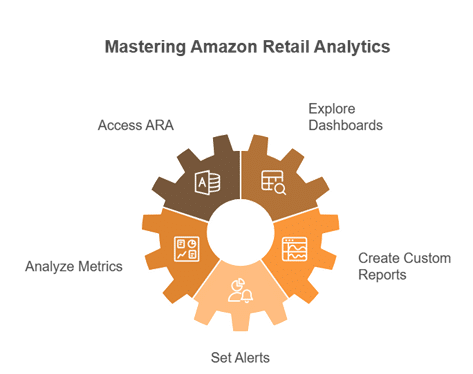
For Amazon Vendors, one of the primary reporting systems available through Vendor Central is Amazon Retail Analytics.
Vendors with the appropriate access can use Amazon Retail Analytics to monitor important areas of their business, including sales performance, inventory levels, operational issues, stock availability, catalog quality, and other key metrics.
The specific reports available to a vendor depend on their permissions and the terms of their agreement with Amazon.
While Amazon Retail Analytics may not provide the same level of data available to some third-party sellers, the reports can still offer valuable information for understanding product performance and identifying areas that may require attention.
Amazon Retail Analytics is available within Vendor Central under Reports → Amazon Retail Analytics, where vendors may have access to either the Basic or Premium reporting options.
What Is Amazon Retail Analytics Basic?
Amazon Retail Analytics Basic is the standard reporting solution available to Amazon Vendors. Eligible vendors can access these reports through their Vendor Central account.
Sales and Inventory Reports
Amazon Retail Analytics Basic includes several sales and inventory reports covering different reporting periods.
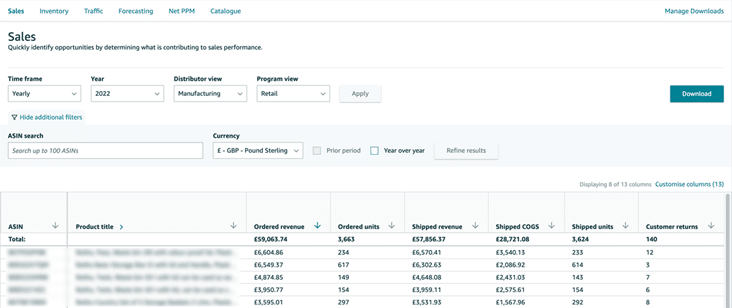
The Sales & Inventory Dashboard provides an overview of important metrics, including Shipped Cost of Goods Sold (COGS) and inventory currently held by Amazon.
The dashboard allows vendors to review information across four primary timeframes: year-to-date, quarter-to-date, month-to-date, and week-to-date.
Vendors can use this information to monitor shipped COGS, inventory quantities and values, as well as quantities associated with open purchase orders.
Another particularly useful report is the Sales and Inventory Product Details report.
This report provides sales and inventory information at the individual product level. Vendors can use it to identify their strongest-performing products and better understand which items are contributing to overall business growth.
Demand Forecast
The Demand Forecast report is designed to assist vendors with inventory planning.
It provides an estimate of the purchase orders a vendor may receive from Amazon based on several factors, including historical sales performance.
However, the forecast should not be considered a guaranteed order quantity.
Amazon’s estimates can change depending on customer demand, market conditions, inventory requirements, and other factors. Vendors should therefore use the report as a planning reference rather than a fixed prediction.
Catalog Report
The Vendor Catalog Listing report provides information about products that have been sold to Amazon and have received page views.
The report can organize products according to page-view performance, giving vendors a clearer picture of which listings are attracting customer attention.
This information can be useful when evaluating catalog performance and identifying listings that may need improvement.
For example, vendors can use the report to identify products with missing images or other catalog-related issues that could affect the quality of their product listings.
Operations Reports
Amazon Retail Analytics Basic also includes several Operations reports designed to provide greater visibility into purchasing and fulfillment performance.
These reports cover areas such as purchase orders, receiving, lead times, inbound defects, and fast-track in-stock performance.
Vendors can use the operational data to identify potential issues throughout the supply chain and better understand how their products are being handled and received.
Because these reports provide more detailed information about individual operational areas, they can help vendors identify recurring problems and areas that may require operational improvements.
What Is Amazon Retail Analytics Premium?
Amazon Retail Analytics Premium (ARA Premium) is an expanded reporting solution available to eligible Amazon Vendors through Vendor Central.
Compared with the standard reporting available through ARA Basic, Premium provides access to additional insights covering multiple aspects of customer and product performance.
These reports can include information related to:
- Customer behavior
- Sales performance
- Geographic performance
- Operations
- Market trends
- Customer reviews
For vendors looking to gain a broader understanding of their Amazon business, these additional data points can provide useful context around how products are performing and how customers interact with them.
How to Get Access to Amazon Retail Analytics Premium
There are different ways eligible vendors may obtain access to Amazon Retail Analytics Premium.
One option is through Amazon’s Vendor Premium Services package, which may involve a significant annual cost depending on the services and agreement involved.
Another possible route is to request access through a support case within Vendor Central.
Availability, pricing, and eligibility can vary, so vendors should confirm the current requirements directly through their Vendor Central account or Amazon representative.
ARA Premium can provide access to a broad selection of pre-formatted reports based on product categories and business needs.
Some examples include:
- Amazon Top 100 Search Terms
- Amazon Search Terms
- Sales Summary
- Category Sales
- Weekly Sales History
- Page Views and Conversion
- Competitive Category Comparison
- Top Amazon Items in Growth
Amazon Top 100 Search Terms Report
One of the potentially valuable reports within Amazon Retail Analytics Premium is the Amazon Top 100 Search Terms Report.
This report can provide information about popular search terms within Amazon categories across different markets.
The ranking of search terms is based on their popularity, allowing vendors to understand what shoppers are searching for within relevant product categories.
This type of information can help vendors identify customer search behavior and uncover potential opportunities for improving their product strategy.
Amazon Search Terms Report
The Amazon Search Terms Report can also be useful for understanding how customers discover products.
Vendors can use the report to examine search terms and identify the products receiving the highest number of clicks for particular searches.
This information can provide useful competitive insights and help vendors understand which products are gaining visibility for important search terms. When combined with other Amazon Retail Analytics reports, search-term data can contribute to a more complete picture of customer behavior, product visibility, and category performance.
How Vendors Can Use Amazon Retail Analytics Data
Amazon Retail Analytics provides vendors with data that can support a range of business decisions.
Sales reports can help identify high-performing products, while inventory reports can provide greater visibility into stock levels and purchasing requirements.
Search-term data can help vendors understand customer interests, while page-view and conversion information can highlight potential listing performance issues.
Operational reports can also help identify supply-chain challenges that may affect product availability or fulfillment.
Rather than looking at each report individually, vendors can combine different data points to identify broader trends.
For example, a product with high page views but relatively low sales may require a closer look at its listing, pricing, availability, or customer experience.
Similarly, strong sales combined with low inventory levels could indicate the need for better inventory planning.
Conclusion
Amazon Retail Analytics is not necessarily a complete solution for evaluating every aspect of an Amazon business, but it can provide vendors with valuable insights into sales, inventory, customer behavior, search activity, and operations.
ARA Basic offers essential reporting capabilities, while ARA Premium provides access to a wider range of detailed reports and market insights.
The real value of these reports comes from understanding how to interpret the information and turn it into practical business decisions.
For Amazon Vendors, learning how Amazon measures product performance and customer activity can make it easier to identify opportunities, address operational challenges, improve listings, and develop a more informed selling strategy.
Ultimately, the more effectively vendors understand their Amazon data, the better positioned they are to make informed decisions about their products and overall business performance.