
Over the years, Amazon has strengthened its position in the rapidly expanding e-commerce market. Its seller-focused solutions, including Fulfillment by Amazon (FBA) and Seller Fulfilled Prime (SFP), have encouraged millions of merchants worldwide to use the platform to reach more customers and grow their businesses. Alongside these services, Amazon has explored additional fulfillment solutions to make selling more efficient.
One such initiative was Amazon FBA Onsite, a program designed to combine selected advantages of Amazon’s fulfillment network with the convenience of storing inventory in a seller’s own warehouse. In this guide, we will explain the concept behind FBA Onsite, how it was designed to operate, and the potential benefits it offered to participating sellers.
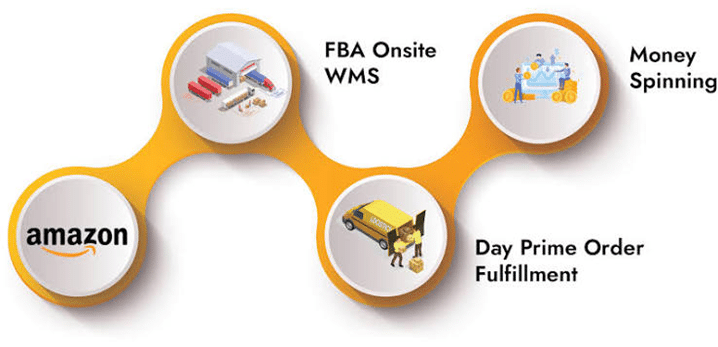
What Is Amazon FBA Onsite?
Amazon FBA Onsite was developed to help Amazon and its sellers manage fulfillment more efficiently. The program aimed to reduce some of the costs associated with traditional warehouse storage while helping sellers streamline order processing and delivery.
To understand how the program worked, it is useful to look at two existing Amazon fulfillment options: Fulfillment by Amazon and Seller Fulfilled Prime. Both provide ways for sellers to manage customer orders, but they operate differently when it comes to inventory storage, shipping, and logistics.
Understanding Amazon FBA and Seller Fulfilled Prime
For many Amazon sellers, gaining the Prime badge on eligible product listings is an important business goal. The badge identifies products that qualify for Prime benefits, which can include fast shipping and convenient returns. These benefits may make listings more appealing to customers who value a reliable and speedy shopping experience.
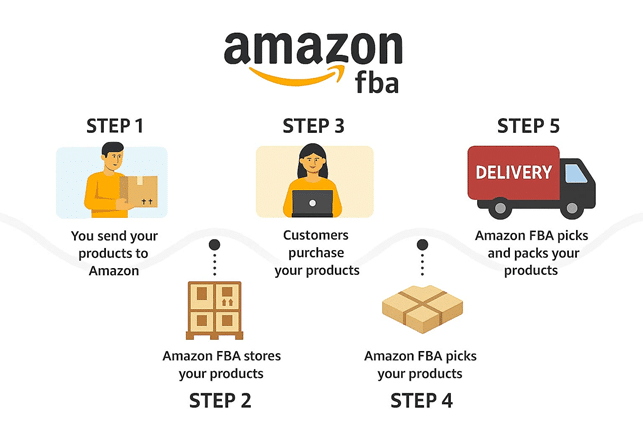
Traditionally, one of the most common ways for sellers to offer Prime-eligible products was through Fulfillment by Amazon. Under this arrangement, sellers send their inventory to Amazon’s fulfillment centers, where Amazon handles storage, order picking, packing, and shipping. Amazon also provides customer service for eligible orders.
This arrangement allows sellers to spend less time managing day-to-day fulfillment activities and more time focusing on product development, marketing, customer demand, and business growth. However, sellers must account for the fulfillment and storage fees associated with using the service.
FBA has been an important part of Amazon’s marketplace because it gives sellers access to an established logistics network. As the marketplace and its seller base expanded, however, inventory management and warehouse capacity became increasingly important operational considerations. Amazon consequently explored other fulfillment methods that could make better use of storage space while continuing to meet customers’ delivery expectations.
Seller Fulfilled Prime was another solution introduced to provide eligible sellers with a route to Prime participation. Rather than sending all their inventory to Amazon’s fulfillment centers, sellers could store products in their own facilities and manage fulfillment themselves while meeting Amazon’s applicable delivery and performance requirements.
Seller Fulfilled Prime (SFP)
Seller Fulfilled Prime gives qualifying sellers the opportunity to offer Prime-eligible products while maintaining greater control over their own inventory and warehouse operations.
Although this approach can reduce dependence on Amazon’s storage facilities, participation involves significant operational responsibilities. Sellers must be able to process orders promptly, use suitable shipping services, maintain reliable delivery performance, and satisfy Amazon’s program requirements.
Historically, sellers interested in joining SFP were required to meet strict performance standards, with the qualification process including a trial period. The exact eligibility criteria and enrollment conditions can change, so sellers should consult Amazon’s current requirements before planning their fulfillment strategy.
There can also be additional costs associated with shipping orders independently. Sellers need to evaluate carrier rates, warehouse labor, packaging expenses, and the resources required to maintain consistent delivery standards.
To address some of the challenges associated with these fulfillment arrangements, Amazon developed FBA Onsite. The concept combined elements of Amazon-managed logistics with seller-operated warehouse facilities. Its objective was to help participating sellers improve inventory management and delivery efficiency without requiring them to transfer all their stock to Amazon’s warehouses.
How Does Amazon FBA Onsite Work?
Amazon FBA Onsite was designed to help selected merchants manage orders from their own warehouses while benefiting from Amazon’s logistics expertise and fulfillment processes.
Under the program’s model, Amazon could assess a seller’s warehouse operations and recommend changes to improve how products were stored, located, picked, and packed. Inventory management tools and streamlined workflows could then help the seller process incoming orders more efficiently.
Consider an Amazon seller who stores products in a privately operated warehouse. Before joining an onsite fulfillment arrangement, the seller might have managed inventory, prepared orders, selected delivery carriers, and arranged shipments independently. If eligible for FBA Onsite, the seller could continue storing inventory at their own facility while using the program’s supported processes for managing orders and shipping.
Amazon’s involvement could help simplify carrier selection and shipping coordination, depending on the arrangement available to the seller. Instead of managing every part of the delivery process independently, the seller could work within a more structured fulfillment system.
Warehouse management software and standardized operating procedures could also provide better visibility into inventory levels and order progress. These tools would help reduce manual work and make it easier to organize products, prioritize orders, and maintain accurate stock records.
The intended outcome was a more coordinated fulfillment process. Sellers could retain control over their physical inventory location while benefiting from selected elements of Amazon’s logistics infrastructure. Meanwhile, Amazon could improve oversight of order processing and delivery performance.
It is important to distinguish this historical program model from the services Amazon currently offers. Program availability, eligibility, fees, and fulfillment responsibilities may vary, so sellers should verify the latest details through Amazon Seller Central before making operational decisions.
Advantages of Amazon FBA Onsite
The central appeal of Amazon FBA Onsite was its attempt to combine the flexibility of seller-owned storage with the operational support associated with Amazon’s fulfillment network. Its proposed advantages included the following.
1. Warehouse Optimization by Amazon’s Experts
Efficient warehouse management can make a significant difference to an e-commerce business. Poorly organized inventory, unnecessary movement between storage areas, and inefficient picking processes can slow down order preparation and increase operating expenses.
The FBA Onsite model aimed to improve warehouse efficiency by applying Amazon’s fulfillment expertise to participating sellers’ facilities. Recommendations could cover warehouse layout, inventory placement, picking routes, packing procedures, and the order in which shipments were processed.
A more organized storage system can help employees locate products quickly and reduce the time required to prepare an order. Clearer workflows can also make inventory easier to track and help minimize avoidable handling errors.
Warehouse management software can further support these improvements by helping sellers maintain stock visibility, organize product locations, and monitor order processing. When these processes work together, a seller’s existing facility can operate more systematically without necessarily requiring additional storage space.
2. A More Streamlined Delivery Process
Shipping orders reliably is a major responsibility for online sellers. Choosing the right carrier, comparing service levels, preparing packages, and monitoring deliveries can all require time and resources.
FBA Onsite was intended to simplify parts of this process by connecting participating sellers with supported fulfillment and shipping arrangements. Sellers could continue holding inventory at their own locations while following the program’s procedures for processing orders and arranging delivery.
Reducing the administrative burden associated with shipping could allow sellers to focus more attention on other business activities, such as advertising, listing improvements, supplier relationships, and customer demand.
However, delivery performance still depends on factors such as inventory accuracy, order preparation, carrier capacity, and the specific service arrangement in place.
3. Access to Prime-Related Shipping Benefits
Prime eligibility can be valuable because many Amazon customers look for products that offer fast and dependable delivery. Products that qualify for Prime benefits may appeal to shoppers who prioritize convenience and predictable arrival times.
The historical FBA Onsite model was intended to help participating sellers combine their own storage facilities with eligible shipping arrangements connected to Amazon’s fulfillment processes. Depending on the program terms, available services could include qualifying Prime delivery options.
For sellers, the potential advantage was the ability to serve customers efficiently without moving all inventory into Amazon-operated fulfillment centers. For customers, the goal was to maintain a convenient shopping and delivery experience.
Sellers should not assume that a particular shipping speed, Prime badge, or rate applies automatically. Current eligibility and service terms must always be checked with Amazon.
4. Customer Service and Returns Support
Managing customer inquiries and product returns can become increasingly demanding as order volumes grow. Sellers must respond to questions, address delivery concerns, and handle return requests according to the applicable marketplace policies.
Amazon-managed fulfillment programs may provide customer service and returns support under their respective terms. The historical FBA Onsite offering highlighted the potential value of access to services such as customer support and simplified returns.
For sellers, an appropriate support arrangement could reduce the time spent handling routine order-related issues. This may create more opportunities to focus on improving product quality, maintaining listings, and developing the business.
The precise coverage, however, depends on the fulfillment program and its current conditions.
5. Potentially Better Operational Efficiency
Beyond warehouse organization and delivery coordination, a more structured fulfillment model can help sellers identify inefficiencies across their operations.
For example, accurate inventory records can make it easier to identify products that need replenishment. Standardized picking and packing procedures can reduce processing errors, while clearer shipping workflows can help teams manage orders during busy periods.
These improvements may contribute to more predictable operations and better use of existing resources. Nevertheless, actual savings depend on a seller’s order volume, storage requirements, labor costs, carrier expenses, and program fees.
The most effective fulfillment strategy is the one that balances operating costs with delivery reliability and customer expectations.
How Can Sellers Join Amazon FBA Onsite?
When FBA Onsite was discussed in its earlier stages, participation was described as invitation-only. Sellers could not necessarily enroll whenever they wished; Amazon selected eligible businesses for participation.
That historical enrollment model meant that availability depended on Amazon’s program decisions and the seller’s suitability for the arrangement. The program was still developing at the time, so its structure and requirements could change as Amazon evaluated its effectiveness.
Because this information comes from the program’s earlier period, sellers should not assume that the same enrollment process remains available today. Check Amazon Seller Central and official Amazon seller resources for current fulfillment programs, eligibility criteria, enrollment opportunities, and regional availability.
Before pursuing any alternative fulfillment arrangement, sellers should also review their warehouse capacity, inventory accuracy, order-processing speed, and ability to meet delivery commitments. These operational foundations matter regardless of which fulfillment model they choose.
Final Thoughts
Amazon FBA Onsite represented an effort to bring together the benefits of seller-owned warehouses and Amazon-supported logistics. Rather than requiring participating merchants to rely entirely on Amazon’s fulfillment centers, its underlying concept aimed to make existing warehouse operations more efficient while supporting dependable order delivery.
For sellers, the potential advantages included improved warehouse organization, streamlined shipping processes, and access to selected fulfillment-related services. These improvements could help businesses manage orders more efficiently and direct more attention toward growth.
However, no fulfillment solution guarantees lower costs or higher sales. Sellers need to evaluate the complete operating model, including storage, labor, shipping, returns, and program eligibility, before deciding which option suits their business.
Ultimately, the most suitable fulfillment strategy is one that supports reliable deliveries, accurate inventory management, sustainable operating costs, and a positive customer experience. Amazon’s available programs and requirements can evolve, so checking current official guidance is an essential step before adopting any fulfillment approach.