As an Amazon seller, discovering that someone is selling counterfeit versions of your products can be frustrating. It can undermine customer confidence, damage your brand’s reputation, and result in lost revenue.
Counterfeit listings can also create legal complications and make it more difficult for customers to distinguish genuine products from unauthorized copies.
If you encounter this problem, taking timely and appropriate action is essential. From reporting fake listings to Amazon to exploring potential legal remedies, there are several ways to protect your intellectual property and safeguard your business.
In this guide, we’ll explain how to identify counterfeit products, report suspected infringement, and navigate Amazon’s available brand protection resources. Understanding these steps can help you respond more effectively and protect the reputation you’ve worked hard to build.
What Are Counterfeit Products on Amazon?
Counterfeit products are fake or unauthorized imitations of genuine products that are sold using another company’s brand name, logo, or protected intellectual property. Although these items may resemble authentic merchandise, they are not manufactured or authorized by the original brand owner.
Counterfeiting can affect numerous product categories, including electronics, clothing, cosmetics, toys, accessories, and luxury goods. These products may be offered at unusually low prices to attract customers, but their quality, reliability, and safety can be significantly different from those of genuine merchandise.
Amazon has introduced various measures to address counterfeit activity across its marketplace. These initiatives include automated detection systems, brand protection programs, and investigations into suspected violations.
Despite these efforts, sellers and customers may still encounter potentially counterfeit products. Buyers should examine product details, seller information, customer reviews, and other available indicators before making a purchase. For brand owners, monitoring listings and responding to suspected infringement can help minimize potential damage.
The Growing Problem of Counterfeit Products on Amazon
Counterfeit merchandise remains a significant challenge for online marketplaces. Popular brands and products with strong demand can become targets for unauthorized sellers seeking to profit from established reputations.
Amazon continues to invest in technology, investigations, and enforcement initiatives designed to prevent counterfeit goods from reaching customers. Its brand protection efforts include automated systems that identify suspicious listings, investigations into organized counterfeiting operations, and cooperation with law enforcement agencies.
The company also provides programs designed to help legitimate brands protect their intellectual property. Amazon Brand Registry gives eligible brand owners access to tools for managing their brand presence and reporting suspected infringement. Meanwhile, the Transparency program uses unique product codes to help verify the authenticity of enrolled products.
Amazon’s Counterfeit Crimes Unit also investigates suspected counterfeiting networks and pursues appropriate legal action where possible.
Although these initiatives can help reduce counterfeit activity, brand owners should not rely entirely on automated enforcement. Regularly monitoring listings, documenting suspicious activity, and submitting well-supported reports remain important parts of an effective brand protection strategy.
What Happens If You Sell Counterfeit Products on Amazon?
Selling counterfeit products can have serious consequences for Amazon sellers. The platform prohibits the sale of inauthentic merchandise and may take enforcement action when a seller violates its policies.
Potential consequences include:
- Account suspension or termination: Amazon may suspend selling privileges or permanently deactivate an account associated with counterfeit sales.
- Listing removal: Listings identified as offering counterfeit merchandise may be removed, restricting the seller’s ability to sell those products.
- Inventory disposal: Depending on the circumstances and applicable policies, counterfeit inventory may be subject to removal or destruction.
- Financial consequences: Funds may be withheld in accordance with applicable policies, agreements, and legal requirements.
- Legal action: Brand owners may pursue legal remedies against sellers who infringe their intellectual property rights.
- Reputational damage: Negative customer experiences, complaints, and unfavorable reviews can undermine trust and reduce future sales opportunities.
Even sellers who believe their products are genuine should maintain reliable sourcing records and supplier documentation. Inauthenticity complaints can create account health problems, so sellers should be prepared to demonstrate the legitimacy of their inventory whenever necessary.
How to Remove Counterfeit Products From Amazon
If you discover suspected counterfeit versions of your products on Amazon, follow these steps to document the issue and report the infringement through the appropriate channels.
1. Identify the Intellectual Property Being Infringed
Before submitting a complaint, determine which intellectual property rights may have been violated. Identifying the correct type of infringement helps you select the appropriate reporting process and provide relevant evidence.
The main categories include trademarks, copyrights, and patents.
Trademark Infringement
Trademarks protect brand identifiers such as names, logos, and certain distinctive marks. If another seller uses your protected trademark in connection with counterfeit products, you may be able to report the suspected infringement to Amazon.
Eligible brand owners can use Amazon Brand Registry to access brand protection tools and submit reports concerning potentially infringing listings.
Copyright Infringement
Copyright protects original creative works, including photographs, written material, illustrations, and certain product-related content.
If another seller copies your protected product images, marketing materials, or other copyrighted content without authorization, you may be able to submit a copyright complaint to Amazon.
Keep in mind that copyright infringement and counterfeit product claims are not identical. Your report should accurately describe the specific material or rights involved.
Patent Infringement
Patents protect qualifying inventions and, depending on the patent type and jurisdiction, certain product designs.
If a competing product appears to infringe your patent, you may be able to report the issue through Amazon’s intellectual property reporting channels. Patent disputes can involve complex legal questions, so professional legal advice may be useful before submitting a claim.
Regardless of the infringement category, gather supporting evidence before filing a report. Useful documentation may include intellectual property registration details, product photographs, listing URLs, ASINs, purchase records, and comparisons between genuine and suspected counterfeit products.
2. Access Amazon’s Intellectual Property Reporting Page
Once you have identified the potential infringement, locate Amazon’s official reporting channel.
For eligible rights holders, Amazon provides an online intellectual property infringement reporting process. The available options and submission requirements may differ depending on the marketplace and the nature of the complaint.
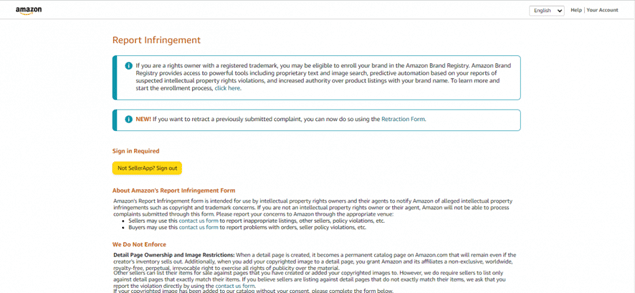
You can begin by visiting Amazon’s intellectual property reporting page:
https://www.amazon.com/report/infringement
If the suspected counterfeit product appears on another regional marketplace, make sure you use the reporting process applicable to that marketplace.
Reporting an issue on one Amazon marketplace does not necessarily result in the removal of the same listing from every other regional marketplace. If the suspected infringement appears across multiple domains, check whether separate reports are required.
You may also need to sign in to an eligible Amazon account and verify your authority to submit the complaint.
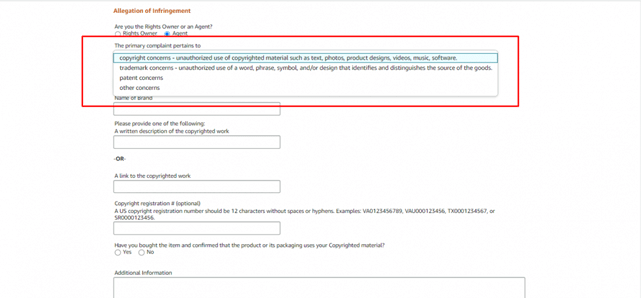
3. Confirm Whether You Are the Rights Owner or an Authorized Agent
Amazon may ask you to identify whether you own the intellectual property rights or are submitting the complaint on behalf of the owner.
If you are the rights owner, provide accurate information about your ownership and the relevant intellectual property registration, where applicable.
If you are an authorized representative, you may need documentation confirming your authority to act for the brand owner. This could include a signed authorization letter identifying the parties and describing the scope of the authorization.
Providing accurate information helps Amazon understand who is submitting the complaint and whether that person is authorized to report the alleged infringement.
Before submitting the report, ensure that all ownership and authorization details are current and consistent with your supporting documentation.
4. Select the Appropriate Type of IP Infringement
During the reporting process, select the complaint category that best describes the suspected violation.
Depending on the options available, Amazon may provide categories relating to trademarks, copyrights, patents, design rights, or other intellectual property concerns.
If you believe a listing offers counterfeit versions of your branded product, select the applicable counterfeit-related option under the relevant trademark complaint category, where available.
Do not select a counterfeit claim simply because another seller offers a similar product or charges a lower price. A valid report should be based on a genuine concern involving counterfeit merchandise or an applicable intellectual property violation.
Choosing the correct category and accurately explaining the issue can help Amazon assess the complaint more efficiently.
5. Provide Detailed Information About the Product
After selecting the complaint type, provide the information Amazon needs to identify the listing and investigate your claim.
Depending on the reporting form, you may be asked to supply:
- Brand name: The name of the brand associated with the protected product.
- ASIN or product identifier: The identifier associated with the Amazon listing in question.
- Product URL: A direct link to the listing you believe contains counterfeit merchandise.
- Intellectual property details: Relevant trademark, copyright, or patent information, as applicable.
- Description of the suspected infringement: A clear explanation of why you believe the product is counterfeit or otherwise violates your rights.
- Supporting evidence: Photographs, screenshots, product comparisons, purchase records, or other relevant documentation.
Make your explanation specific and factual. For example, identify discrepancies in the logo, packaging, product construction, serial numbers, or other authenticity indicators, if applicable.
Avoid unsupported accusations or assumptions. The purpose of your report is to give Amazon sufficient information to evaluate the suspected violation and determine whether enforcement action is appropriate.
6. Enter Your Contact Information
Amazon may require contact details so its team can request clarification or follow up on your complaint.
Provide the information requested in the form, which may include your full name, business email address, telephone number, and relevant company or representative details.
Ensure that the information is accurate and that you can access the email address you provide. If Amazon requests additional documentation, responding promptly can help prevent unnecessary delays.
For representatives submitting reports on behalf of a brand, make sure your contact information matches your authorization details and that you can provide any additional verification that may be requested.
7. Wait for Amazon to Review Your Complaint
After submitting your report, Amazon will review the information and determine what action, if any, is appropriate.
Processing times can vary depending on the complexity of the complaint, the type of intellectual property involved, and whether additional evidence is required. There is no guarantee that every report will result in immediate listing removal.
During the review period, keep copies of your submission, supporting evidence, and any correspondence from Amazon. If you receive a request for additional information, respond with clear and relevant documentation.
You should also continue monitoring the affected listing where appropriate. If the suspected counterfeit product remains available or reappears, document the updated information and follow Amazon’s instructions for further reporting.
Avoid assuming that a complaint has been resolved until you have verified the outcome. If the response does not address your concern, review the available appeal or follow-up options.
How to Report Suspected Counterfeit or Infringing Products as a Customer
You do not always need to be a brand owner to raise a concern about a suspicious product. Customers who believe they have encountered counterfeit merchandise may be able to report the listing or their purchase through Amazon’s available reporting channels.
The exact options can vary by marketplace and may change over time. A general approach is to:
- Open the Amazon product listing or relevant order details.
- Look for the available reporting, customer service, or product feedback options.
- Select the reason that most accurately describes the issue, if a suitable option is available.
- Explain why you suspect the product is counterfeit.
- Include relevant details, such as order information, packaging discrepancies, and photographs, where requested.
- Submit the report and follow any instructions provided by Amazon.
If you have already purchased the product, you can also contact Amazon Customer Service to ask about the available return, refund, or product reporting procedures.
Submitting a report does not guarantee that a listing will be removed. Amazon may investigate the concern and request additional information before making a decision.
Are You a Brand-Registered Seller?
Amazon Brand Registry can be a useful resource for eligible brand owners who want to protect their intellectual property and manage their presence on the marketplace.
The program offers tools that can help enrolled brands identify potential violations, report suspected infringement, and maintain more control over their brand information.
Eligibility requirements apply, and the available features depend on factors such as the brand’s registration status and the marketplace involved.
If your brand qualifies, enrolling in Brand Registry may help streamline your ongoing brand protection efforts. You should still maintain your own records, monitor listings, and submit accurate reports whenever you identify a potential violation.
You may also contact the brand owner directly if you discover counterfeit merchandise associated with another company’s intellectual property. Many brands have established procedures for investigating reports and collecting evidence.
Amazon Counterfeit Crimes Unit and Its Role in Brand Protection
Amazon’s Counterfeit Crimes Unit (CCU) is part of the company’s broader effort to investigate counterfeiting operations and pursue action against those responsible.
The unit works on investigations involving suspected counterfeit goods, collaborating where appropriate with brand owners, law enforcement agencies, and other relevant organizations.
Its work may include investigating sellers and suppliers, identifying connections between suspected counterfeiting operations, collecting evidence, and supporting civil litigation or criminal referrals where appropriate.
The CCU complements Amazon’s other brand protection measures, including automated detection systems, product verification initiatives, and intellectual property reporting tools.
However, individual complaints are not necessarily handled directly by the Counterfeit Crimes Unit. Sellers should use the appropriate Amazon reporting channels and provide evidence relevant to their specific cases.
Where Is Amazon’s Counterfeit Crimes Unit Available?
Amazon’s Counterfeit Crimes Unit investigates counterfeiting activities across different markets and may work with international partners when a case involves multiple jurisdictions.
Its investigations can involve brand owners, suppliers, suspected counterfeiters, and distribution networks operating across borders. The specific scope of an investigation depends on the circumstances and available evidence.
For sellers, the most practical first step is usually to document the suspected infringement and report it through the appropriate Amazon channel. If the case involves a larger counterfeiting operation, significant financial losses, or potential criminal activity, additional legal or law enforcement assistance may be appropriate.
What Is Amazon’s Anti-Counterfeiting Policy?
Amazon prohibits the sale of counterfeit products on its marketplace. Its anti-counterfeiting rules are designed to protect customers, preserve brand integrity, and help ensure that sellers comply with applicable marketplace requirements.
Sellers are expected to offer authentic products and maintain appropriate documentation supporting the legitimacy of their inventory.
When Amazon identifies a potential violation, it may investigate the issue and take enforcement action depending on the available evidence and applicable policies. Possible consequences can include listing removal, account restrictions, or other measures consistent with Amazon’s rules.
To reduce the risk of authenticity-related problems, sellers should work with reputable suppliers, retain invoices and sourcing records, verify products before listing them, and respond promptly to Amazon’s requests for documentation.
Brand owners should also familiarize themselves with Amazon’s current policies and reporting procedures, as requirements may change over time.
What Is Amazon Associates’ Anti-Counterfeiting Policy?
Amazon Associates participants must also follow the program’s rules concerning counterfeit products and intellectual property.
Associates should not knowingly promote counterfeit merchandise or use Amazon’s affiliate program to direct customers toward products that violate intellectual property rights.
Care is particularly important when describing imitation products. Terms such as “dupe,” “fake,” or “faux” should not be used to disguise or promote unauthorized counterfeit merchandise, and affiliate content must comply with the applicable program policies.
Violations can lead to consequences under the Associates Program Operating Agreement, potentially including account suspension or termination and other measures permitted under the applicable terms.
Affiliate publishers should review product information carefully, use accurate descriptions, and promote products through legitimate listings. If a product appears suspicious, avoiding its promotion until its authenticity can be established is a prudent approach.
Conclusion
Removing counterfeit products from Amazon requires careful documentation, accurate reporting, and a clear understanding of your intellectual property rights.
If you discover a suspected counterfeit listing, begin by identifying the relevant infringement, gathering supporting evidence, and submitting a report through Amazon’s appropriate reporting channel. Eligible brand owners can also use Brand Registry to access additional brand protection tools.
Keep records of your complaints, respond promptly to requests for clarification, and monitor the affected listings to check whether the issue has been resolved. If the infringement continues or involves substantial losses, consider consulting an intellectual property professional about further options.
Although no reporting process guarantees immediate removal, a consistent and evidence-based approach can help protect your products, strengthen customer confidence, and reduce the potential impact of counterfeiting on your Amazon business.
By taking proactive steps to safeguard your brand and following Amazon’s applicable policies, you can build a stronger foundation for long-term business growth.
Happy selling!