
Anyone aiming to succeed on Amazon understands how critical KPIs (Key Performance Indicators) are. Running an online business requires staying updated with trends and responding quickly to customer needs. This becomes even more crucial when operating on a competitive platform like Amazon. With access to vast amounts of data and analytics tools, sellers and brands can efficiently collect, manage, and interpret their KPI data.
These KPIs enable Amazon sellers and brands to monitor performance and extract valuable insights that align with both short-term and long-term objectives. Whether your goal is to build brand awareness, increase sales, attract new customers, or perform in-depth analysis, these metrics provide a clear direction for business growth.
In this blog, we’ll break down the importance of KPIs for Amazon sellers and explore the most important metrics that sellers and vendors should focus on.
Why Are Seller KPIs Important?
With the rapid growth of e-commerce, multichannel fulfillment has become the norm. As more sellers enter the marketplace across various niches, analyzing KPIs has become essential for staying competitive. If you’re managing your own online store alongside Amazon, you likely already recognize the importance of tracking performance metrics. One of the biggest challenges in e-commerce is that inventory, sales, and marketing are deeply interconnected, making it difficult to evaluate each area separately.
This is where KPIs come into play. By consolidating data from marketing, sales, and inventory, sellers can better understand overall business performance and control costs effectively.
Additionally, Amazon KPIs play a crucial role in maintaining account health and improving seller performance. As the platform continues to evolve, so do the expectations from sellers. Fortunately, tools like Seller Central allow sellers to consistently monitor and evaluate their KPIs.
How Often Should You Track E-commerce Metrics?
Many sellers wonder how frequently they should review their metrics. The truth is, it depends on the type of KPI and your specific business goals.
Some KPIs require weekly monitoring, while others are better reviewed monthly or quarterly. Here’s a simple breakdown:
Weekly:
Certain metrics require close and consistent tracking. These include organic traffic, impressions, and click-through rates for your listings.
Bi-monthly:
Tracking KPIs every two weeks helps you analyze a larger dataset, reducing fluctuations. Metrics like cost per acquisition and average order value fit well in this category.
Monthly:
Monthly analysis is ideal for identifying buying trends and evaluating marketing performance. Metrics such as Buy Box performance and cart abandonment rate are best reviewed during this period.
Quarterly:
For long-term planning and strategy refinement, quarterly KPIs are essential. These include customer lifetime value, product relationships, and product affinity, which help improve cross-selling and promotional strategies.
Ultimately, defining your goals beforehand will help you determine which KPIs to track and how often.
Amazon Seller KPIs You Should Be Tracking
Most sellers focus on basic metrics such as:
- Sales
- Profit
- Inventory levels
While these are fundamental to any business, they don’t provide a complete picture. They are helpful for beginners but lack the depth needed for long-term growth and strategic planning.
To scale effectively, sellers need a broader understanding of advanced KPIs and how to analyze them. Let’s look at some of the most important metrics that contribute to business growth.
Key Amazon Seller KPIs Explained
Conversion Rate (Unit Session Percentage):
This metric measures how many units are sold compared to the number of sessions on a product page. A session represents a 24-hour period in which a user visits your listing, regardless of multiple views. A higher conversion rate indicates that your listing is effective in turning visitors into buyers.
Inventory Performance Index (IPI):
The Inventory Performance Index evaluates how efficiently you manage your inventory. It ranges from 0 to 1000. A score below 350 signals potential issues, while a score above 400 reflects strong inventory management. Monitoring this KPI helps ensure that you maintain optimal stock levels and avoid storage limitations.
Order Defect Rate (ODR):
This KPI measures the quality of customer service by tracking negative feedback, A-to-Z claims, and chargebacks. Amazon requires sellers to maintain an ODR below 1%. Exceeding this limit can lead to warnings or even account suspension, making it one of the most critical metrics to monitor.
Perfect Order Percentage:
This metric reflects how many orders are completed without any issues. It considers factors such as timely processing, accurate packaging, and successful delivery. Maintaining a high perfect order percentage ensures customer satisfaction and strengthens your seller reputation.
What Are Amazon Glance Views?
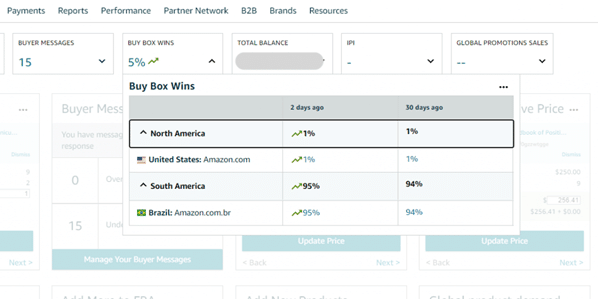
Many sellers often misunderstand the concept of glance views. This metric represents the number of times a product detail page is viewed. Unlike impressions, which measure how often your listing appears, glance views indicate actual interest from potential customers.
How to Use Amazon Glance Views
Glance views help sellers evaluate product demand. A higher number of views typically suggests greater customer interest, which can lead to increased sales.
This metric can also be used to calculate and analyze several important KPIs:
Product Conversion Rate:
This shows how many visitors purchase your product after viewing it.
Formula: Total Orders ÷ Customer Glance Views
Buy Box Fast Track Percentage (For Vendors):
This measures how often a fast-track offer appears on your product page.
Formula: (Glance Views with Fast Track Offer ÷ Total Glance Views) × 100
Replenishable Buy Box Fast Track (For Vendors):
This metric tracks how frequently fast-track offers appear on replenishable items.
Formula: (Fast Track Glance Views on Replenishable Items ÷ Total Glance Views on Replenishable Items) × 100
Replenishable Out-of-Stock Percentage:
This KPI identifies lost sales opportunities due to stock shortages.
Formula: (Glance Views When Product Was Out of Stock ÷ Total Glance Views) × 100
Views on Non-Replenishable Items (For Book Vendors):
This helps vendors determine which non-replenishable products still attract customer interest and may benefit from a print-on-demand model.
Formula: (Glance Views on Non-Replenishable Products ÷ Total Glance Views) × 100
Final Thoughts
Understanding and tracking Amazon KPIs is essential for long-term success on the platform. Since every business operates differently, the specific KPIs you focus on may vary based on your goals and strategy. However, consistently monitoring these metrics will help improve your account health, optimize performance, and keep your business aligned with Amazon’s standards.
By leveraging the right KPIs, sellers can make informed decisions, enhance customer experience, and drive sustainable growth in a highly competitive marketplace.