As competition on Amazon continues to increase, getting your products in front of the right shoppers—and turning those visits into consistent sales—has become more challenging.
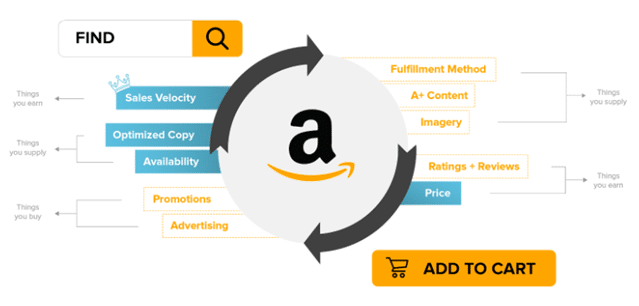
Sales velocity is an important performance signal for Amazon sellers. The rate at which a product generates sales can contribute to its overall marketplace performance, visibility, and organic growth.
A strong sales velocity can also help products gain momentum in competitive categories. In this guide, we’ll explore practical strategies you can use to increase sales velocity and build stronger performance on Amazon.
Maximize Conversions With Long-Tail Keywords
Keyword research often goes beyond identifying the most popular search terms. Many sellers overlook valuable opportunities hidden within highly specific, long-tail keywords.
Long-tail keywords typically have lower search volume than broad terms, but they can attract shoppers with clearer purchase intent. Because these searches are more specific, targeting relevant long-tail phrases can help bring qualified traffic to your listing and improve your chances of conversion.
Look for search terms that closely match your product, its features, use cases, and the problems it solves. Incorporating these terms naturally throughout your listing can help you reach shoppers who are further along in the buying journey.
Improve Product Visibility With an Optimized Listing
Take a look at competing Amazon listings and you’ll often find common problems such as weak copy, spelling mistakes, excessive keyword placement, unclear descriptions, and difficult-to-read content.
Fixing these issues can make your listing more appealing to shoppers and create a smoother path from discovery to purchase.
Here are some practical ways to optimize your product listing:
- Identify relevant, high-converting keywords and incorporate them naturally into your title, bullet points, and description.
- Create a clear and informative product title that communicates the brand, product type, important specifications, primary keyword, and intended use. For example: “NYC Chic Glow Tinted Lip Balm – Nude Radiance Infusion – Vitamin-Enriched Hydration – Subtle Luster Finish.”
- Use persuasive bullet points that explain the product’s key features, benefits, differentiators, and use cases. Keep the information easy to scan while incorporating relevant keywords naturally.
- If you are an eligible brand owner, take advantage of A+ Content to expand your product presentation with additional visuals, comparison sections, enhanced copy, and other engaging elements.
A well-structured listing does more than improve discoverability. It also gives shoppers the information they need to feel confident about purchasing.
Get More Clicks With Better Product Images
Product images can have a major influence on how shoppers perceive an Amazon listing. Since customers cannot physically examine a product before purchasing, images need to communicate its appearance, features, size, and practical use as clearly as possible.
Make sure your primary image is clean, professional, and compliant with Amazon’s requirements. Supporting images should demonstrate the product from different angles and highlight important benefits or use cases.
While sellers can photograph products themselves, professional photography can help create a stronger visual presentation and differentiate a listing from competing products.
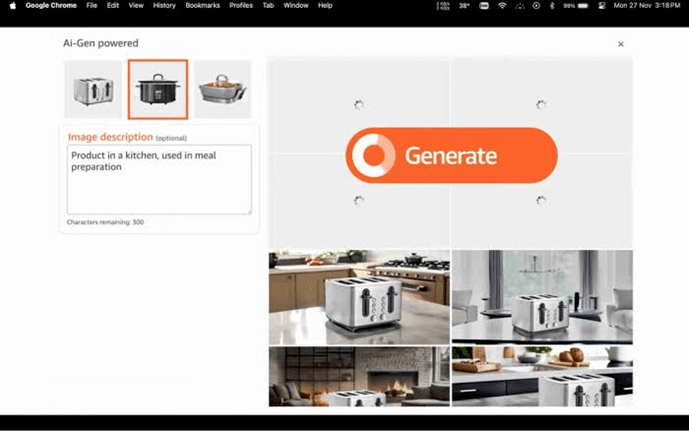
You can also explore AI-powered image creation and enhancement tools where appropriate to develop additional visual assets for your listings. However, every image should accurately represent the actual product and comply with Amazon’s content requirements.
Win More Conversions With Competitive Pricing
Price is another important factor when shoppers compare similar products on Amazon. When several sellers offer comparable products, customers often consider price alongside reviews, delivery speed, product quality, and overall value.
Competitive pricing can therefore help you remain attractive to potential buyers and improve conversion opportunities.
However, competing purely on price is not always the right approach. Pricing a product too low can reduce profitability and may even create the perception that the product is lower quality.
Instead, analyze competitor prices, your costs, customer expectations, and the value your product provides. The goal is to establish a price that remains competitive while protecting your margins.
Build Buyer Confidence With More Reviews
Reviews play an important role in helping shoppers evaluate products before purchasing. A listing with useful, authentic customer feedback can provide social proof and answer questions that product descriptions alone may not address.
If your product is eligible, Amazon programs such as Vine can help generate initial customer feedback from participating reviewers.
Amazon Vine allows eligible brands to provide products to selected Vine Voices, who then share their genuine opinions about those products.
Always follow Amazon’s review policies. Sellers should never manipulate reviews, request positive feedback, offer incentives in exchange for favorable reviews, or pressure customers to change or remove feedback.
Authentic reviews help establish trust while also giving sellers valuable insights into customer expectations and product experience.
Create Urgency With Promotions and Discounts
Strategic promotions can encourage shoppers who are interested in a product to make a purchase sooner.
Depending on your product and margins, you can experiment with Amazon Coupons, percentage-off promotions, quantity discounts, bundles, or other eligible promotional tools.
For example, a seller might offer a discount when customers purchase multiple units or create a bundle featuring complementary products. These approaches can potentially increase both conversion rates and average order value.
Promotions should always be planned around your profitability. A discount that generates additional orders but eliminates your margin may not contribute to sustainable growth.
You can also use complementary products and relevant add-ons to increase the value of each order. The key is to make the offer useful rather than simply adding more products to the customer’s cart.
Optimize Inventory to Protect Your Advertising Budget
Generating sales is only part of the equation. You also need enough inventory available to fulfill those orders.
Poor inventory planning can result in excess stock, higher storage costs, or stockouts that cause you to miss potential sales. Any interruption in availability can make it harder to maintain consistent sales momentum.
Monitor your sales history, inventory levels, seasonal demand, and lead times to determine when new stock should be ordered.
You should also evaluate shipping methods and replenishment schedules to control logistics costs. By managing inventory efficiently, you can protect your margins and potentially allocate more resources toward advertising and growth.
Re-Engage Interested Shoppers With Retargeting
Not every shopper who discovers your product will purchase it during their first interaction.
Some customers may click your listing, browse similar products, or leave Amazon before completing a purchase. Retargeting can help you reconnect with audiences who have already demonstrated interest.
Amazon advertising solutions can be used to reach eligible audiences based on their shopping activity and interactions.
Because these shoppers have already shown some level of interest, retargeting campaigns can complement prospecting campaigns and help keep your brand visible throughout the consideration process.
Create Better Listings Through A/B Testing
Small changes to an Amazon listing can sometimes have a meaningful impact on shopper behavior. However, it can be difficult to know which changes are actually responsible for improved performance without testing.
A/B testing provides a structured way to compare different versions of eligible listing elements.
You can test variables such as:
- Product titles
- Main and supporting images
- Bullet points
- A+ Content
- Other eligible listing content
For example, you could test two different title variations while keeping other major variables consistent. After collecting enough performance data, compare the results to determine whether the change produced an improvement.
Avoid changing multiple major elements simultaneously if you want to understand what caused the performance difference.
Even relatively small improvements in conversion can become significant when they are sustained over time and combined with other optimization efforts.
Improve Fulfillment and Customer Experience With FBA
Fulfillment has an important role in the overall Amazon shopping experience. Using Fulfillment by Amazon (FBA) allows eligible sellers to outsource many fulfillment responsibilities to Amazon.
With FBA, Amazon handles tasks such as storing inventory, picking and packing orders, shipping products, and managing eligible customer service and returns.
Some potential advantages include:
- Faster delivery: Eligible products can benefit from Amazon’s fulfillment network and Prime delivery options.
- Simplified logistics: Amazon handles many day-to-day fulfillment processes on the seller’s behalf.
- Customer support: Amazon manages eligible customer service, returns, and refunds associated with FBA orders.
- Scalable storage: Sellers can use Amazon’s fulfillment infrastructure instead of managing their own warehouse capacity.
- Marketplace opportunities: FBA can make it easier for eligible sellers to participate in additional Amazon programs and expand into other marketplaces.
FBA is not automatically the right choice for every product or business. Sellers should compare fulfillment fees, storage costs, margins, and operational requirements before making a decision.
Bring External Traffic to Your Amazon Listings
Amazon does not have to be the only source of traffic for your products.
External channels such as social media, email marketing, content marketing, influencer partnerships, and paid advertising can introduce your products to new audiences.
Sending qualified external traffic to Amazon can also help you build awareness outside the marketplace while creating additional opportunities for customers to discover your products.
Amazon Attribution can help eligible sellers measure the performance of certain non-Amazon marketing activities and understand how external campaigns contribute to Amazon conversions.
Here are some external traffic strategies to consider:
Email Marketing
Email marketing can help you stay connected with existing customers and audiences who have already expressed interest in your brand.
You can use email campaigns to announce new products, share educational content, promote eligible offers, and encourage repeat purchases. The most effective campaigns focus on providing useful information instead of repeatedly pushing sales messages.
Content Marketing
Content marketing can support long-term brand visibility by creating useful resources around your products, industry, and customer needs.
Blog posts, guides, comparison content, tutorials, videos, and other educational resources can help attract relevant audiences and introduce them to your brand.
User-generated content can also add authenticity by showing how real customers use your products.
Influencer Marketing
Influencer partnerships can help brands reach niche audiences that may already be interested in a particular product category.
Working with relevant micro-influencers can be especially useful when you want to reach a focused audience without relying entirely on large, expensive partnerships.
Choose creators whose audience aligns with your target customers and whose content naturally fits your product. Authentic demonstrations and genuine product experiences can make influencer campaigns more useful to potential buyers.
Final Thoughts
Increasing sales velocity on Amazon requires more than simply increasing advertising spend. Sustainable growth comes from improving multiple parts of the customer journey—from discovery and clicks to conversion, fulfillment, and repeat purchases.
Start by improving the fundamentals of your listing, including keywords, copy, images, pricing, and customer trust signals. Then strengthen your promotional strategy, inventory planning, advertising campaigns, and external traffic sources.
Most importantly, monitor your performance data and continuously test what works for your specific product and audience.
With a consistent optimization process, you can create stronger sales momentum, improve your listing’s overall performance, and build a more sustainable Amazon business.