
Selling on Amazon comes with many opportunities, but it also brings challenges that every seller should be prepared for. One of the most common situations sellers face is the Amazon A-Z Guarantee Claim. Since Amazon strongly prioritizes customer satisfaction, buyers are given protection whenever they purchase products from third-party sellers.
Understanding how these claims work is important because they can directly affect your seller performance and account health. By learning how the process operates and taking preventive steps, sellers can reduce the chances of receiving unnecessary claims.
What Is an Amazon A-Z Guarantee Claim?
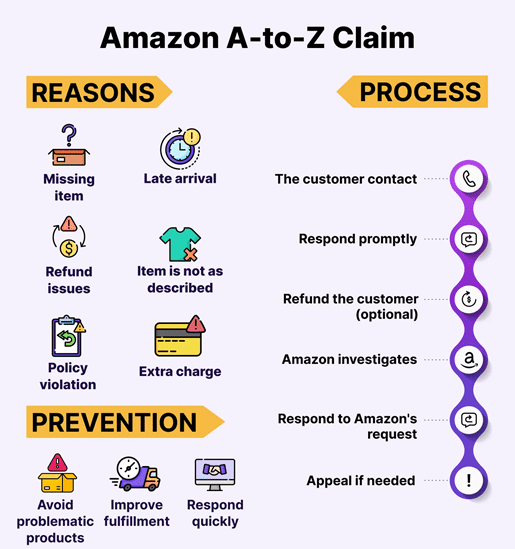
An Amazon A-Z Guarantee Claim is a customer protection program created by Amazon for purchases made from third-party sellers. The purpose of this guarantee is to ensure that buyers receive their orders on time and in the condition promised in the listing.
When a customer experiences an issue with an order, Amazon first expects the buyer to contact the seller directly. This gives both parties an opportunity to resolve the matter before Amazon becomes involved.
If the issue remains unresolved within 48 hours, the customer can escalate the matter by filing an A-Z claim with Amazon. Once the claim is submitted, the seller normally has 72 hours to provide a response. Failing to respond within this timeframe can result in Amazon automatically approving the claim in favor of the customer and deducting the refund amount from the seller’s account.
In some cases, Amazon may ask the seller for additional information before making a final decision. Sellers must provide the requested details within the given deadline. If Amazon approves the customer’s claim, sellers still have the option to appeal the decision within 30 calendar days.
Because all communication is handled through email, sellers should regularly monitor their inboxes to avoid missing important notifications.
How A-Z Claims Affect Sellers
A-Z claims can negatively impact a seller’s Order Defect Rate (ODR), which is one of Amazon’s key performance metrics. Maintaining a healthy ODR is critical because excessive defects may lead to account warnings, restrictions, or even suspension.
Providing excellent customer service is one of the best ways to maintain a healthy seller account. Fast communication, accurate listings, and reliable shipping all contribute to reducing claim risks.
When Does the Amazon A-Z Guarantee Apply?
Amazon allows customers to file A-Z claims under several circumstances. Buyers may qualify for a full or partial refund if the order arrives later than the expected delivery date or if it is delayed for an extended period after purchase.
Claims may also apply when customers receive products that are damaged, defective, incomplete, or significantly different from the product description. If a customer returns an item but does not receive a refund, Amazon may step in to resolve the issue.
In addition, sellers who refuse valid return requests or fail to follow Amazon’s return policy can face claims. International orders may also trigger claims if the seller does not provide a prepaid return label, a return address, or an alternative refund solution.
Customers may even file claims if they believe they were charged incorrectly for an order.
Importance of Accurate Product Descriptions
One major reason sellers receive A-Z claims is inaccurate product information. Customers rely heavily on product descriptions, images, and specifications when deciding to make a purchase.
For this reason, listings should clearly explain the product’s condition, features, size, material, and other important details. The more transparent the listing is, the lower the chance of customer disappointment.
If the item matches the listing description exactly, customers are less likely to win an A-Z claim. Sometimes buyers simply regret their purchase decision, and in those situations sellers can determine the most appropriate resolution to maintain customer satisfaction.
How to Avoid Amazon A-Z Claims
Although it may not be possible to eliminate claims completely, sellers can significantly reduce them by following best practices.
1. Provide Reliable Shipping and Handling
Shipping performance plays a major role in customer satisfaction. Sellers should ensure that orders are shipped on time and packaged properly to avoid delays or product damage during transit.
Using Fulfillment by Amazon (FBA) can provide additional protection because Amazon handles storage, packing, and shipping. However, sellers who fulfill orders themselves are responsible for resolving delivery-related issues.
Adding shipment tracking is extremely important. Customers appreciate being able to track their packages, and tracking information can also help sellers defend themselves in claim disputes. Without tracking details, Amazon often favors the customer automatically.
For expensive products, requiring a delivery signature can provide additional proof that the order was successfully delivered.
Packaging quality should also never be ignored. Secure packaging helps products arrive safely and creates a better customer experience overall.
In addition, sellers should maintain a clear return policy with realistic timelines and conditions to avoid misunderstandings.
2. Focus on Accurate Product Listings
Customers expect to receive exactly what they see online. This makes accurate listings essential for preventing disputes and returns.
Sellers should ensure products are listed under the correct ASIN and categorized properly according to condition, whether new, refurbished, or used. Product titles should include important information such as the brand name, color, size, material, quantity, and key features.
Using clear and informative product descriptions can help customers make confident purchasing decisions while reducing confusion after delivery.
3. Improve Product Images
High-quality images can significantly improve both conversions and customer satisfaction. Buyers often rely more on images than descriptions when evaluating products.
Using high-resolution photos from multiple angles allows customers to better understand the product before purchasing. Zoom-enabled images also help buyers inspect details more carefully.
Professional lighting and clean white backgrounds are recommended because they make products appear more trustworthy and visually appealing. Sellers should also highlight important features, uses, and branding wherever possible.
To further improve listing quality, sellers can consider using Amazon A+ Content to create enhanced product pages with additional visuals and detailed information.
4. Respond Quickly to Customers
Fast communication is another key factor in reducing A-Z claims. Customers expect timely responses whenever they encounter an issue with an order.
Responding within 24 hours can help resolve concerns before they escalate into formal claims. In many situations, offering a refund or replacement proactively may prevent negative feedback and account issues later.
Ignoring customer messages can create frustration and increase the likelihood of Amazon ruling against the seller.
Managing Inventory Properly
Inventory management also plays an important role in preventing claims. If an item becomes unavailable after a customer places an order, sellers should immediately notify the buyer and cancel the order instead of delaying the shipment unnecessarily. It is also important to remove problematic or defective products from listings to avoid repeated complaints. Reporting inaccurate listings on Amazon can also help maintain account quality and customer trust.
What If Customers Try to Scam Sellers?
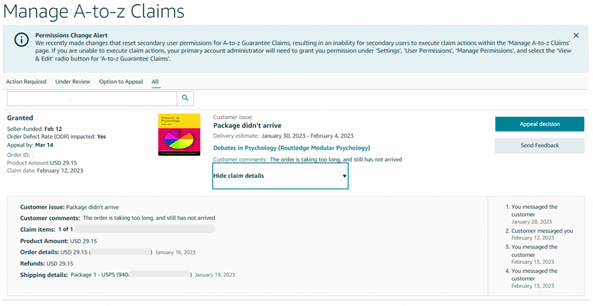
Unfortunately, not every claim is legitimate. Some customers may attempt to misuse Amazon’s policies to receive refunds unfairly. In these situations, sellers should carefully evaluate whether disputing the claim is worth the time and effort involved.
For low-cost items, issuing a refund may sometimes be the simpler solution. However, if a seller chooses to dispute a claim, it is important to remain professional and polite throughout the process. All communication is documented and may be reviewed by Amazon later.
Tracking shipments, keeping delivery records, and using reliable carriers such as FedEx or UPS can help sellers provide evidence when disputes arise.
No matter the situation, sellers should avoid arguing emotionally with customers. Maintaining professionalism can improve the chances of a fair outcome.
Final Thoughts
Amazon A-Z Guarantee Claims are designed to protect buyers and maintain trust within the marketplace. While claims can sometimes be frustrating for sellers, understanding the process can make them easier to manage.
By focusing on customer satisfaction, accurate listings, reliable shipping, and fast communication, sellers can reduce claim risks and maintain strong account health. Preventing issues before they occur is always more effective than dealing with disputes afterward.