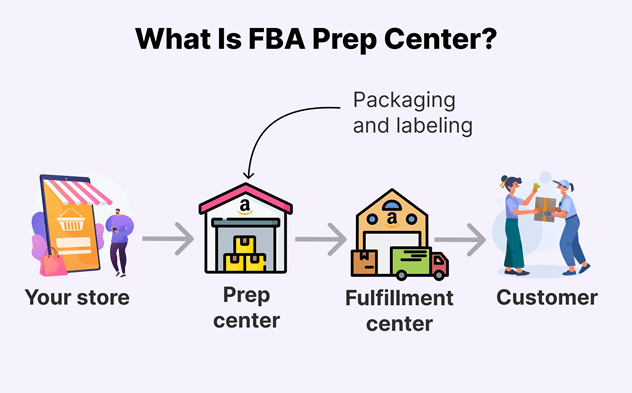
Amazon Fulfillment by Amazon (FBA) is a logistics solution that enables sellers to send their inventory to Amazon fulfillment centers. Amazon then manages storage, order processing, packaging, shipping, and certain aspects of customer service and returns. As in you can say, its called Amazon FBA Prep.
By outsourcing fulfillment, sellers can reduce the time spent managing daily operational tasks and concentrate on product development, customer acquisition, marketing, and long-term brand growth. With Amazon managing much of the fulfillment process, sellers can devote more attention to improving their products and expanding their businesses.
Which Product Types Are the Most Challenging to Prepare for FBA?
Amazon fulfillment centers handle large volumes of inventory every day, with strict processing targets and operational requirements. Because of this, certain products require more preparation and careful handling than others.
Fragile items, oversized or heavy products, hazardous materials, and groceries with expiration dates often require additional packaging, labeling, or documentation. Sellers need to understand the specific requirements for their product categories before sending inventory to Amazon.
When preparing products for shipment, prioritize safety, packaging consistency, and efficient handling. Following Amazon’s applicable preparation and packaging guidelines helps reduce the risk of delays, damage, and shipment complications.
How Important Is Compliance With Amazon’s Packaging Requirements?
Packaging compliance plays a major role in maintaining a smooth FBA fulfillment process. Products that do not meet Amazon’s applicable requirements may encounter processing delays or additional handling issues.
Depending on the nature of the violation, Amazon may refuse a shipment, return inventory, or dispose of non-compliant products. Repeated or serious violations can also affect account health and selling privileges, while additional fees may apply in certain situations.
To minimize these risks, review the packaging requirements for every product before shipment. Ensure that items are protected adequately, labels are readable, cartons meet the applicable specifications, and all required documentation is included.
Can I Use a Non-Partnered Carrier for FBA Inbound Shipments?
In many situations, sellers can arrange inbound shipping through a carrier that is not partnered with Amazon. However, the available options and costs depend on the destination country, shipment type, and applicable program rules.
Amazon’s partnered carrier options may offer competitive shipping rates and a more convenient shipping workflow. Sellers should compare the available services instead of automatically assuming that an independent carrier will be less expensive.
For example, the original guidance distinguishes between parcel shipments in Canada and parcel or less-than-truckload shipments in the United States. It also notes that certain oversized and hazardous products may not qualify for discounted shipping options.
Before booking transportation, confirm the current carrier eligibility requirements for your fulfillment center and shipment type. Working with a third-party logistics provider (3PL) may also provide access to negotiated shipping rates and additional transportation options.
What Is a UPC?
A Universal Product Code (UPC) is a barcode commonly used to identify retail products. Amazon sellers may need an eligible product identifier when creating a listing, depending on the product category and applicable listing requirements.
Sellers typically obtain legitimate product identifiers through GS1 or another authorized source where applicable. Products that qualify for Amazon’s GTIN exemption may be eligible for a different listing process without a standard product identifier.
Avoid purchasing cheap, recycled, or improperly assigned UPCs. An identifier that does not correspond correctly to your product or brand can cause listing problems and may trigger additional verification. In serious cases, inaccurate product information can contribute to account-related issues.
Before purchasing a barcode, confirm which product identifier your listing requires and whether your product qualifies for an exemption.
What Is an ASIN?
An Amazon Standard Identification Number (ASIN) is a unique alphanumeric identifier that Amazon uses to organize and track products in its catalog. Each ASIN is generally ten characters long.
When a seller creates a new product listing, Amazon assigns an ASIN when the product is added to its catalog. Existing products may already have an ASIN, allowing sellers to offer the same catalog item without creating a duplicate listing.
ASINs help Amazon distinguish between products and their specific variations. Understanding how they work is important for listing creation, inventory management, advertising, and product research.
What Is an FNSKU?
A Fulfillment Network Stock Keeping Unit (FNSKU) is an inventory identifier used within Amazon’s fulfillment system to associate a product with a particular seller’s inventory.
For sellers using FBA, FNSKUs help Amazon identify and track units as they move through its fulfillment network. This can be especially important when multiple sellers offer similar or identical products.
An FNSKU is different from a UPC or ASIN. A UPC identifies a product through a retail barcode system, while an ASIN identifies a product in Amazon’s catalog. An FNSKU helps Amazon associate inventory with the appropriate seller.
Understanding these distinctions makes it easier to select the correct barcode and prepare your products for fulfillment.
Should I Use a UPC or an FNSKU Barcode?
The right barcode depends on your inventory setup, Amazon’s applicable requirements, and your preference for inventory identification.
A UPC may be used for eligible products when Amazon’s barcode and tracking rules permit it. An FNSKU, on the other hand, provides seller-specific identification within Amazon’s fulfillment system.
Using an FNSKU can help distinguish your inventory from units belonging to other sellers, particularly when product identification and inventory commingling are concerns. However, sellers should not assume that one barcode is universally better for every product.
Review Amazon’s current barcode requirements for your account and product category before choosing a labeling method. If an FNSKU is required or selected, ensure that the correct label is applied to every relevant unit.
Can My Manufacturer Handle FBA Labeling?
Yes. A manufacturer may apply FBA labels before shipping products if it has the appropriate equipment, understands the requirements, and can follow your instructions accurately.
However, manufacturing experience does not necessarily mean a supplier understands Amazon’s inbound shipping procedures. Incorrect labels, unsuitable packaging, inaccurate carton measurements, or missing documentation can lead to shipment delays and additional costs.
Before relying on a manufacturer for preparation, provide clear specifications and request a sample for inspection. Confirm that the supplier can meet all relevant product, barcode, carton, and shipping requirements consistently.
Alternatively, you can send inventory to a specialist prep center or 3PL for inspection, labeling, and shipment preparation before it reaches Amazon.
Can a 3PL or Amazon Prep Center Label My Products?
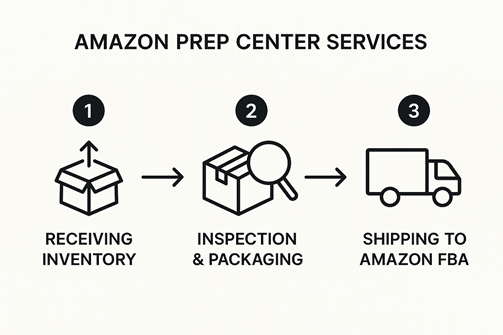
Yes. Many third-party logistics providers and Amazon prep centers offer services such as barcode labeling, product inspection, packaging, storage, bundling, and shipment preparation.
Choosing an experienced provider can make inventory management more efficient, particularly when you have multiple suppliers or ship products in large quantities. These companies specialize in preparing goods for fulfillment and can help identify problems before inventory is dispatched.
Some providers also offer carton forwarding or case forwarding. Under these arrangements, products that have already been prepared and labeled are forwarded to Amazon in their existing cartons, provided they meet the relevant requirements.
Before selecting a provider, confirm which services are included, how quickly orders are processed, and whether the company can handle your specific product types and shipment volumes.
What Should I Consider When Choosing an FBA Prep Service?
Selecting an FBA prep service requires more than comparing prices. You need a provider that understands Amazon’s logistics requirements and can handle inventory accurately and consistently.
Look for a company with demonstrated experience in labeling, packaging, shipment planning, and inventory handling. Clear communication and responsive customer support are also important, particularly when a shipment has a deadline or an unexpected issue arises.
Before making a decision, ask potential providers for their published pricing, typical processing times, order accuracy data, and sample preparation specifications. These details can help you compare service quality and understand any additional charges.
You should also assess the provider’s location, storage capabilities, shipping partnerships, and ability to support future business growth. A reliable prep partner can help reduce preparation errors and give you more time to focus on selling and expanding your brand.
How Can I Bundle Products for Amazon FBA?
Product bundling allows sellers to combine two or more complementary products into a single offer. For example, a kitchen accessory might be packaged with related utensils to create a convenient set for customers.
Although bundling can help differentiate an offer, it requires careful planning. Every component must be secured appropriately, and the complete bundle must meet Amazon’s applicable packaging, labeling, and product identification requirements.
Depending on the bundle’s design, preparation may involve polybags, suffocation warnings where required, heat sealing, protective materials, and clear identification showing that the items belong together as one sellable unit.
If you do not have the necessary equipment or experience, an Amazon prep center may be able to assemble and package the bundle for you. Some providers specialize in kitting and assembly, making them suitable for sellers who want to offer multipacks, product sets, or gift bundles.
Does a Product Bundle Need a New UPC, ASIN, or FNSKU?
A newly created bundle may require its own product identifier and Amazon listing, depending on its structure and applicable catalog rules.
For example, when multiple individual products are combined and sold together as a distinct retail offering, the bundle may need a separate product identifier and ASIN. FBA inventory may also require a corresponding FNSKU when seller-specific Amazon barcode labeling is used.
However, requirements can differ by product category, bundle type, and listing circumstances. Not every multipack or product set follows precisely the same process.
Before assembling inventory, review Amazon’s product bundling and listing policies. Make sure the bundle is accurately described, the included products are clearly identified, and the barcode used on the packaged unit corresponds to the correct listing.
Why Might Amazon Reject My FBA Shipment?
Amazon may reject or delay an inbound shipment when its contents, packaging, labeling, transportation, or documentation do not meet the relevant requirements.
Common reasons include:
- Incorrect product labels: Barcodes may be missing, unreadable, inaccurate, or assigned to the wrong products.
- Carton weight or size issues: Boxes may exceed applicable limits or fail to meet packaging specifications.
- Pallet problems: Pallets may have unsuitable dimensions, excessive height, overhanging products, or incorrect preparation and documentation.
- Carrier or delivery issues: The shipment may use an ineligible carrier, arrive without a required appointment, or fail to meet delivery procedures.
- Customs and import complications: International shipments may lack the required documentation or have unpaid duties and taxes.
Some requirements vary according to the destination, shipping method, inventory type, and fulfillment program. Sellers should review the latest instructions for their specific shipment rather than relying on general rules alone.
Checking labels, carton measurements, pallet configuration, carrier eligibility, and paperwork before dispatch can significantly reduce avoidable problems.
What Happens if Amazon Rejects My Shipment?
The consequences of a rejected FBA shipment depend on the reason for rejection and Amazon’s handling decision. The inventory may need to be corrected, returned to the sender, or disposed of in certain circumstances.
Returns can be especially expensive for palletized or less-than-truckload shipments because transportation and handling costs may be substantial. If the goods need to be inspected, relabeled, or repackaged before reshipping, additional preparation expenses may also apply.
To limit these risks, verify every shipment before it leaves your warehouse or prep facility. Keep accurate records of product quantities, labels, carton dimensions, tracking numbers, and shipping documents.
If Amazon identifies a problem, review the shipment notification carefully and follow the available resolution process. Addressing the underlying issue before creating another shipment can help prevent the same mistake from happening again.
How Can I Improve My Amazon FBA Inventory Limits?
Amazon may impose storage or inventory limits based on factors such as available fulfillment capacity, account-specific conditions, and inventory performance. These restrictions can make it difficult for sellers to replenish popular products or launch new items.
One important step is to monitor your Inventory Performance Index (IPI), reduce unnecessary excess stock, and keep products available for sale. Strong sell-through rates and better inventory planning can help improve overall inventory management.
Sellers should also review Amazon’s current storage and capacity options to determine which limits apply to their accounts. Avoid sending more stock than you can reasonably sell within the expected period.
Working with a 3PL or prep center can help organize inbound inventory, store products before shipment, and replenish FBA stock in smaller or more strategic quantities. However, using a prep service does not automatically increase your Amazon inventory limit.
What Affects My Inventory Performance Index (IPI) Score?
Amazon’s Inventory Performance Index is a metric used to evaluate aspects of a seller’s FBA inventory management. It can help sellers understand how effectively they balance available stock, product demand, and excess inventory.
A seller’s inventory performance may be affected by several factors, including:
- Excess inventory: Too much stock relative to expected demand can increase storage costs and reduce efficiency.
- Sell-through performance: Products that sell consistently can contribute to healthier inventory management.
- Stranded inventory: Stock that cannot be purchased because of listing or other issues can create avoidable problems.
- In-stock performance: Maintaining adequate quantities of products with ongoing demand helps support sales opportunities.
Amazon may update its scoring methodology and inventory policies over time, so sellers should consult the current information available in Seller Central rather than relying on an old benchmark.
To improve inventory performance, review sales trends regularly, address stranded inventory, avoid excessive replenishment, and create realistic demand forecasts.
Is SPD or LTL the Better Shipping Option for Amazon FBA?
Small Parcel Delivery (SPD) and Less Than Truckload (LTL) are two common ways to transport inventory to Amazon fulfillment centers.
SPD generally involves sending individual cartons through parcel carriers. It can be convenient for small shipments, lower inventory volumes, and sellers who replenish products frequently.
LTL shipping consolidates palletized freight with other shipments moving through a transportation network. It can be useful for larger quantities, heavy products, or shipments that are better handled on pallets.
The most suitable option depends on shipment size, product weight, handling requirements, delivery arrangements, and total cost.
For example, SPD may be appropriate when you are sending a few cartons at a time. When your shipment grows to several dozen cartons, comparing LTL rates may make sense. The precise cost advantage will depend on your shipment details rather than a fixed carton threshold.
LTL deliveries may also require suitable pickup and delivery access, appointments, and additional handling services. Confirm these requirements with your carrier before booking.
What Should I Do if a Partnered Carrier Loses My Shipment?
Although shipping carriers have tracking systems and established handling procedures, packages can occasionally be lost or damaged during transit.
If a shipment goes missing, begin by reviewing the tracking information and contacting the carrier when appropriate. Check the shipment status in Seller Central and follow Amazon’s current investigation or reimbursement process for eligible shipments.
You may need to provide information such as your shipment ID, proof of inventory ownership, tracking records, shipping documents, or proof of delivery, depending on the circumstances and the claim requirements.
Keep copies of invoices, packing records, and carrier confirmations to support any investigation. Also review the relevant reimbursement policy and deadlines, as the required documentation and eligibility conditions can vary.
A reliable prep center or 3PL may help with shipment documentation and communication, but it cannot guarantee that packages will never be lost. Choose a provider with clear procedures for tracking, investigating, and resolving shipping issues.
Should I Consider Fulfilled by Merchant (FBM)?
Fulfilled by Merchant (FBM) is an Amazon fulfillment method in which the seller is responsible for storing inventory and arranging order fulfillment rather than sending those orders through FBA.
FBM can be useful for oversized products, items with different storage needs, or products for which merchant-managed fulfillment offers a better cost structure. It can also provide another sales fulfillment option when FBA capacity or inventory restrictions affect your operations.
Using both FBA and FBM may help sellers diversify their fulfillment strategy. FBA can handle eligible inventory through Amazon’s network, while FBM can provide an alternative for selected products or orders.
Many businesses outsource FBM fulfillment to a 3PL rather than packing every order in-house. Some logistics providers can manage Amazon orders alongside Shopify and direct-to-consumer (DTC) orders from a shared inventory pool.
Before deciding, compare storage, shipping, labor, return handling, and service requirements. FBM is not automatically cheaper or more efficient for every product, so evaluate the actual costs and operational demands for your business.
Does Amazon Still Prep My Inventory for FBA?
According to the policy details in the original draft, Amazon stopped offering prep and item-labeling services for shipments to US fulfillment centers on January 1, 2026. Under that arrangement, sellers need to prepare and label their inventory themselves or use a third-party prep provider before sending products to Amazon.
Because fulfillment policies can vary by marketplace and change over time, confirm the current rules in Seller Central before arranging your next shipment.
If you manage inventory from multiple manufacturers, consider establishing a consistent preparation process. This may involve creating packaging instructions for suppliers, inspecting inventory before dispatch, or using a specialist prep center to complete the work.
The goal is to ensure that inventory meets the applicable requirements before it arrives at Amazon, helping reduce avoidable delays and additional costs.
What Are Amazon Inbound Placement Fees, and How Can I Reduce Them?
Amazon inbound placement service fees may apply when sellers choose certain shipment configurations instead of distributing inventory according to Amazon’s preferred placement arrangements.
The amount and availability of these fees depend on the relevant marketplace, shipment details, and placement options presented during shipment creation.
Sellers may be able to reduce or avoid some placement fees by selecting an eligible shipping configuration that distributes inventory across the fulfillment centers Amazon specifies. However, the best option depends on the costs of transportation, preparation, and inventory distribution.
Some 3PLs and prep providers also offer transportation programs designed to move inventory through the inbound network. For example, AMZ Prep promotes a Middle Mile program with no inbound placement fees under its stated offering and a reported Amazon check-in time of two to four days.
Before selecting any service, review its current pricing, eligibility conditions, delivery estimates, and applicable restrictions. Compare the complete cost rather than focusing only on the placement fee.
How Much Does an Amazon FBA Prep Center Cost?
FBA prep center pricing varies according to the services you need, the number of units you send, the products being handled, and how long inventory must be stored.
Common pricing structures include per-unit preparation fees, carton forwarding charges, storage fees, and additional costs for services such as bundling, polybagging, bubble wrapping, labeling, and specialized handling.
When comparing providers, request a clear breakdown of the fees that apply to your products and shipments. A low preparation rate may not represent the lowest total cost if storage, receiving, shipping, or extra handling charges are significant.
AMZ Prep, for example, advertises FBA preparation starting at $0.40 per item and case forwarding starting at $1.50 per box, with no setup fees. These are provider-advertised rates from the supplied draft and should be confirmed directly before making a purchasing decision.
Ask for a written quote based on your expected monthly volume, product specifications, and required turnaround time. This will give you a more practical understanding of the cost of outsourcing preparation.
Can One Prep Center Handle Both FBA and Shopify Orders?
Yes. Many 3PL providers can prepare inventory for Amazon FBA while also fulfilling Shopify, direct-to-consumer, and other eligible sales channels.
Using one provider for multiple channels can simplify inventory management by keeping stock in a shared system rather than dividing it between separate fulfillment partners. It may also make it easier to coordinate receiving, storage, order processing, and replenishment.
A provider with multiple warehouse locations and suitable carrier partnerships may be able to ship orders from a facility closer to the customer. However, actual delivery times and savings depend on inventory placement, destination, carrier availability, and service selection.
AMZ Prep, for example, describes a network of more than 50 centers and services for FBA, Shopify, and DTC fulfillment. It also promotes zone skipping and a network of more than 35 carriers as part of its logistics offering. Before choosing a provider, confirm that its inventory system integrates with your sales channels and that it can manage stock allocation, returns, order updates, and replenishment accurately.
How Can I Get Inventory Into Amazon Faster?
Getting inventory checked in quickly starts with completing preparation before shipping begins. Products should have the correct labels, packaging, carton details, and documentation before the shipment leaves the supplier or prep facility.
You can also improve the process by organizing shipment plans early, selecting a suitable transportation method, and arranging required carrier appointments in advance. Reducing unnecessary handling steps may make the journey from supplier to fulfillment center more efficient.
A prep center or 3PL may help coordinate receiving, inspection, labeling, packing, and freight transportation. Some providers offer dedicated transportation programs that aim to shorten the time between preparation and Amazon check-in.
For example, AMZ Prep advertises preparation times of one to three days and Amazon check-in times of two to four days through its Middle Mile program. The original draft compares this with a typical seven-to-ten-day process, but actual timelines can vary depending on shipping distance, carrier schedules, Amazon receiving capacity, and shipment compliance.
The best approach is to plan replenishment around realistic lead times and maintain enough stock to account for unexpected delays. Faster preparation and transportation can help reduce the risk of stockouts, but no service can guarantee a particular check-in time in every situation.
Final Thoughts on Amazon FBA Prep
Preparing inventory correctly is an essential part of running an efficient Amazon FBA business. From choosing the appropriate barcode and packaging method to selecting a carrier and managing inventory levels, each step can influence shipping costs, processing times, and the overall customer experience.
Sellers can handle preparation themselves, work directly with capable manufacturers, or outsource the process to an experienced 3PL or Amazon prep center. The right option depends on product requirements, order volume, available resources, and the complexity of the supply chain.
By reviewing current Amazon guidelines, maintaining accurate shipment records, and selecting logistics partners carefully, you can reduce avoidable preparation errors and build a more reliable fulfillment process as your business grows.