An Amazon micro influencer campaign can create a significant impact on product sales, sometimes much faster than brands expect. Imagine a skincare creator with just 10,000 followers sharing an honest unboxing video. There are no expensive studio setups, professional lighting, or carefully choreographed promotional scenes. Instead, the creator simply demonstrates how the product looks and performs as part of their everyday skincare routine. Within a few days, the product starts gaining attention, orders increase, and the brand finds itself preparing for another inventory shipment.
This is the kind of opportunity that makes micro influencer marketing particularly valuable for growing businesses. When you’re trying to establish your presence in a competitive Amazon category, competing with established brands can be challenging, especially when your advertising budget is limited. However, you don’t necessarily need expensive celebrity partnerships or large-scale promotional campaigns to get noticed.
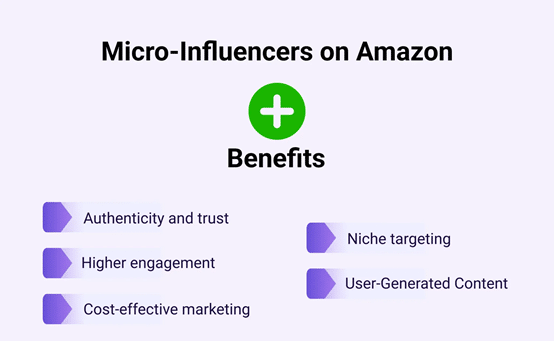
Micro influencers offer something that traditional advertising often struggles to achieve: genuine connections with their audiences. They understand their followers’ interests, communicate in a relatable way, and frequently recommend products that fit naturally into their content.
For Amazon sellers looking to build credibility, attract relevant shoppers, and increase product visibility, working with smaller creators can be a practical marketing strategy.
In this guide, we’ll explore how Amazon micro influencer campaigns work, what makes them effective, which metrics sellers should monitor, and how to develop a campaign that generates meaningful results rather than simply collecting views and likes.
Why Amazon Is an Ideal Platform for Micro Influencer Marketing
Amazon is more than an online shopping destination. People visit the marketplace with specific purchasing intentions. They might be searching for a household essential, comparing skincare products, researching electronics, or looking for the perfect gift.
This buying-focused environment creates an interesting opportunity for micro influencer marketing. When a creator introduces a product that solves a particular problem, their recommendation can encourage interested followers to move directly from product discovery to purchasing.
Here are some reasons why this approach works particularly well.
1. Building Customer Trust
Shoppers don’t always make purchasing decisions based solely on product descriptions, professional photographs, or advertising campaigns. They also want to understand how a product performs in everyday situations.
A recommendation from a creator they regularly follow can provide that additional reassurance.
For example, when a skincare creator with 12,000 followers shares their experience with a moisturizer, followers may pay attention because they are already familiar with the creator’s routines and opinions. They might ask questions, request additional details, or look for similar products based on that recommendation.
This relationship is one of the biggest advantages of micro influencers. Their audiences are generally more concentrated around particular interests, allowing creators to develop stronger relationships with their communities.
Larger influencers can certainly generate widespread awareness, but having a substantial following doesn’t automatically translate into meaningful engagement or purchasing activity.
Micro influencers often have an advantage when it comes to personal interaction. Their followers may recognize their content style, participate in discussions, and feel more comfortable asking questions about recommended products.
For Amazon sellers, this creates an opportunity to introduce products through familiar voices rather than relying entirely on conventional advertisements.
Instead of simply telling customers that a product is worth purchasing, brands can let creators demonstrate its usefulness through real experiences.
2. Amazon Influencer Program vs. Independent Micro Influencer Campaigns
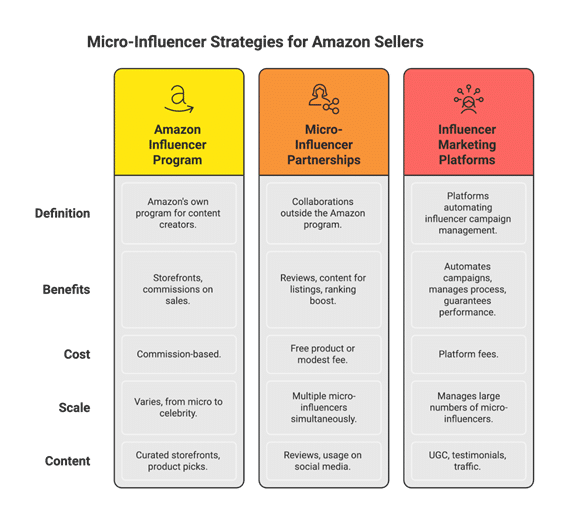
Amazon recognizes the importance of creator-driven marketing and offers its own Amazon Influencer Program.
Through this program, eligible influencers can create Amazon storefronts, recommend products, share shopping links, and earn commissions from qualifying purchases.
However, independent micro influencer campaigns can follow a different approach.
Rather than relying exclusively on Amazon’s influencer ecosystem, brands can establish direct partnerships with smaller creators across platforms such as Instagram, TikTok, and YouTube.
These collaborations may involve product gifting, affiliate commissions, agreed promotional fees, or performance-based incentives.
An affiliate arrangement can be particularly useful because it gives creators an ongoing financial reason to recommend products. Instead of receiving compensation for a single promotional post, they can continue earning through qualifying purchases generated by their links.
A one-time sponsorship can also be effective, but the partnership may end once the agreed content has been published.
Independent campaigns offer another advantage: brands can work with creators whose audiences closely match their target customers, even if those creators aren’t part of Amazon’s official influencer network.
Consider a skincare company partnering with a creator who regularly publishes affordable skincare routines. The creator might introduce the product in a morning routine video, answer questions in the comments, and share another update after using it for several weeks.
This approach gives the product more context and allows potential buyers to see how it fits into everyday life.
Ultimately, the objective isn’t simply to get a product featured in someone’s content. It’s to create a meaningful connection between the product, the creator, and the audience.
3. Affiliate Promotions vs. Authentic Creator Storytelling
Traditional affiliate promotions usually focus on directing people toward a purchasing link. A creator introduces a product, shares a discount code, and encourages followers to visit the listing.
Although this approach can generate traffic, it doesn’t always establish a lasting connection with potential customers.
Creator-led storytelling takes a more natural direction.
Instead of presenting a product as another promotional opportunity, the influencer demonstrates how it fits into their routine. They might explain what problem encouraged them to try it, describe their experience, or show how they use it regularly.
For example, a home organization creator could demonstrate how a particular storage product helps keep a small kitchen organized. Rather than simply mentioning its features, they can show the product in action and explain why it has become part of their daily routine.
This type of content feels more relatable because viewers can understand the product’s practical value.
According to influencer marketing industry research, smaller creators can generate strong engagement because their audiences are often more closely connected to their content.
For Amazon sellers competing in crowded search results, this type of recommendation can help distinguish their products from similar alternatives.
The goal is to move beyond basic product promotion and create content that helps customers understand why a product deserves their attention.
What Makes an Amazon Micro Influencer Campaign Successful?
Not every influencer collaboration will produce the results an Amazon seller expects. Simply sending free products to creators and waiting for sales to increase isn’t a reliable marketing strategy.
A successful campaign requires more than finding someone willing to promote your product. You need to consider the creator’s audience, content style, preferred social platform, and ability to communicate your product’s value.
For example, a creator might have thousands of followers, but if those followers have little interest in your product category, the partnership may generate limited results.
The following factors can help make your campaign more effective.
1. Finding the Right Product-Creator Match
The first step is identifying creators whose content naturally aligns with your product.
A partnership should make sense to the creator and their audience. If the recommendation feels unrelated to their usual content, followers may question its authenticity.
Imagine a fitness influencer promoting a decorative coffee table. Although the product might be useful, it doesn’t necessarily fit the creator’s usual subject matter.
Now consider a home décor creator who regularly shares affordable furnishing ideas. Their audience is already interested in products of this kind, making the recommendation much more relevant.
The same principle applies across different Amazon categories.
- Skincare products work well with beauty enthusiasts and skincare reviewers.
- Kitchen accessories are suitable for food bloggers and home cooking creators.
- Fitness equipment can be promoted through workout instructors and fitness enthusiasts.
- Technology accessories are a natural fit for gadget reviewers and tech-focused creators.
Before approaching an influencer, review their previous posts, audience interests, engagement, and content quality.
The ideal partnership isn’t necessarily with someone who has the largest following. It’s with someone whose audience is likely to appreciate and purchase your product.
2. Choosing the Right Social Media Platform
Different social media platforms offer different opportunities for influencer marketing. Selecting the right channel depends on your product and the type of content you want creators to produce.
Instagram: Instagram works particularly well for visually appealing products. Creators can use Reels, Stories, carousels, and product demonstrations to introduce items to their followers. Beauty, fashion, home décor, and lifestyle products can benefit from this format.
TikTok: TikTok is suitable for short, engaging demonstrations and creative product discoveries. A quick video showing an interesting product feature or solving an everyday problem can attract attention and encourage viewers to explore the listing.
YouTube: YouTube is useful when customers need more information before making a purchase. Detailed reviews, tutorials, comparisons, and unboxing videos allow creators to explain product features and discuss their experiences in greater depth.
For instance, a multifunctional kitchen appliance might benefit from a detailed YouTube demonstration, while a skincare accessory could gain more attention through a short Instagram Reel or TikTok video.
Rather than choosing a platform simply because it’s popular, consider where your potential customers spend their time and what type of content helps them make purchasing decisions.
3. Prioritizing Storytelling Instead of Traditional Sponsorships
Consumers regularly encounter promotional content across social media. As a result, generic advertisements and overly scripted influencer collaborations can struggle to capture their attention.
An effective micro influencer campaign should focus on demonstrating the product’s usefulness instead of repeatedly emphasizing that it’s sponsored.
Creators can introduce products through personal experiences, everyday routines, tutorials, and honest demonstrations.
For example, a cleaning influencer could show how a particular cleaning solution helps remove stubborn kitchen stains. A beauty creator could incorporate a moisturizer into their regular skincare routine and discuss its texture and application.
These demonstrations provide viewers with practical information while making the content feel more natural.
A notable example is Blueland. The sustainable cleaning brand has been associated with micro influencer marketing campaigns through creator collaborations.
One reported campaign involved working with 211 micro creators through Stack Influence. Rather than relying on traditional advertising, creators demonstrated how the products could be incorporated into everyday household routines.
The reported campaign results included an increase in monthly sales from 542 units to 2,562 units over three months, alongside a reported 13x return on investment.
The example illustrates the potential of creator-generated content when brands select relevant influencers and encourage authentic product demonstrations. However, campaign results can vary depending on product demand, audience fit, and execution.
4. Making User-Generated Content Part of the Strategy
User-generated content (UGC) is an important element of micro influencer marketing.
It includes videos, photographs, product demonstrations, testimonials, and other content created by customers or independent creators.
For Amazon sellers, UGC can provide additional ways to showcase products beyond traditional product photography and advertising.
A creator might produce:
- An unboxing video highlighting the packaging and product contents.
- A tutorial explaining how to use the product.
- A before-and-after demonstration showing its practical benefits.
- A comparison highlighting differences between similar products.
- A personal review discussing their experience after regular use.
The key is to make the content informative and relevant to potential buyers.
Sellers should also consider how they can reuse creator content across their marketing channels. With the appropriate usage rights and permissions, suitable UGC can be incorporated into social media campaigns, advertising creatives, and other promotional materials.
Amazon Attribution can help measure the traffic and sales generated by eligible external marketing activities. Meanwhile, affiliate links and promotional codes can provide additional tracking opportunities, depending on the campaign structure.
5. Smaller Audiences Can Generate Meaningful Results
A creator’s follower count doesn’t tell the entire story.
An influencer with 15,000 followers may have a highly engaged audience interested in a particular product category. Another creator with one million followers might have a much broader audience with limited interest in the same product.
This difference can influence campaign performance.
Micro influencers often build communities around specific interests, making their content particularly useful for reaching niche audiences.
For example, a small account dedicated to affordable home improvements might be more valuable to a seller offering kitchen organization products than a general lifestyle account with a much larger following.
The important consideration is audience relevance.
Sellers should evaluate engagement patterns, previous collaborations, audience demographics, and the quality of interactions before selecting creators.
A smaller but relevant audience can generate more meaningful purchasing interest than a larger audience that has little connection with the product.
6. Supporting Influencer Content With Paid Advertising
Influencer marketing and traditional advertising don’t have to operate independently.
Brands can combine creator-generated content with paid promotional campaigns to expand their reach and introduce products to additional audiences.
For example, an influencer might publish a product demonstration on Instagram or TikTok. The brand can then explore using that content in paid campaigns, provided the required advertising permissions and platform policies are followed.
This creates an opportunity to test different creative approaches without producing every advertisement from scratch.
Some creator videos may generate stronger engagement, while others may produce more referral traffic or purchasing activity.
By identifying the content that performs best, sellers can make more informed decisions about where to allocate their advertising budgets.
The purpose isn’t to replace advertising entirely. It’s to complement traditional promotional methods with content that feels more relatable and demonstrates products in real-world situations.
The Most Important Metrics to Measure in an Amazon Micro Influencer Campaign
Measuring campaign performance requires looking beyond follower counts and social media likes.
A video receiving thousands of views might generate very few product visits. Meanwhile, a smaller creator’s demonstration could attract fewer viewers but generate more qualified traffic.
For Amazon sellers, the real objective is understanding how influencer activity contributes to product discovery, customer interest, and sales.
Here are the metrics worth monitoring.
1. Engagement Rate
Engagement rate helps determine how actively an influencer’s audience interacts with their content.
It generally considers interactions such as likes, comments, shares, and other platform-specific engagement signals relative to the creator’s audience or reach.
For example, a creator with 9,000 followers who regularly receives meaningful comments and questions may offer a stronger partnership opportunity than someone with 100,000 followers whose posts generate little interaction.
However, engagement should never be evaluated using a single number.
Review the quality of the interactions as well. Are followers asking questions about the product? Are they discussing its features? Are they tagging friends who might find it useful?
These interactions can provide useful insight into audience interest.
A creator who actively responds to questions can also help potential customers better understand the product.
2. Comments, Saves, and Shares
Not all engagement activities indicate the same level of interest.
Comments can reveal questions, opinions, and purchasing concerns. Saves may suggest that viewers want to revisit the content later, while shares can indicate that someone considers the recommendation relevant enough to send to another person.
For example, a creator demonstrating a useful kitchen gadget might receive comments asking about its durability, price, and availability on Amazon.
These questions help sellers understand what potential buyers want to know before purchasing.
Saves and shares can also help identify content that continues to provide value after its initial publication.
Rather than focusing exclusively on likes, examine the different ways people interact with influencer content.
3. Amazon Referral Traffic
Referral traffic is one of the most useful indicators for understanding whether an influencer campaign is bringing shoppers to your Amazon listings.
Sellers can use Amazon Attribution to measure how external marketing activities contribute to customer visits and purchases.
By creating separate tracking tags for individual creators and campaigns, you can identify which partnerships generate the most valuable traffic.
For example, consider working with three influencers:
- Influencer A publishes an Instagram Reel.
- Influencer B shares a TikTok product demonstration.
- Influencer C uploads a detailed YouTube review.
Using separate tracking tags allows you to compare the performance of these activities.
You can examine metrics such as clicks, detail page views, add-to-cart activity, and attributed purchases where available.
You can also create separate tracking links for different content formats produced by the same creator.
This makes it easier to identify whether an unboxing video, product tutorial, or personal review generates better results.
Without proper tracking, sellers may struggle to determine which influencer partnerships are actually contributing to their marketing objectives.
4. Affiliate Link Conversions and Promotional Code Redemptions
Affiliate links and promotional codes can help brands understand which creators are generating purchasing activity.
When influencers use unique tracking links, sellers can evaluate the traffic and qualifying purchases associated with their promotions.
Promotional codes can provide another way to monitor campaign performance, depending on the available Amazon promotional features and reporting arrangements.
For example, a seller might collaborate with two creators promoting the same product.
The first creator publishes an Instagram Reel, while the second shares a detailed YouTube review.
By comparing their tracking results, the seller can determine which collaboration attracts more customers and generates stronger purchasing activity.
These insights are valuable when planning future campaigns.
Instead of distributing the same budget across every creator, brands can prioritize partnerships and content formats that demonstrate stronger performance.
5. Understanding the Long-Term Value of Influencer Content
The benefits of micro influencer marketing don’t necessarily disappear when a creator publishes their content.
A product review, tutorial, or demonstration can continue attracting attention long after its original publication, depending on the platform and content format.
For instance, a TikTok video might receive limited attention initially but gain additional views weeks later when viewers discover it through recommendations or searches.
Similarly, a YouTube product review may continue attracting shoppers who research the product months after the video was uploaded.
The popularity of the #TikTokMadeMeBuyIt trend demonstrates how social media discovery can influence purchasing decisions.
Beauty products, household gadgets, and everyday accessories have all benefited from creator recommendations and demonstrations circulating across social platforms.
One frequently discussed example is L’Oréal Paris Telescopic mascara, which has received considerable attention through beauty creator content.
The broader lesson for Amazon sellers is that influencer content can offer value beyond its initial publication date.
Building a collection of useful, relevant creator content can support product discovery over an extended period.
How to Launch an Amazon Micro Influencer Campaign
Starting a micro influencer campaign doesn’t have to involve a complicated marketing process. With the right preparation, Amazon sellers can identify suitable creators, establish partnerships, and measure the results.
Here are four practical steps to get started.
Step 1: Research and Identify Relevant Influencers
Your first task is finding creators who already produce content related to your product category.
Start by exploring social media platforms and searching for relevant hashtags, product reviews, competitor mentions, and niche communities.
For example, if you’re selling kitchen accessories, look for creators who publish cooking tutorials, kitchen organization tips, product demonstrations, and home improvement content.
You can also explore influencer discovery platforms to identify potential collaborators.
When evaluating creators, consider the following:
- Audience relevance: Do their followers match your target customers?
- Engagement quality: Are people genuinely interacting with their content?
- Content consistency: Do they regularly publish within your product category?
- Previous collaborations: How do they present sponsored products?
- Audience authenticity: Does their engagement appear natural and credible?
Don’t make follower count your primary selection criterion. A smaller creator with a highly relevant audience may be a more valuable partner.
Step 2: Contact Creators With a Personalized Pitch
Once you’ve shortlisted potential influencers, the next step is reaching out to them.
Avoid sending identical promotional messages to every creator. A generic partnership request may fail to communicate why your product is relevant to their audience.
Instead, take some time to understand their content and explain why you believe a collaboration would be suitable.
Your message should briefly introduce your brand, explain the product, and outline what you would like to offer.
For example, if a creator regularly publishes skincare routines, explain how your skincare product could fit naturally into their existing content.
Keep the communication professional and straightforward. You should also make the collaboration requirements clear from the beginning, including content expectations, compensation, timelines, and usage rights.
Step 3: Create a Fair and Attractive Partnership Offer
Not every micro influencer expects a large upfront payment.
Depending on their experience, audience size, and collaboration preferences, creators may consider different compensation arrangements.
Some common options include:
- Product gifting: Providing a complimentary product in exchange for an agreed collaboration, where permitted and transparently disclosed.
- Affiliate commissions: Offering commissions on qualifying purchases generated through tracked links.
- Fixed payments: Paying an agreed amount for specific promotional content.
- Performance-based incentives: Providing additional compensation when agreed campaign targets are achieved.
The right arrangement depends on your marketing budget and the creator’s expectations.
Make sure the agreement clearly explains deliverables, payment terms, content deadlines, promotional disclosures, and any permissions required to reuse the content.
A transparent partnership creates a better experience for both parties and helps establish long-term working relationships.
Step 4: Give Creators Creative Freedom
Once the partnership is finalized, allow creators to communicate in their natural style.
You can provide essential product information, key features, usage instructions, and points that should be covered. However, avoid controlling every sentence or demanding that creators follow a rigid script.
Their audiences follow them because they appreciate their personality, opinions, and content style.
Overly scripted promotions can make a recommendation feel less genuine.
Instead, encourage creators to demonstrate the product, share their actual experiences, and address questions their audiences might have.
You should also prepare your tracking system before the content goes live.
Use Amazon Attribution where eligible, affiliate tracking links, or suitable promotional codes to measure campaign performance.
This will help you understand which creators are contributing to your marketing objectives and where future improvements are needed.
Common Mistakes Sellers Make With Amazon Micro Influencers
Micro influencer marketing can offer valuable opportunities, but poor campaign planning can prevent sellers from achieving their desired results.
Many businesses focus too much on getting influencers to promote their products and overlook the factors that actually influence campaign performance.
Here are some common mistakes worth avoiding.
1. Assuming Influencer Marketing Requires a Huge Budget
One common misconception is that successful influencer campaigns require thousands of dollars in sponsorship payments.
Although established creators may charge substantial fees, smaller influencers can offer more accessible partnership opportunities.
Depending on their expectations, sellers can explore product gifting, affiliate arrangements, and smaller paid collaborations.
The important thing is finding creators who genuinely connect with your target audience.
Spending more money doesn’t automatically guarantee better results. A relevant creator with an engaged audience may offer better value than an expensive partnership that generates little purchasing interest.
2. Expecting Every Campaign to Go Viral
Another mistake is treating viral exposure as the primary measure of influencer marketing success.
Not every video will receive millions of views, and not every creator recommendation will immediately increase sales.
Micro influencer campaigns are often more effective when approached as an ongoing marketing strategy rather than a one-time attempt to generate massive attention.
Working with multiple relevant creators can help brands reach different audience segments and build awareness over time.
Focus on consistent product discovery, qualified traffic, and measurable purchasing activity instead of expecting every collaboration to become a viral success.
3. Choosing the Wrong Social Media Platform
A creator’s preferred platform should match the type of product being promoted.
Forcing a lengthy YouTube review when your product is better suited to a quick visual demonstration may limit the campaign’s effectiveness.
Similarly, products requiring detailed explanations may not communicate their full value through a short social media video.
Before launching a campaign, consider the product’s features and the type of information customers need before purchasing.
Choose content formats that make those features easy to understand.
4. Making Every Piece of Content Look Like an Advertisement
Professional production can be useful, but overly promotional content may reduce the personal connection that makes micro influencer marketing valuable.
Consumers often appreciate demonstrations that show how a product works in realistic situations.
A simple kitchen demonstration, an everyday skincare routine, or an honest product review can communicate more than an elaborate promotional video.
Allow creators to maintain their usual presentation style while ensuring that all important product information is accurate.
5. Ignoring Campaign Tracking and Performance Analysis
Perhaps one of the biggest mistakes is launching influencer collaborations without establishing a way to measure their results.
Sending products to creators and waiting for sales to increase doesn’t provide enough information to evaluate campaign performance.
Without appropriate tracking, you may not know which creators generated traffic, which content formats performed best, or which partnerships contributed to purchases.
Set up tracking before launching your campaign.
Review referral activity, attributed sales, affiliate conversions, promotional code usage, and other relevant metrics.
Use these findings to improve future collaborations and allocate your marketing budget more effectively.
Final Thoughts
An Amazon micro influencer campaign can be a valuable growth opportunity for sellers who want to build brand awareness, reach targeted shoppers, and establish credibility without depending entirely on expensive advertising.
The biggest advantage of working with smaller creators is their ability to connect with specific audiences through relatable content and personal recommendations.
However, successful campaigns require more than simply finding influencers and sending them products. Sellers need to identify suitable creators, select the right social media platforms, establish transparent partnerships, and monitor campaign performance.
Focus on relevance rather than reach. Give creators the freedom to demonstrate your products naturally, and prioritize content that answers customer questions and highlights real-world benefits.
Most importantly, treat influencer marketing as a long-term investment in customer relationships rather than a shortcut to immediate sales.
You don’t necessarily need an influencer with millions of followers to make your product stand out. Sometimes, the right recommendation from a creator with a small but genuinely interested audience can introduce your brand to customers who might otherwise never discover it.
For Amazon sellers, the real opportunity lies in turning authentic product recommendations into lasting brand recognition, customer trust, and measurable business growth.