Understanding Amazon FBA fees is an essential part of running a profitable Amazon business. These charges directly influence your product margins, pricing decisions, and overall business performance.
For sellers using Fulfillment by Amazon (FBA), knowing exactly what Amazon charges for storage, order fulfillment, inventory placement, and other services can make a significant difference.
Amazon regularly reviews its fee structure, introducing adjustments that may increase certain costs while reducing others. Staying informed about these changes allows sellers to plan their expenses, manage inventory more effectively, and protect their profit margins.
In this guide, we’ll explore the major Amazon FBA fees, explain how they work, and highlight the fee updates covered in the original 2024 schedule.
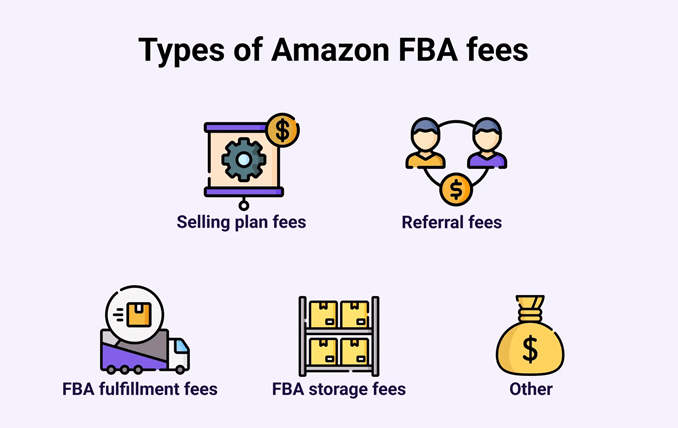
What Makes Amazon FBA Fees Important?
Amazon FBA allows third-party sellers to store their products in Amazon’s fulfillment centers. Once an order is placed, Amazon takes care of picking, packing, shipping, and several aspects of customer service.
This arrangement removes many of the operational responsibilities associated with running an online store. Instead of managing warehouses and coordinating every shipment independently, sellers can rely on Amazon’s established fulfillment network.
Using FBA also gives sellers more time to concentrate on important business activities, including product research, advertising, marketing, and business expansion. However, these conveniences come with different fees that must be included when calculating profitability.
How Does Amazon FBA Pricing Work?
Amazon calculates FBA charges using several product-related factors. Understanding these elements helps sellers estimate their expenses before sending inventory to fulfillment centers.
The primary factors include:
- Product Weight: Amazon considers the shipping weight of an item when determining its fulfillment charges. Depending on the applicable size tier, dimensional weight may also influence the calculation.
- Product Dimensions: The length, width, and height of a product determine its size classification, which affects the applicable fee.
- Product Category: Different product categories may have different fee structures. Apparel, electronics, handmade products, and other categories can be subject to specific rates.
FBA charges also depend on where an order originates. Products sold through Amazon and orders fulfilled for external sales channels may have different fee arrangements.
Two of the most important expenses sellers should account for are fulfillment fees and monthly inventory storage fees. Additional charges may apply depending on inventory levels, returns, product condition, and the services selected.
Amazon FBA Fees Every Seller Should Understand
Amazon’s fee structure includes several charges that can influence a seller’s operating costs. Below is an overview of the major fees and the 2024 changes covered in the source material.
1. FBA Fulfillment Fees (Excluding Apparel)
Fulfillment fees are among the primary expenses associated with selling through Amazon FBA. They cover the services involved in processing customer orders, including picking products from inventory, packaging them, and shipping them to buyers.
Amazon also provides support for several order-related activities, such as payment processing, shipping inquiries, and customer returns.
The amount sellers pay for fulfillment depends largely on the product’s dimensions, shipping weight, and applicable size category.
As part of its 2024 fee revisions, Amazon introduced more detailed pricing tiers for standard-size products on February 5, 2024. It also replaced some of the previous oversized classifications with new categories, including large bulky and extra-large.
Further adjustments took effect on April 15, 2024, when Amazon reduced fulfillment rates for several standard-size and large bulky products.
Fulfillment Fees for Non-Standard Size Products (January 15–February 4, 2024)
Before the introduction of the revised size classifications, Amazon used oversized categories to calculate fulfillment charges for larger products. The applicable fees depended on the product’s weight and its assigned oversized category.
Fulfillment Fees for Non-Standard Size Products (February 5, 2024 Onward)
From February 5, 2024, Amazon introduced large bulky and extra-large classifications to provide a more detailed fee structure for larger products.
The revised pricing was subsequently adjusted on April 15, 2024, with lower rates introduced for certain large bulky products. The extra-large categories continued to follow their respective weight-based pricing structures.
Important Note: For small standard products and extra-large products weighing 150 pounds or more, Amazon calculates shipping fees using unit weight. For most other size categories, the calculation is based on whichever is greater: the product’s unit weight or dimensional weight.
2. FBA Fulfillment Fees for Apparel
Apparel products follow a separate fulfillment fee structure under Amazon FBA. These charges vary according to the item’s size classification and shipping weight.
On February 5, 2024, Amazon expanded its size classifications by introducing large bulky and extra-large categories. This change provided additional weight and size brackets for apparel products that did not fit within the existing standard-size tiers.
Amazon subsequently reduced fulfillment fees for selected standard-size and large bulky apparel products beginning April 15, 2024.
Fulfillment Fees for Non-Standard Size Apparel (January 15–February 4, 2024)
Before the revised classifications were introduced, oversized apparel products were divided into small, medium, large, and special oversized categories.
The applicable fulfillment charge depended on the product’s shipping weight and its assigned size category.
Fulfillment Fees for Non-Standard Size Apparel (February 5, 2024 Onward)
Following the February 2024 changes, Amazon replaced the previous oversized classifications with large bulky and extra-large categories.
The updated fee structure also included adjustments scheduled for April 15, 2024, particularly for large bulky products. Extra-large apparel products continued to follow weight-based fulfillment rates.
3. Fulfillment Fees for Dangerous Goods
Products classified as dangerous goods require additional care during storage, handling, and transportation. Because these items involve specialized fulfillment requirements, Amazon applies a separate fee structure to them.
On February 5, 2024, Amazon introduced more detailed fulfillment pricing for dangerous goods. The revised structure included additional weight brackets for standard-size products and new classifications for large bulky and extra-large items.
Further reductions to selected standard-size and large bulky fulfillment rates became effective on April 15, 2024.
These adjustments were intended to provide a more detailed pricing structure based on the size and weight of dangerous goods.
Fulfillment Fees for Non-Standard Size Dangerous Goods (January 15–February 4, 2024)
Before the updated classifications took effect, Amazon calculated fulfillment charges for oversized dangerous goods using four categories: small, medium, large, and special oversized.
Each category had a different base fee, with additional charges applied according to the product’s shipping weight.
Fulfillment Fees for Non-Standard Size Dangerous Goods (February 5, 2024 Onward)
The February 2024 revision introduced large bulky and extra-large categories for dangerous goods. These classifications included different base charges and additional weight-based fees.
Some of these rates were adjusted again on April 15, 2024, while several extra-large categories maintained their previous pricing.
4. Low-Price FBA Fees
Amazon offers reduced fulfillment rates for eligible products priced below $10 through its Low-Price FBA program.
This pricing structure allows sellers to benefit from lower fulfillment expenses while maintaining the delivery speeds associated with standard FBA services.
According to the 2024 fee schedule, eligible products received fulfillment rates that were $0.77 lower than standard FBA charges.
Customers with Prime memberships could receive free shipping on qualifying orders, while non-Prime customers received standard shipping options.
The program covered both apparel and non-apparel products, with different fee schedules based on size and shipping weight.
5. Fulfillment Fee Changes for Dangerous Goods
Amazon also introduced specific pricing adjustments for dangerous goods eligible for its lower-price fulfillment structure.
These charges differ from regular product fulfillment fees because dangerous goods require additional handling and storage considerations.
The revised 2024 rates included changes across standard-size, large bulky, and extra-large classifications. Depending on the product’s weight and size, sellers could be charged a base fulfillment fee along with additional weight-based amounts.
6. FBA Inbound Placement Service Fee
Amazon introduced changes to its FBA Inbound Placement Service Fee effective March 1, 2024.
This fee relates to how sellers distribute their inventory when shipping products to Amazon fulfillment centers. Depending on the shipment arrangement selected, sellers may pay different charges for sending their inventory to designated locations.
Amazon provides different shipment placement options, including:
- Minimal Shipment Splits: Sellers send their inventory to a single fulfillment center, which generally involves a higher placement fee.
- Partial Shipment Splits: Inventory is distributed across two or three fulfillment centers, with comparatively lower placement charges.
- Amazon-Optimized Shipment Splits: Sellers distribute inventory across four or more locations according to Amazon’s recommended placement arrangement. This option can qualify for zero inbound placement fees under the applicable conditions.
The revised pricing varies according to the product’s size classification and shipping weight.
These placement charges should be considered when calculating the total cost of sending inventory to Amazon. Selecting an appropriate shipment configuration can help sellers manage inbound expenses while meeting Amazon’s inventory distribution requirements.
7. Ships in Product Packaging (SIPP) Program
Amazon’s Ships in Product Packaging (SIPP) program allows eligible products to reach customers in their original packaging without requiring additional Amazon packaging.
Products that meet Amazon’s packaging certification requirements can qualify for reduced FBA fulfillment fees on every certified unit shipped. This program encourages sellers to use packaging that is durable enough to protect products throughout the delivery process while minimizing unnecessary packaging materials.
However, not every product qualifies. Items measuring less than 6 x 4 x 0.375 inches, dangerous goods, and extra-large products are excluded from the discounted SIPP rates.
Starting February 5, 2024, Amazon applied the revised 2024 fulfillment fee discounts to eligible SIPP-certified products.
The discount amount depends on the product’s size tier, shipping weight, and whether it belongs to the apparel or non-apparel category.
8. Low-Inventory-Level Fee
Amazon introduced a Low-Inventory-Level Fee for standard-size products that consistently maintain insufficient inventory compared with customer demand.
Maintaining low stock levels can make it harder for Amazon to distribute products efficiently throughout its fulfillment network. This may affect delivery speeds and increase the operational costs associated with fulfilling customer orders.
Under the 2024 fee structure, this charge applied when a product’s historical days of supply fell below 28 days.
Historical days of supply refers to the relationship between a seller’s available inventory and the product’s historical customer demand.
If a product meets the eligibility requirements, Amazon includes the applicable low-inventory-level charge in its FBA fulfillment fee for each shipped unit.
The fee varies according to the product’s size category and historical inventory coverage.
Sellers can reduce the likelihood of these additional charges by monitoring inventory levels, reviewing sales patterns, and maintaining stock that aligns with expected demand.
9. FBA Removal and Disposal Fees
Amazon charges removal and disposal fees when sellers choose to remove products from fulfillment centers or request that Amazon dispose of their inventory.
A removal order allows sellers to retrieve products stored in Amazon warehouses, while a disposal request authorizes Amazon to dispose of those units.
These services can be useful when managing excess inventory, slow-moving products, damaged goods, or items that sellers no longer intend to offer.
Amazon determines the applicable removal or disposal charge when the seller submits the order. The fee is then applied at the agreed rate when the inventory leaves the fulfillment center.
On February 5, 2024, Amazon introduced updated removal and disposal charges across different product size and weight categories.
While some standard-size fees experienced relatively small increases, several large bulky, extra-large, and special-handling categories also received revised pricing.
Before submitting a removal or disposal request, sellers should evaluate the associated costs and compare them with the potential value of recovering or liquidating their inventory.
10. FBA Liquidation Processing Fees
FBA Liquidations offers sellers another way to manage excess inventory and customer-returned products without paying the usual removal or disposal expenses.
Instead of having unsold inventory returned or discarded, sellers can use Amazon’s liquidation service to make eligible products available to designated liquidators.
Through this process, sellers may recover a portion of the original inventory cost. This amount is known as the net recovery value.
Liquidation can also help sellers avoid ongoing monthly storage charges and aged-inventory surcharges on eligible inventory.
Amazon generally credits the net recovery value to the seller’s account within 90 days of the liquidation order being submitted.
Two separate fees apply to each liquidated product:
- Liquidation Referral Fee: Amazon charges a 15% referral fee based on the product’s gross recovery value.
- Liquidation Processing Fee: This charge depends on the product’s size and shipping weight.
According to the fee information covered in the original 2024 schedule, liquidation fees remained unchanged.
11. Monthly Inventory Storage Fees
Amazon charges monthly inventory storage fees for products kept inside its fulfillment centers.
These charges are calculated according to the amount of warehouse space occupied by a seller’s inventory. Amazon generally separates products into standard-size and large bulky or extra-large categories when determining storage expenses.
Storage fees are typically assessed between the 7th and 15th of the following month.
Amazon introduced a reduction in off-peak storage fees for standard-size products beginning April 1, 2024. The adjustment reduced the monthly charge by $0.09 per cubic foot for storage during January through September.
Sellers began seeing this change in May 2024 charges for inventory stored during April.
However, the adjustment did not affect off-peak storage rates for large bulky and extra-large products. Peak-season storage fees across all applicable size categories also remained unchanged.
Since storage costs can accumulate over time, sellers should pay close attention to inventory turnover. Keeping products in fulfillment centers longer than necessary can reduce overall profitability, particularly when demand is low.
12. Storage Utilization Surcharge
Apart from regular monthly storage charges, certain sellers may also be subject to an additional Storage Utilization Surcharge.
This surcharge is connected to the amount of warehouse space a seller uses compared with the volume of inventory they send through Amazon’s fulfillment network.
From April 1, 2024, Amazon introduced more detailed fee brackets for calculating this surcharge. The revised structure also expanded its application to eligible Professional sellers whose storage utilization ratio exceeded 22 weeks.
Inventory that had been stored for 30 days or less was excluded from this surcharge.
The adjustment appeared in May 2024 billing for inventory storage recorded during April.
The surcharge varies depending on the seller’s storage utilization ratio and the size classification of the products.
Off-Peak Storage Utilization Surcharge
During January through September, the surcharge structure included different pricing levels for standard-size and oversized inventory.
Peak-Season Storage Utilization Surcharge
Amazon also applies different storage utilization rates during the October-to-December peak season.
These charges reflect the additional storage costs associated with the busiest shopping period of the year. The applicable surcharge increases as the storage utilization ratio moves into higher brackets.
New sellers, sellers using Individual selling accounts, and sellers maintaining less than 25 cubic feet of daily volume were listed as exempt from this surcharge under the conditions described in the original fee schedule.
13. Aged Inventory Surcharge
Amazon’s Aged Inventory Surcharge applies to eligible inventory that remains inside its fulfillment network for an extended period.
Previously known as the long-term storage fee, this charge is designed to encourage sellers to manage slow-moving products and prevent inventory from occupying warehouse space unnecessarily.
Under the fee structure described in the original 2024 schedule, products stored for 181 days or longer could become subject to additional charges.
Amazon revised certain aged-inventory rates beginning February 15, 2024. The most notable increases affected products stored between 271 and 365 days.
However, the charges for inventory aged between 181 and 270 days and inventory stored for 365 days or longer remained unchanged.
Amazon assesses these charges monthly, on the 15th of each month.
For sellers, regularly reviewing inventory age reports can help identify products that are taking too long to sell. Taking action early through promotions, price adjustments, removal orders, or liquidation can help prevent unnecessary storage expenses.
14. Multi-Channel Fulfillment (MCF) Fees
Amazon’s Multi-Channel Fulfillment (MCF) service allows sellers to use Amazon’s fulfillment network for orders received through channels outside the Amazon marketplace.
For example, sellers can fulfill purchases made through their own websites or other e-commerce platforms without maintaining separate warehousing and shipping arrangements.
Amazon manages the fulfillment process, including picking, packing, and delivering orders to customers.
MCF fulfillment fees depend on several factors, including the product’s size, shipping weight, order quantity, and selected delivery speed.
Sellers can use the applicable fee schedule to estimate fulfillment expenses for orders placed through external sales channels.
15. Amazon Referral Fees
Referral fees are charges Amazon collects for allowing sellers to list and sell products through its marketplace.
These fees are generally calculated as a percentage of the total selling price of an item, including applicable shipping costs.
The percentage varies depending on the product category, meaning sellers operating in different niches may pay different referral rates.
Referral fees are charged for each item sold and should always be included when calculating product profitability.
Amazon introduced specific referral fee reductions for eligible apparel products priced below $20, effective January 15, 2024.
Under these changes:
- Products priced below $15 saw their referral fee decrease from 17% to 5%.
- Products priced between $15 and $20 received a reduction from 17% to 10%.
- Referral fees for other product categories remained unchanged under the announced adjustment.
These changes provided an opportunity for eligible apparel sellers to reduce marketplace expenses and improve their profit margins.
16. Amazon Vine Fees
Amazon Vine is a program that helps brands and sellers generate product reviews by providing selected reviewers with eligible products.
The program is particularly useful when introducing new products to the marketplace because customer feedback can help shoppers make more informed purchasing decisions.
Through Vine, participating sellers can enroll eligible products and provide units to trusted reviewers, who then share their opinions through Amazon’s review system.
Amazon announced a revised and more affordable Vine pricing structure to make the program more accessible to participating brands.
The updated fee model applied to products enrolled in the program beginning October 19, 2023.
Sellers considering Vine should review the applicable enrollment charges and program requirements before registering their products.
17. US FBA New Selection Program
Amazon’s US FBA New Selection Program encourages sellers to introduce new products to the marketplace by providing benefits for eligible new-to-FBA selections.
The initiative is intended to expand product availability while helping sellers introduce new inventory through Amazon’s fulfillment network.
Beginning March 1, 2024, Amazon expanded the benefits available through the program.
Under the revised offering, eligible new-to-FBA parent products could receive an average 10% rebate on sales. Amazon also extended certain benefits to non-branded product selections.
Additional improvements included expanded eligibility for oversized products and access to Amazon Vine benefits for associated eligible selections.
These incentives can help qualifying sellers manage some of the initial expenses associated with launching new products through FBA.
18. Inbound Defect Fee
Amazon’s Inbound Defect Fee applies to certain shipments that do not follow the expected inbound shipping arrangements.
When inventory does not arrive at the designated fulfillment center or fails to meet Amazon’s shipping requirements, additional operational work may be necessary to redirect, receive, and process the shipment.
To account for these additional expenses, Amazon introduced an inbound defect fee effective March 1, 2024.
Under the announced policy, the fee applied to certain domestic shipments that failed to arrive within 45 days of shipment creation.
For international shipments included in multiple-destination shipping plans, the applicable arrival period was 30 days from the initial shipment.
The fee was also introduced for shipments directed to a different location from the one assigned during shipment creation.
To avoid these additional charges, sellers should carefully review their shipment plans, verify destination information, and monitor delivery progress to ensure inventory reaches the correct fulfillment centers within the required timeframe.
19. Return Processing Fee
Amazon’s Return Processing Fee covers certain expenses associated with handling customer returns.
When a customer sends a product back, Amazon may need to inspect the item, process the return, prepare it for resale, or determine whether it should be removed or disposed of.
These activities create additional operational costs, which the return processing fee is designed to address.
Amazon announced an expansion of its returns processing fee policy to cover high-return-rate products across most categories, excluding apparel and shoes.
The revised policy was scheduled to take effect on June 1, 2024.
Rather than applying the charge to every returned product, Amazon planned to target items with particularly high return rates compared with other products in their respective categories.
The existing average return processing fee structure for apparel and footwear was set to remain unchanged.
Sellers should monitor return patterns and identify recurring customer complaints to reduce unnecessary returns and the associated expenses.
20. Inventory Performance Index (IPI)
The Inventory Performance Index (IPI) is an Amazon metric used to evaluate how effectively sellers manage their FBA inventory.
It provides insight into inventory management practices and helps sellers understand how efficiently they are using Amazon’s fulfillment network.
Maintaining a healthy inventory position is important for balancing product availability with storage expenses.
Sellers need to avoid two common inventory problems: holding excessive stock that takes up warehouse space and maintaining insufficient inventory that may result in missed sales opportunities.
Regularly monitoring inventory performance, identifying slow-moving products, and adjusting replenishment plans can help sellers maintain more efficient inventory operations.
A well-managed inventory strategy can also support better cost control and improve overall FBA performance.
Conclusion
Understanding Amazon FBA fees is essential for maintaining a profitable and sustainable selling business. From fulfillment and storage charges to inventory placement, removal, and return processing fees, every expense can influence a seller’s overall profit margins.
Amazon’s 2024 fee adjustments introduced several changes across its fulfillment and storage services. While certain fees were reduced to provide sellers with cost-saving opportunities, others increased or expanded to account for additional operational requirements.
For Amazon sellers, staying informed about these fee structures is important when making decisions about product pricing, inventory replenishment, and fulfillment strategies.
Careful inventory management, accurate cost calculations, and regular reviews of Amazon’s fee updates can help sellers avoid unnecessary expenses and improve their financial performance.
Ultimately, understanding how Amazon FBA charges work allows sellers to make better business decisions, manage operational costs, and build a more profitable presence in the competitive Amazon marketplace.