Buy Now, Pay Later (BNPL) has become an increasingly popular payment solution in the United States, particularly following the rapid growth of online shopping during the COVID-19 pandemic.
The market has experienced considerable expansion over recent years. One industry forecast estimated that the US BNPL market would grow from $5.01 billion in 2021 to $25.23 billion by 2028, representing a compound annual growth rate (CAGR) of approximately 26%.
Several factors have contributed to this growth, including increasing digital adoption, wider merchant acceptance, growing interest among younger consumers, and financial pressure on household budgets.
Traditional credit cards have also become less attractive to some shoppers due to high interest rates, additional fees, missed payment penalties, and changing credit limits. Consequently, consumers have started exploring alternative payment methods that offer greater flexibility.
This is where Buy Now, Pay Later (BNPL) enters the picture. It provides shoppers with another way to purchase products immediately while spreading the cost across multiple payments.
But what makes BNPL such an attractive option?
BNPL allows customers to receive their purchases without paying the entire amount upfront. Depending on the provider and payment plan, shoppers can settle their balance later or divide it into smaller installments. Some plans are interest-free when payments are made on schedule, while others may include interest or additional charges.
For e-commerce businesses, this payment method presents an opportunity to improve the shopping experience, reach more customers, and potentially increase conversions.
Offering flexible payment options can also help brands differentiate themselves in an increasingly competitive online marketplace.
In this guide, we’ll explore how BNPL works, why customers prefer it, and how e-commerce brands can use it to support sales growth.
What Is Buy Now, Pay Later in E-commerce?
Buy Now, Pay Later is a point-of-sale financing option that allows customers to purchase products without paying the full price at checkout.
Instead of completing the entire payment immediately, shoppers can select a BNPL option and receive their products while paying the balance according to an agreed schedule.
Depending on the provider, customers may be able to pay the full amount after a short period, divide the cost into several installments, or choose a longer-term financing arrangement.
Payments are generally collected automatically through a linked debit card, credit card, or another approved payment method.
For merchants, BNPL providers typically charge a transaction fee. These charges may include a percentage of the purchase value and an additional fixed fee. The exact amount depends on the provider, merchant agreement, and location. Fees in some BNPL arrangements have been reported in the range of 2% to 6%.
Customers may encounter three common BNPL payment structures:
- Pay Later in Full: Customers receive their order and pay the complete amount after an agreed period, such as 30 days.
- Short-Term Installments: The purchase price is divided into three or four smaller payments, which may be interest-free when paid on time.
- Long-Term Financing: Customers spread the cost across several months, sometimes extending to 36 monthly payments. Interest may apply depending on the financing terms.
The payment plans available to shoppers vary by BNPL provider, country, purchase value, and eligibility requirements.
How Does BNPL Work for Shoppers and Merchants?
The BNPL payment process is relatively straightforward. Both shoppers and merchants participate in the transaction, while the financing provider manages the payment arrangement.
Consider an example.
Bob wants to purchase an electronic gadget priced at $100 from an online store. At checkout, he notices a Buy Now, Pay Later option and selects it instead of paying the full amount immediately.
The BNPL provider reviews his application and determines whether he qualifies for the selected payment plan. Depending on its requirements, the provider may perform an eligibility or credit assessment.
Once the transaction is approved, the merchant receives the payment from the BNPL provider, minus the applicable transaction charges.
For example, if the provider charges the merchant a $4 fee, the merchant receives $96 from the $100 transaction.
Bob then follows the agreed repayment schedule. Under a four-installment arrangement, he might pay $25 at a time until the purchase is fully settled. Some plans may require an initial payment at checkout.
The BNPL provider is responsible for collecting the scheduled installments through Bob’s selected payment method.
If Bob follows the payment schedule, he may avoid interest and late-payment charges under an eligible interest-free plan. However, missing payments or selecting a longer-term financing option could result in additional costs, depending on the agreement.
For the merchant, the main advantage is receiving payment at the time of purchase rather than waiting for the customer to complete every installment. The merchant pays the agreed transaction fee, while the provider manages the repayment arrangement.
Choosing the Right BNPL Plan for Your Products
Merchants should consider their average product prices before selecting a BNPL partner.
Businesses selling expensive products may benefit from providers offering longer repayment periods, such as six or twelve months. These arrangements can make higher-priced purchases more manageable for customers.
On the other hand, stores selling lower-priced products may find shorter installment plans more practical. A three- or four-payment arrangement can provide flexibility without introducing an unnecessarily long repayment period.
Ultimately, the right BNPL solution should match the products, customer expectations, and financial goals of the business.
The Growing Popularity of Buy Now, Pay Later Among US Consumers
Although installment-based shopping is not a new concept in the United States, digital BNPL services have introduced a more convenient way to access this type of financing.
Online shoppers can now explore payment plans directly during checkout without going through the traditional financing process associated with some credit products.
Earlier industry projections highlighted the scale of this growing trend. For example, estimates suggested that BNPL gross merchandise value (GMV) in the United States could increase from approximately $49.3 billion in 2021 to $443.8 billion by 2028.
Other industry estimates projected that worldwide BNPL users could reach 360 million in 2022 and grow to approximately 900 million by 2027.
The increasing adoption of BNPL has been influenced by several factors, including changing shopping habits, demand for financial flexibility, and the growth of online retail.
During the pandemic, supply chain disruptions and product shortages also encouraged some shoppers to purchase holiday items earlier than usual. Flexible payment services provided another way to manage these purchases, contributing to increased interest in BNPL applications.
As this payment method continues to influence the e-commerce landscape, businesses need to understand what motivates customers to use it.
Here are four important reasons behind its popularity.
1. Changing Attitudes Toward Credit Cards
Credit cards have traditionally been a popular method of financing purchases. However, high interest rates, additional charges, changing credit limits, and concerns about accumulating debt have encouraged some consumers to consider alternatives.
BNPL offers a different approach by allowing customers to divide their purchases into smaller payments.
Many short-term BNPL plans provide interest-free installments when customers meet their repayment obligations. This can make them appealing to shoppers who prefer knowing exactly when and how much they need to pay.
Additionally, the availability of these options directly at checkout creates a convenient purchasing experience.
For consumers who want an alternative to conventional credit card financing, BNPL can offer greater control over individual purchase schedules. However, customers should still review the terms carefully and avoid taking on installments they cannot comfortably manage.
2. Limited Access to Traditional Credit
Younger shoppers, particularly members of Generation Z, represent an important audience for digital payment services.
Many young consumers are entering the workforce, developing independent spending habits, and making their first online purchases. However, limited credit histories or inconsistent income can make it difficult for some of them to qualify for traditional credit products.
BNPL services provide another potential financing option for eligible shoppers.
Rather than applying for a conventional credit card, customers can access an installment payment plan through a provider’s checkout process.
The application and approval requirements vary between providers, and approval is not guaranteed. Some BNPL services also report payment activity to credit bureaus, while others do not.
For e-commerce businesses, offering BNPL can help make products more accessible to younger shoppers who prefer digital payment experiences and flexible purchasing arrangements.
3. A Faster and More Convenient Checkout Experience
Convenience is one of the biggest factors influencing online shopping decisions.
Modern consumers expect websites to provide straightforward navigation, quick checkout processes, and payment methods that suit their preferences.
Younger generations, including Millennials and Gen Z, are particularly comfortable with digital shopping experiences. They often compare products, browse different retailers, and evaluate available payment options before deciding where to make a purchase.
BNPL supports this behavior by introducing another payment choice at checkout.
Instead of paying the full purchase price immediately, eligible customers can select an installment plan and complete their order through the provider’s approval process.
This flexibility can make the purchasing journey more convenient, particularly for shoppers managing larger expenses.
By providing different payment options, e-commerce brands can create a checkout experience that better accommodates varying customer preferences.
4. A More Streamlined Refund Experience
Refund procedures can sometimes create frustration for online shoppers.
When customers cancel an order or return a product, the time required to process their refund may depend on the retailer, payment provider, bank, and return policy.
BNPL providers also have procedures for handling refunds and canceled transactions.
When a merchant approves a cancellation or return, the BNPL provider adjusts the customer’s outstanding balance according to the applicable terms. Any payments already collected may be refunded, while remaining installments may be reduced or canceled.
The exact processing time depends on the provider and payment method, so refunds are not necessarily instant.
For example, imagine a customer purchases a phone cover through a BNPL service but later decides to return it. Once the retailer approves the return, the provider updates the customer’s payment arrangement instead of requiring the shopper to continue paying for the canceled purchase.
A clear and efficient refund process can improve customer confidence and make flexible payment options more attractive.
What Are the Benefits of Offering BNPL for E-commerce Merchants?
Understanding customer demand is only one part of the BNPL opportunity. Businesses also need to evaluate how offering installment payments could support their sales performance and overall operations.
By introducing BNPL at checkout, e-commerce merchants can potentially improve purchasing flexibility, attract additional customers, and reduce some of the financial hesitation associated with larger purchases.
Here are four important benefits merchants should consider.
1. Increased Sales and Higher Average Order Value
BNPL can help reduce the immediate financial barrier associated with purchasing expensive products.
Some customers may be interested in a product but hesitate to complete the purchase because they do not want to pay the entire amount at once.
Offering installment payments gives eligible shoppers another way to manage the cost.
For example, a customer considering a $400 electronic device may find four smaller payments more manageable than a single $400 transaction.
This flexibility can encourage customers to complete purchases they might otherwise postpone.
BNPL may also influence average order value (AOV). Customers who have access to installment financing may feel more comfortable adding additional products to their carts, particularly when purchasing complementary or higher-priced items.
Furthermore, brands offering flexible payment options may gain a competitive advantage over retailers that only accept conventional payment methods.
2. A Better Customer Shopping Experience
A convenient payment process plays an important role in the overall online shopping experience.
Customers want payment methods that are easy to understand, quick to use, and suitable for their financial preferences.
BNPL adds another level of flexibility by allowing eligible shoppers to spread purchase costs across multiple payments.
This can make larger orders feel more manageable and reduce the hesitation some customers experience before completing checkout.
A smoother purchasing experience can also support customer retention. When shoppers find a retailer’s checkout process convenient and reliable, they may be more likely to return for future purchases.
Research and market projections have also suggested that BNPL adoption could improve retail conversion rates. For example, RBC Capital Markets previously estimated that BNPL could increase retail conversion rates by approximately 20% to 30%.
While actual results vary by industry, product category, customer base, and implementation, the potential impact makes BNPL worth evaluating as part of a broader customer experience strategy.
3. Reduced Shopping Cart Abandonment
Cart abandonment remains a major challenge for e-commerce businesses.
Customers may add several products to their shopping carts, review their order, and then leave the website without completing the purchase.
There are many reasons behind this behavior, including unexpected shipping charges, complicated checkout procedures, limited payment options, and concerns about the overall purchase cost.
BNPL can help address one of these barriers: the amount customers need to pay immediately.
When shoppers see an installment option at checkout, they may feel more comfortable proceeding with their orders instead of postponing the purchase.
For example, a customer considering a high-priced household appliance may hesitate to pay the complete amount upfront. A suitable installment plan could make the purchase easier to manage.
Although BNPL cannot eliminate every cause of cart abandonment, it provides another payment option that may encourage eligible customers to complete their transactions.
4. Improved Cash Flow Management
One of the practical advantages of BNPL for merchants is the potential to receive payment shortly after a transaction is approved.
With traditional installment arrangements managed directly by a retailer, the business may need to collect payments over several weeks or months.
BNPL providers typically handle the repayment process, allowing merchants to receive the agreed transaction amount upfront or according to their settlement terms.
Some providers also assume responsibility for managing customer repayment risk, although the extent of their protection depends on the merchant agreement.
This arrangement can help businesses maintain more predictable cash flow while reducing the administrative work involved in collecting installment payments.
It can also allow merchants to focus more attention on inventory management, marketing activities, product development, and customer service rather than managing individual repayment schedules.
Before selecting a provider, merchants should review settlement timelines, transaction fees, refund procedures, dispute responsibilities, and the provider’s approach to failed payments.
How Are Major Brands Using BNPL to Their Advantage?
The growing adoption of BNPL has encouraged established retailers and technology companies to explore partnerships with financing providers.
These collaborations allow brands to introduce flexible payment options without necessarily building their own financing infrastructure.
Several widely discussed examples have demonstrated how businesses have incorporated BNPL into their customer purchasing experiences.
Apple and Affirm
Apple has previously partnered with Affirm to provide financing options for selected Apple products, including iPhones, iPads, and Mac computers.
The partnership demonstrated how BNPL could be introduced into the purchasing journey for expensive consumer electronics.
By allowing eligible customers to spread payments over time, the arrangement offered an alternative to paying the entire product price upfront.
Amazon and Affirm
Amazon also partnered with Affirm to introduce installment-based payment options for eligible purchases.
The arrangement allowed qualifying customers to divide the cost of certain orders into smaller payments, depending on the purchase amount and available financing terms.
This partnership highlighted how BNPL could become part of the checkout experience on large online marketplaces.
PayPal’s Buy Now, Pay Later Service
PayPal is another major name associated with the growth of BNPL.
Its installment payment services allow eligible customers to split qualifying purchases into smaller payments at participating merchants.
PayPal’s established payment network has helped introduce installment financing to customers who already use its digital payment services.
The company has also introduced changes to its BNPL policies over time, including removing late fees from certain installment products.
Afterpay and Major Retail Brands
Afterpay has built partnerships with well-known retailers, including Nordstrom, Calvin Klein, and Tommy Hilfiger.
These collaborations demonstrate how fashion and lifestyle brands can incorporate flexible payment options into their online shopping experiences.
Customers can use eligible installment plans to spread purchase costs, while participating retailers gain another way to encourage conversions.
The broader takeaway from these examples is that BNPL is no longer limited to smaller online retailers or emerging payment platforms.
Established brands have also explored installment financing as a way to provide greater purchasing flexibility, improve checkout convenience, and compete for digitally active shoppers.
However, partnerships, product availability, payment terms, and eligibility requirements can change over time. Businesses should review current provider offerings before choosing a BNPL solution.
Final Thoughts
Buy Now, Pay Later has introduced another dimension to the e-commerce payment experience. As consumers continue to explore flexible ways to manage their purchases, installment-based payment options have become an important consideration for online retailers.
For merchants, BNPL can offer several potential advantages, including increased conversion opportunities, higher average order values, improved checkout experiences, and more predictable payment settlements.
However, adopting this payment method requires careful planning.
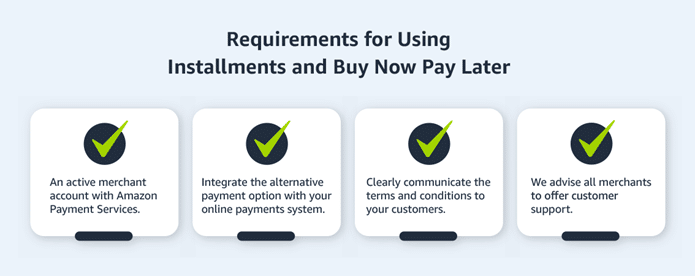
Businesses should evaluate their target audience, average order value, product categories, transaction fees, repayment structures, and potential financial risks before selecting a BNPL provider.
It is equally important to communicate payment terms clearly so customers understand their installment obligations and any applicable charges.
At SAECOM FBA PRO, we help e-commerce sellers strengthen their online presence through Amazon listing optimization, SEO strategies, and practical digital growth solutions. A well-planned approach to e-commerce can help businesses improve product visibility, reach relevant customers, and build a stronger foundation for long-term growth.
As digital shopping continues to evolve, offering the right payment experience can be one part of creating a more competitive and customer-focused online business.