
Amazon Lens Live is transforming the way shoppers discover products on Amazon, and many sellers have yet to recognize its impact.
Instead of relying solely on the search bar, customers can now use their smartphones to scan products they come across in everyday life. Whether they spot an item in a restaurant, at a friend’s home, or while shopping in a retail store, Amazon Lens Live can instantly direct them to visually similar listings on Amazon.
For years, Amazon sellers have focused on keyword optimization, PPC campaigns, and ranking strategies to increase visibility. While these factors remain important, visual search introduces a new way for customers to find products. Rather than depending primarily on keywords, Amazon now evaluates how closely your product images match what shoppers are scanning.
If your product images closely resemble the item a customer scans, your listing has a better chance of appearing in the results.
If your images fail to match, your product may miss out on this growing source of traffic altogether.
Visual search also introduces a valuable stream of high-intent shoppers. Most users scanning products have already shown interest in a specific item, making them more likely to purchase once they find a suitable match. Because of this, listings with clear, high-quality images that accurately represent the product are more likely to attract clicks and convert visitors into customers.
Sellers who begin optimizing for visual search today can gain an early advantage. As Amazon continues refining its image-recognition technology, strong visual signals combined with positive engagement and conversion rates can improve listing performance over time, much like traditional keyword rankings.
In this guide, you’ll learn how Amazon Lens Live works, why it matters for Amazon sellers, how it can affect ACoS and ROI, and the practical steps you can take to optimize your listings for visual search.
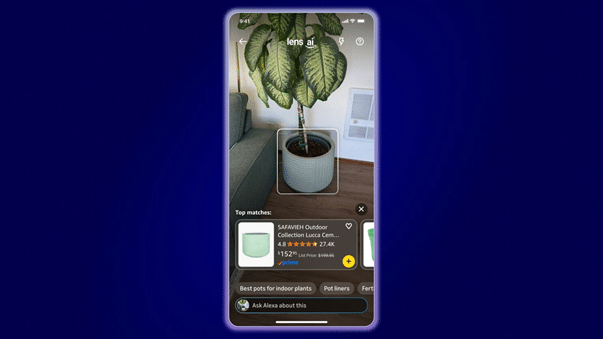
What Is Amazon Lens Live? The AI Tool Transforming Visual Search
It is a visual search feature built into the Amazon Shopping app that allows customers to discover products by using their phone’s camera instead of typing search terms.
Amazon first introduced Amazon Lens as a tool that let shoppers upload or capture an image to find similar products. Amazon Lens Live expands on that functionality by enabling real-time visual searches through the device’s camera, making product discovery faster and more interactive.
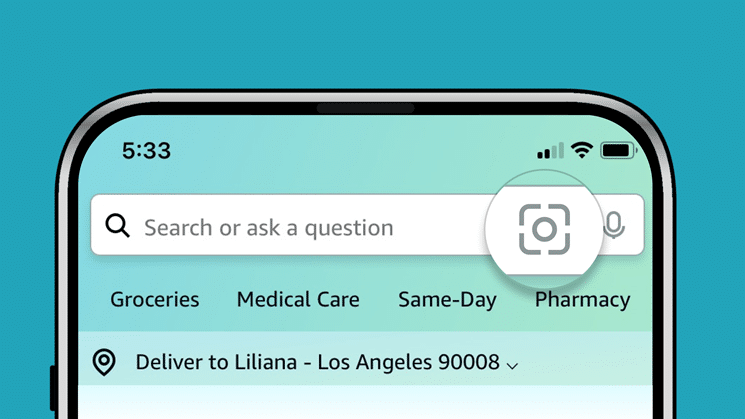
To use the feature, shoppers simply open the Amazon app, tap the search bar, and select the camera icon. They can then point their phone at almost any product—whether it’s a decorative lamp in a café, a skincare bottle on a bathroom shelf, or a dining chair in a furniture showroom—and Amazon instantly displays visually similar products available on its marketplace.
This technology addresses one of the biggest challenges in online shopping.
When people shop in physical stores, they usually discover products by seeing them first. Something grabs their attention, and they decide to learn more or make a purchase. Traditional online shopping, however, requires users to know what they are looking for before they can search.
Amazon Lens Live removes that limitation by allowing shoppers to search with images instead of words.
For example, someone might notice a stylish rattan pendant light while dining at a restaurant or a premium-looking serum bottle while visiting a friend. Instead of trying to describe the product or guess its name, they can simply scan it using Amazon Lens Live and instantly browse visually similar products available on Amazon.
Amazon Lens Live represents the next evolution of mobile commerce by combining artificial intelligence with visual search. Rather than relying entirely on text-based searches, shoppers can now discover products naturally through the objects they encounter in everyday life.
How Amazon Lens Live Works
When a customer scans an object using Amazon Lens Live, the system does not attempt to identify the exact product name or read a barcode. Instead, it analyzes the product’s visual characteristics to create a unique digital fingerprint.
This fingerprint includes details such as the product’s shape, color, texture, size, packaging, and overall design. Amazon’s AI then compares these visual attributes against millions of product images in its catalog to identify the closest matches.
A simple way to understand Amazon Lens Live is to think of it as a visual version of music recognition apps. Instead of identifying songs, it recognizes products based on how they look and recommends similar items available for purchase on Amazon.
Amazon Lens Live Availability and the Early Opportunity for Sellers
It is available through the Amazon Shopping app, although access may differ depending on the user’s device, region, or account as Amazon continues expanding the feature.
Amazon has offered visual search capabilities for several years, but Amazon Lens Live takes the experience further by enabling shoppers to scan products in real time using their phone’s camera. This creates a faster and more seamless shopping experience, making it easier for customers to discover products without typing search queries.
Since visual search is still in its early stages, many sellers have not yet optimized their listings for this new discovery method. That creates an excellent opportunity for businesses willing to adapt before visual search becomes more competitive.
Unlike keyword rankings, where competition has steadily increased over the years, visual search remains relatively untapped. Sellers who invest in improving their product images today have a better chance of capturing valuable traffic before the marketplace becomes saturated.
As more shoppers begin using Amazon Lens Live, listings that consistently perform well in visual searches are likely to generate stronger engagement and conversion signals, helping improve their visibility over time.
How Amazon Lens Live Is Changing Product Discovery for Amazon Sellers
Amazon Lens Live is more than just another shopping feature. It introduces a new way for products to be discovered and influences how sellers can improve both organic and paid performance.
1. Product Discovery Is No Longer Limited to Keywords
Traditional Amazon SEO depends heavily on keywords. With Amazon Lens Live, however, products can appear simply because they visually resemble what a shopper scans.
This means customers may discover your listing even if they have never searched for your product category or brand. As a result, visually distinctive products now have another pathway to gain visibility beyond conventional keyword rankings.
2. Visual Search Brings Higher-Intent Shoppers
People using Amazon Lens Live are typically searching for products they have already seen and liked in the real world. Instead of casually browsing, they are actively looking for something similar.
Because of this, traffic generated through visual search often carries stronger buying intent, leading to higher click-through rates and improved conversion potential.
When your product images clearly represent the item customers expect to find, they are more likely to complete a purchase.
3. Better Conversions Can Strengthen Organic Rankings
Amazon’s algorithm rewards listings that consistently convert visitors into buyers.
If Amazon Lens Live sends highly targeted traffic to your listing and those shoppers convert at a strong rate, your overall conversion metrics improve. Over time, these stronger performance signals can contribute to higher organic rankings without requiring additional advertising investment.
This means optimizing your product images benefits more than just visual search—it can positively influence your listing’s overall performance.
4. Improved Conversion Rates Can Reduce ACoS
Higher conversion rates allow sellers to generate more sales from the same advertising budget.
When listings convert more efficiently, Advertising Cost of Sales (ACoS) naturally decreases while overall return on investment improves. Combining visually optimized listings with Sponsored Products or Sponsored Display campaigns can make paid advertising even more effective.
5. Visual Search Reveals a Different Set of Competitors
The products appearing in Amazon Lens Live results are not always the same competitors you encounter through keyword searches.
By scanning your own products with Amazon Lens Live, you can discover visually similar listings that compete for the same audience. This provides valuable insights into how your images compare with competing products and highlights opportunities to improve your visual presentation.
6. Monitor Performance to Refine Your Strategy
Although Amazon Seller Central does not currently offer dedicated reporting for Amazon Lens Live traffic, sellers can still evaluate its impact through performance trends.
An increase in sessions, stronger conversion rates, and stable keyword rankings may indicate that visual search is contributing additional traffic.
Monitoring these patterns over time helps identify which listings benefit the most from visual discovery, allowing you to prioritize future optimization efforts.
What Does Amazon Lens Live Mean for Your ACoS and ROI?
Although Amazon Lens Live is primarily a product discovery tool, its biggest impact is how it can improve the efficiency of your listings and overall sales performance.
Customers using visual search are usually further along in the buying journey. Instead of casually browsing, they have already found a product they like in the real world and are looking for something similar on Amazon. This higher level of purchase intent often leads to stronger conversion rates.
Conversion rate plays a major role in determining both Advertising Cost of Sales (ACoS) and Return on Investment (ROI). For example, if you spend $100 on advertising and generate $300 in sales, your ACoS is approximately 33%. When your listing converts more visitors into buyers without increasing ad spend, your ACoS decreases while profitability improves.
Industry research also indicates that shoppers using visual search tools are generally more likely to complete a purchase than those relying solely on text-based searches.
The benefits extend beyond traffic generated through Amazon Lens Live itself. Amazon evaluates overall listing performance based on combined conversion signals rather than individual traffic sources. As high-intent visitors convert more frequently, your listing’s overall conversion rate improves, which can positively influence organic rankings over time.
Stronger organic visibility often reduces the amount of advertising needed to maintain sales, creating a long-term advantage for sellers.
While results will vary depending on your category, pricing strategy, competition, and listing quality, the overall principle remains consistent: higher-quality traffic usually produces better conversions, and better conversions contribute to improved ACoS and ROI.
The best approach is to establish your current performance metrics, optimize your listings for visual search, and monitor changes over time to measure the results.
How to Track Amazon Lens Live Performance Without Increasing ACoS
Amazon Seller Central does not currently provide a dedicated report showing how much traffic comes directly from Amazon Lens Live. However, sellers can still estimate its impact by monitoring key performance indicators and identifying meaningful trends.
Step 1: Record Your Current Performance
Before making any changes, document your existing performance metrics.
Navigate to:
Seller Central → Reports → Business Reports → Detail Page Sales and Traffic by Child Item
Record important data such as:
- Sessions
- Page views
- Unit Session Percentage
- Organic keyword rankings
- Conversion rate
These figures will serve as your benchmark for future comparisons.
Step 2: Optimize Your Product Images
Update your main image and supporting gallery images with visual search in mind.
Once the changes are published, allow approximately 60 days for Amazon to process and evaluate the updated images. During this period, avoid making unnecessary listing changes so you can accurately measure the impact.
Step 3: Monitor Early Traffic Changes
Within three to four weeks, review your listing performance.
If sessions begin increasing while keyword rankings remain relatively unchanged, your listing may be benefiting from additional visual search exposure.
Although this is not direct proof, it is often one of the earliest indicators that visual optimization is producing results.
Step 4: Look for Consistent Performance Trends
Rather than focusing on a single metric, evaluate multiple signals together.
Positive indicators may include:
- Higher session counts without major keyword ranking improvements.
- Organic traffic increasing while advertising spend remains stable.
- Better conversion rates without changes to pricing or listing copy.
- Improved sales performance despite maintaining the same advertising budget.
When these trends appear together, they may suggest that Amazon Lens Live is contributing additional high-intent traffic.
Step 5: Reevaluate If Results Do Not Improve
If six to eight weeks pass without noticeable improvements in organic traffic or conversion rates, review your product images again.
Ask yourself whether your images clearly highlight the product, use strong contrast, and accurately represent what customers are likely to scan in real-world environments.
Small improvements in image quality or composition can make a significant difference in visual recognition.
Step 6: Use Third-Party Analytics Tools
While Amazon’s reporting is limited, third-party analytics platforms can help identify unusual traffic increases or performance changes that are not linked to keyword ranking improvements.
These insights can provide additional evidence that your listings are benefiting from visual search traffic.
Step 7: Avoid Drawing Conclusions Too Quickly
Keep in mind that better product images improve performance across multiple channels, not just Amazon Lens Live.
Enhanced visuals can increase conversions from Sponsored Products, Sponsored Display campaigns, and traditional organic search at the same time.
Instead of attributing every improvement to visual search, focus on long-term performance patterns and compare multiple metrics before reaching conclusions.
How to Use Amazon Lens Live in Your 2026 Content and Advertising Strategy
To get the most out of Amazon Lens Live, sellers need to think beyond keywords and start treating product images as a core part of their optimization strategy. The goal is to make your products instantly recognizable so Amazon’s visual search technology can accurately match them with what shoppers scan.
If you have control over your product packaging, design it with visual recognition in mind as well as shelf appeal. Distinctive shapes, bold colors, clean labels, and unique design elements make it easier for Amazon’s AI to identify your products.
Avoid packaging that blends in with competing products. Instead, focus on creating a recognizable visual identity through strong color contrast, clear branding, and memorable product shapes.
When planning your advertising campaigns, prioritize products with the greatest visual appeal. Categories such as home décor, furniture, kitchen accessories, beauty products, and lifestyle items often benefit the most from visual search because shoppers frequently discover these products in everyday environments.
A simple way to evaluate your listing is by using Amazon Lens Live yourself. Scan products that closely resemble your own and see which listings appear in the results.
If your product is missing, consider improving your hero image, updating your image gallery, or making your packaging more visually distinctive before increasing your advertising budget.
Once your products begin appearing more consistently in visual search results, reinforce that momentum with Sponsored Products and Sponsored Display campaigns. Combining visual discovery with paid advertising can increase conversions while strengthening your listing’s overall performance signals.
Think of visual optimization and advertising as complementary strategies rather than separate efforts. Use advertising data to identify your best-performing products, continue refining their images, and invest more heavily in listings that consistently generate strong results. Over time, this approach can improve advertising efficiency while supporting long-term organic growth.
Final Thoughts
Amazon Lens Live is changing how shoppers discover products, and sellers who adapt early are likely to benefit the most as visual search continues to expand.
Start by taking a few practical steps. Scan your own products using Amazon Lens Live to see which competing listings appear alongside yours. Record your current performance metrics in Seller Central so you have a reliable benchmark for future comparison. Finally, review your hero image to ensure it complies with Amazon’s image requirements while making your product as visually clear and recognizable as possible.
You do not need to completely redesign your catalog or dramatically increase your advertising budget to benefit from visual search. In many cases, improving your product images, monitoring performance carefully, and incorporating visual optimization into your overall listing strategy can make a meaningful difference.
As Amazon continues investing in AI-powered shopping experiences, visual search is expected to play an increasingly important role in product discovery. Sellers who begin optimizing today will be in a stronger position to capture high-intent traffic, improve conversion rates, and stay ahead of competitors as customer shopping behavior continues to evolve.
Amazon Lens Live rewards listings that combine high-quality visuals with accurate product representation. By making visual optimization part of your long-term Amazon strategy, you can strengthen both your organic visibility and advertising performance while preparing your business for the future of eCommerce.