A report by InvestigateTV examined 429 household products that had been recalled from the market. According to the findings, these products were associated with 62 deaths and approximately 1,600 injuries. That’s the reason why compliance is needed.
Product safety should be a top priority for every Amazon brand. Consumers rely on countless everyday products, from cookware and household essentials to clothing and bedding. However, sellers may not always consider the potential safety risks associated with the products they offer.
To help protect consumers and maintain product safety, Amazon has established processes designed to support regulatory compliance. Sellers may also be required to submit specific documentation demonstrating that their products meet applicable safety standards.
But what exactly are Amazon documents? Which sellers need them, and what should you know about Amazon’s product safety requirements?
What Are Amazon Compliance Documents?
Certain products sold on Amazon must meet international, federal, state, and local laws and regulations before they can be offered to customers. These requirements are designed to ensure that products are safe and suitable for consumer use.
Amazon requires sellers to provide documentation when necessary to demonstrate that their products meet applicable safety and regulatory standards.
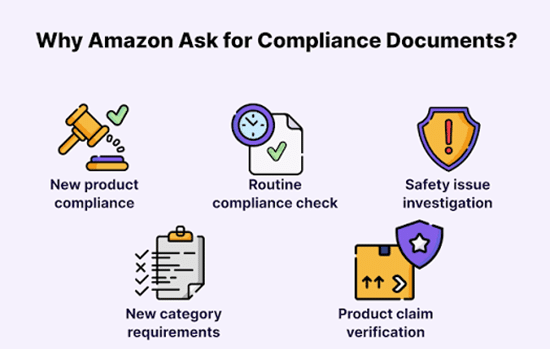
Many sellers may submit documents when creating or listing a product. However, Amazon can request additional documentation at virtually any point. Such requests may occur following customer complaints, changes to regulations, product safety concerns, or Amazon’s internal compliance reviews.
Examples of documents Amazon may request include:
- Safety certificates
- Product testing reports
- Product label images
- Safety or instruction manuals
- Tracking labels
- Registration cards
- Compliance markings
The specific documentation required depends on the product and industry. For instance, sellers offering certain children’s products may need a Children’s Product Certificate (CPC) to demonstrate compliance with applicable safety requirements.
Failure to provide the required documentation can have serious consequences. Amazon may remove the affected listing, restrict sales, or take further action against the seller’s account.
Do You Need to Upload Compliance Documents?
Not every Amazon seller is required to submit compliance documentation. However, products subject to international, federal, state, or local regulations may require supporting documents.
Sellers may also need to demonstrate compliance when listing products that fall within Amazon’s restricted product categories.
Let’s look at some of the most common situations where compliance documentation may be necessary.
Legal Regulations
Some industries face significantly greater regulatory scrutiny than others. These can include pesticides, motor vehicles, electronics, children’s products, and other product categories that may involve chemicals, hazardous materials, specialized safety requirements, or vulnerable consumers.
In the United States, several laws regulate the materials and substances that can be used in consumer products. One example is the Toxic Substances Control Act (TSCA).
Under TSCA regulations, the Environmental Protection Agency (EPA) places restrictions on certain chemicals and substances, including specific PBTs, PFAS, and PCTP. These substances can potentially be found in a variety of everyday products, including clothing, carpets, lighters, and plywood.
Requirements can also differ between states. California, for example, is known for having particularly strict environmental and chemical regulations. The California Air Resources Board (CARB) maintains standards related to volatile organic compounds (VOCs) and other pollutants.
VOCs can contribute to air pollution and may be present in products such as cleaning supplies, air fresheners, and certain personal care products, including hairspray.
Amazon’s Restricted Products
Legal regulations aren’t the only requirements Amazon sellers need to consider. Amazon also maintains its own policies governing restricted and regulated products.
Some products may be completely prohibited, while others may be eligible for sale only after the seller provides specific documentation or receives approval.
Examples of product categories that may involve additional compliance requirements include:
- Dietary supplements
- Certain food products
- Environmental products
- Children’s and baby products
- Animal-related products
- Alcohol
- Fine art
- Disinfectants
- Cosmetics and personal care products
- Medical devices
- Lasers
- Precious stones and gems
- Lighting products
- Seeds and plants
- Surveillance equipment
- Tobacco products
- Upholstery products
- Certain weapons and weapon-related products
- Theft prevention devices
- Burial artifacts
- Postage stamps
Being listed as a restricted product category does not necessarily mean that a product cannot be sold on Amazon. In many cases, sellers can apply for approval and provide the required documentation before listing or selling the product.
Some products may also face additional restrictions when it comes to Amazon advertising. As a result, sellers should understand both the selling and advertising requirements that apply to their particular product category.
Manage Your Compliance Dashboard
Amazon provides sellers with a dedicated Manage Your Compliance area where they can review product compliance requirements and submit the documents Amazon requests.
The dashboard can also be used to manage previously submitted documents, respond to compliance requests, handle appeals, and complete other regulatory requirements.
To access the compliance workflow, sellers can log in to their Amazon Seller Central account and navigate through the relevant account health and product compliance sections.
Within the dashboard, sellers can typically find information about the product requiring documentation. This may include the product’s name, image, SKU, and ASIN.
The Compliance Requirements section provides additional information about the documents associated with a product. Depending on the request, sellers may be able to see submitted documents, submission dates, and the current approval status.
Amazon may also display additional product-related information, including recent sales data associated with the affected product.
How to Upload Compliance Documents
Once you access the Manage Your Compliance dashboard, Amazon will identify products that require additional safety or compliance documentation.
If a product has an outstanding requirement, sellers can select the relevant request and follow Amazon’s instructions to submit the required files.
Depending on the situation, sellers may be able to upload documents individually or submit information for multiple products at once.
When dealing with compliance requirements across multiple ASINs, sellers may also be asked to provide product information in a structured format, such as a spreadsheet containing product names, ASINs, and details about the applicable compliance requirements.
Before submitting anything, carefully review each document to make sure it corresponds to the correct product and meets Amazon’s stated requirements.
Other Features Available Through Manage Your Compliance
Manage Your Compliance is not simply a location for uploading safety documentation. It can also help sellers identify regulatory requirements and address potential compliance concerns affecting their products.
Depending on the products being sold, sellers may encounter requirements related to areas such as imports and exports, electronics, children’s products, product safety, and other regulated categories.
Amazon may also provide access to reference information and resources that can help sellers understand applicable regulatory requirements or identify potential compliance service providers.
However, sellers remain responsible for making sure their products meet all applicable regulations and that their documentation is accurate, valid, and up to date.
How to Know If You Violated Amazon’s Compliance Policies
Keeping track of every applicable product regulation can be challenging. Laws and industry standards can change, and Amazon may introduce or update its own compliance requirements.
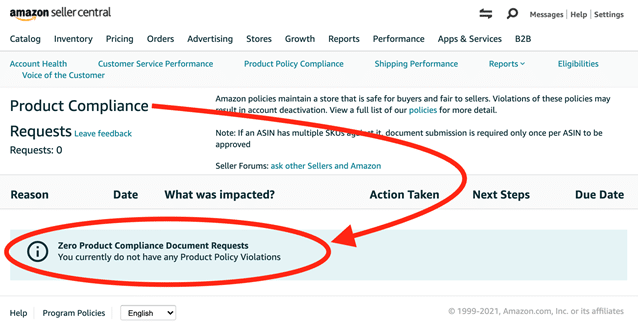
Fortunately, Amazon generally notifies sellers when a product requires additional documentation or when a potential compliance issue has been identified.
Sellers can review their compliance status through the Manage Your Compliance area and their Account Health dashboard. These areas can provide information about outstanding product compliance requests, violations, and other account-related concerns.
This is especially important for sellers operating in restricted or highly regulated categories. Regularly reviewing these areas can help sellers identify potential problems before they have a major impact on their listings or account.
If a seller fails to respond to a compliance request, Amazon may restrict or remove the affected listing. In more serious cases, continued non-compliance could potentially result in account-level enforcement.
How to Address Amazon Compliance Issues
When Amazon identifies a compliance problem, it generally provides instructions explaining what the seller needs to do next.
Although the exact process depends on the nature of the violation, sellers will typically need to:
- Review the compliance notification and understand the issue.
- Gather the appropriate testing reports, certificates, labels, or other requested documents.
- Prepare an appeal or Plan of Action when Amazon requires one.
- Submit the requested information before the specified deadline.
Sellers should pay close attention to the deadline provided in the notification. Some compliance requests may require a response within a specific timeframe, such as 48 hours, while others may provide a different deadline.
After submission, Amazon will review the information and determine whether the issue has been resolved. The review period can vary depending on the type and complexity of the compliance request.
If the issue remains unresolved, sellers should carefully review Amazon’s response and provide any additional information or documentation requested.
Once a violation has been successfully addressed, the status should be updated within the relevant account health or compliance area.
Always Have the Right Compliance Documents
Product safety is an essential part of selling successfully on Amazon. Everyday consumer products can involve potential risks related to chemicals, materials, manufacturing processes, labeling, or intended use.
For this reason, Amazon requires certain sellers to provide documentation demonstrating that their products meet applicable safety and regulatory standards.
These requirements can come from international, federal, state, and local regulations, as well as Amazon’s own product policies.
Instead of waiting until Amazon requests documentation, sellers should maintain organized records of their product certificates, testing reports, labels, manuals, and other compliance materials.
If you’re unsure whether a particular product requires compliance documentation, review the Manage Your Compliance section in Seller Central and carefully check the requirements associated with your product.
Staying proactive with Amazon compliance can help reduce listing interruptions, prevent unnecessary delays, and protect the long-term health of your Amazon business.