
Are your regular Amazon selling strategies starting to lose their impact? There was a time when sellers followed a predictable formula—wait for an Amazon sales announcement, apply a coupon, slightly increase bids, and let the traffic do the work. But that approach no longer delivers the same results.
Earlier, even a modest 5–10% discount could easily convert shoppers. Today, rising competition and shifting buying behavior have made demand less predictable. Sellers now face irregular spikes, often driven by trends or sudden changes in the sales cycle.
The reason behind this shift is simple—2026 is bringing a completely different sales environment. Amazon is introducing frequent micro-sales, AI-driven product recommendations, and personalized deal feeds. This means fixed timelines and standard discount strategies are becoming outdated.
Amazon is transforming every sale into a data-backed experience. Discounts alone are no longer enough; the overall shopping experience plays a bigger role in driving conversions.
This evolution is clearly visible in events like Prime Day and Fall Deal Fest. What used to be short, high-intensity events has now become a layered system powered by predictive insights.
Modern Amazon sales are no longer static. Deals adjust dynamically, discovery is AI-powered, and product visibility shifts in real time based on performance signals.
The shopper has also changed significantly.
In 2026, the typical Amazon buyer behaves differently. Gen Z shoppers are becoming dominant—they prioritize value, sustainability, and are heavily influenced by creator-driven content rather than traditional advertising.
Many shoppers no longer browse manually. Instead, they rely on voice assistants like Alexa or curated recommendations such as “best of the week” lists. The focus has shifted from searching to trusting the algorithm.
Behind the scenes, Amazon leverages massive datasets to drive these changes. Despite slower overall retail growth, Amazon’s sale-driven GMV has grown by nearly 20% between 2023 and 2026. This highlights how strategically important these events have become.
Amazon sales are no longer random discount events—they are carefully engineered demand cycles powered by automation and data. Sellers who align inventory, advertising, and messaging with these moments are the ones who succeed.
Amazon Sale Calendar 2026
Amazon has strategically spaced its sales events throughout the year to maintain steady consumer engagement while giving sellers time to prepare between peaks. Each quarter follows a unique pattern influenced by data and buyer behavior.
Here’s a breakdown of what to expect in 2026.
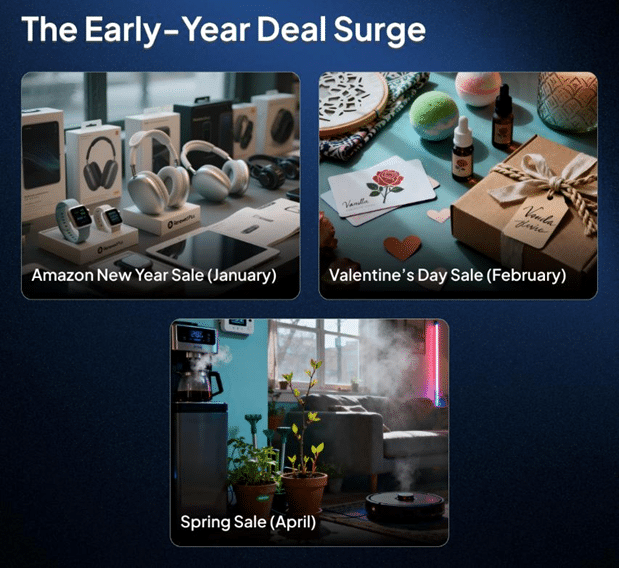
Early-Year Deal Surge
New Year Sale (January)
January acts as a reset period for shoppers. After the holiday rush, customers return for replacements, upgrades, and “new year” purchases. Amazon supports this trend with clearance deals and categories like fitness, productivity, and refurbished electronics.
For sellers, this is the perfect opportunity to clear old inventory and avoid rising storage costs.
In 2026, Amazon is heavily promoting its “Renewed Plus” program, giving refurbished products almost equal visibility to new ones—creating a valuable opportunity for sellers.
Valentine’s Day Sale (February)
Valentine’s Day has evolved beyond traditional gifting. It now includes lifestyle-focused products such as DIY kits, home spa items, and subscription services.
Personalization is key here. Influencer storefronts and curated gift lists are becoming more influential, especially among younger buyers who prefer meaningful purchases over generic ones.
Spring Sale (April)
Spring Sale has expanded beyond home and garden into the “smart living” category.
In 2026, AI-powered appliances, smart home devices, and connected lifestyle products are gaining traction. Amazon is promoting these through its AI-driven discovery features.
For sellers, this period is ideal for testing campaigns, refining creatives, and identifying trends before major events like Prime Day.
Mid-Year Power Events
Prime Day 2026
Prime Day remains the most impactful sales event but has evolved significantly.
Amazon now uses predictive inventory systems to position products closer to demand zones in advance. This improves delivery speed and boosts conversion potential.
Advertising has also expanded, with options like Sponsored TV and advanced audience targeting. Additionally, pricing and deal rankings now adjust in real time based on performance metrics.
Sellers who prepare early by feeding data into Amazon’s ecosystem gain better visibility and lower advertising costs.
Back-to-School Sales
Following Prime Day, Amazon targets students and parents with education-focused deals.
Bundled offers and subscription-based discounts are becoming more common. Sellers who create themed bundles tailored to student life often perform better than standard listings.
This period is also ideal for building long-term customer relationships.
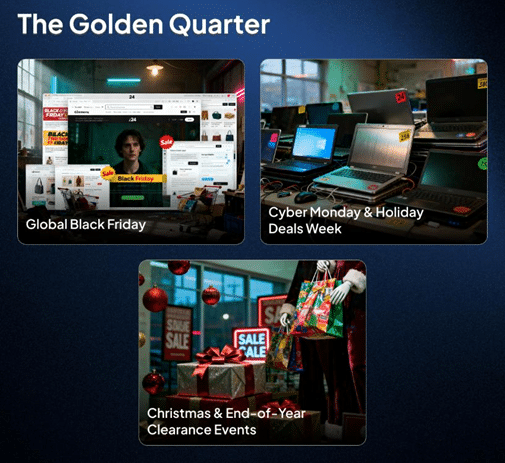
The Golden Quarter
Black Friday
Black Friday remains a major traffic driver, especially for electronics and fashion.
In 2026, Amazon is testing region-specific deal variations, meaning pricing and promotions may differ based on location and user behavior.
Cyber Monday & Deal Week
Cyber Monday has expanded into a full “Deal Week.”
Amazon now allows coupon stacking, enabling shoppers to combine multiple offers. While this increases competition, it also opens up higher conversion opportunities for well-prepared sellers.
Christmas & Year-End Clearance
By late December, shoppers become more selective. Strong value propositions are necessary to convert sales.
Amazon uses this time to push clearance inventory, while sellers can benefit from remarketing campaigns targeting previous visitors.
What’s New in Amazon Sales 2026
Flexible Pricing
Amazon’s pricing system is now highly adaptive. It reacts to competitor pricing across platforms like Walmart and TikTok Shop.
Even small pricing changes can impact visibility, Buy Box ownership, and conversions. Sellers must stay competitive without sacrificing margins.
Algorithm-Driven Visibility
Deal performance now depends on engagement metrics.
High-performing deals get additional visibility automatically, making early momentum critical. Listings with strong visuals, videos, and content perform significantly better.
Personalized Deals
Amazon now delivers highly personalized shopping experiences.
Each user sees a unique version of deals based on behavior, preferences, and past activity. Micro-sales—short, targeted promotions—are also becoming more common.
Category Trends for 2026
The fastest-growing categories are those aligned with technology, lifestyle, and sustainability.
AI-powered gadgets, smart devices, and wearables are seeing strong growth as consumers prioritize convenience and efficiency.
Pet tech and wellness products are also expanding rapidly, especially when paired with engaging content and guides.
Sustainable and refillable products are gaining popularity, offering both environmental value and customer retention benefits.
Meanwhile, less competitive niches like STEM kits, refurbished items, and regional products present new opportunities for sellers.
Seller Strategies for 2026
Pre-Sale Preparation
Effective inventory planning is critical. Sellers should position stock early to avoid delays and stockouts during peak demand.
Audience targeting also plays a key role. Pre-sale campaigns help build intent, making it easier to convert shoppers once the event begins.
During the Sale
Real-time optimization is essential.
Testing creatives, adjusting budgets, and aligning campaigns can significantly improve performance. Combining different ad formats can create stronger visibility and engagement.
Post-Sale Strategy
The opportunity doesn’t end when the sale does.
Retargeting past buyers, offering subscriptions, and building loyalty programs help turn one-time customers into repeat buyers.
Shopper Behavior Insights
Impulse buying still exists but is now driven by personalized recommendations rather than urgency.
Shoppers rely more on AI suggestions and trust signals rather than manually comparing products.
Sustainability badges and credibility indicators also influence buying decisions, especially among younger audiences.
Challenges in 2026
Sellers face several challenges, including rising ad costs, increased competition, and complex logistics.
Maintaining brand trust and authenticity is equally important as Amazon tightens its quality and fraud detection systems.
The Future of Amazon Sales
Amazon is moving toward predictive retail powered by AI.
Future sales will focus less on discounts and more on personalized, data-driven shopping experiences.
Emerging technologies like virtual shopping and interactive commerce are expected to play a bigger role.
Final Thoughts
The Amazon sales landscape in 2026 is more advanced and competitive than ever. Success depends on how well sellers adapt to AI-driven systems, consumer behavior, and evolving trends.
Those who combine data, automation, and authentic storytelling will outperform others in this new environment.