Amazon’s inbound placement fees have introduced another cost consideration for sellers using Fulfillment by Amazon (FBA). These charges are influenced by factors such as product size, weight, shipment quantities, and the locations where inventory is initially sent.
Understanding how these fees are calculated and when they apply can help sellers make better shipping and inventory decisions. A well-planned fulfillment strategy can reduce unnecessary expenses while maintaining efficient inventory distribution.
In this guide, we’ll explain Amazon’s inbound placement service fees, the available inventory placement options, the factors that influence the charges, and practical strategies sellers can use to reduce their overall FBA costs.
What Is the Amazon FBA Inbound Placement Service Fee?
The Amazon FBA Inbound Placement Service Fee is a charge that may apply when sellers choose an inbound placement option that allows Amazon to distribute inventory across its fulfillment network.
Amazon uses this system to position products closer to customers, which can support faster delivery and more efficient fulfillment. The fee can vary depending on factors such as product dimensions, weight, shipment configuration, and the number of locations involved.
Understanding these costs in advance allows sellers to include them in their overall FBA budgeting and make more informed logistics decisions.
Amazon FBA Inventory Placement Services
When creating an FBA shipping plan, sellers may have different inventory placement options available depending on their account, products, inventory levels, and Amazon’s network requirements.
1. Minimal Shipment Splits
With the minimal shipment splits option, sellers can send inventory to fewer inbound locations, potentially including a single location, while Amazon handles further distribution within its fulfillment network.
This option can simplify the shipping process because sellers do not have to divide inventory among several facilities themselves. However, a placement fee may apply, and the exact amount can depend on the inbound location and the products included in the shipment.
2. Partial or Amazon-Optimized Shipment Splits
With partial or Amazon-optimized shipment splits, sellers can distribute inventory among multiple inbound locations. Depending on the shipping plan and eligibility, sending inventory to more locations may result in lower placement fees or no placement fee.
Amazon may recommend several fulfillment locations based on its network and inventory requirements. Sellers can also have the option to use a smaller number of locations for a reduced fee rather than choosing the full optimized split.
Factors That Affect Amazon Inbound Placement Options
The placement options available to a seller can depend on several factors, including:
- The types and quantities of products included in the shipping plan
- Current inventory levels across Amazon’s fulfillment network
- Customer demand and geographic purchasing patterns
- Amazon’s operational requirements and available fulfillment capacity
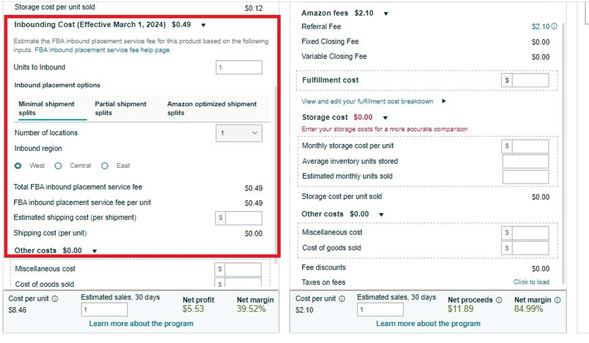
When preparing an FBA shipment, Amazon generally displays the available placement options along with their estimated costs. The applicable inbound placement fee is charged based on the inventory and inbound locations associated with the shipment.
How to Choose Your Preferred Amazon Inventory Placement Service in Seller Central
Choosing an inbound placement option can be done through your Amazon Seller Central account. The process is generally straightforward.
Start by logging in to your Seller Central account and navigating to the Settings section. From there, select Fulfillment by Amazon.
Next, locate the Inbound Settings section and click Edit. Review the available placement preferences and select the option that best fits your fulfillment strategy.
Sellers who use third-party software to create FBA shipments should also make sure their account settings are properly configured. This helps ensure that the selected preferences can work correctly with the relevant integrations and APIs.
How Does Amazon Calculate the Inbound Placement Service Fee?
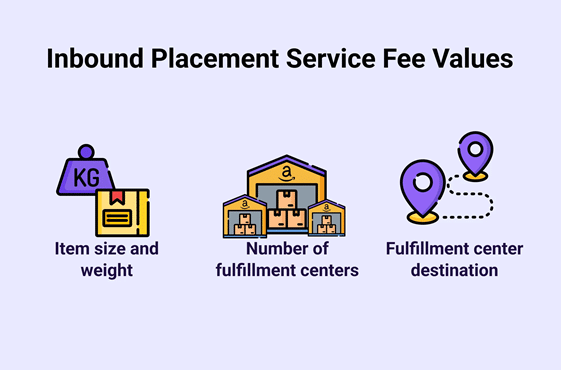
Amazon determines inbound placement fees using several product and shipment characteristics. Product size and weight are among the most important factors used to determine the applicable charge.
Product Classification
Amazon generally groups products into categories such as standard-size and oversized or bulky products. The applicable fee structure can differ considerably between these classifications.
Product Weight
Weight is another major factor. For certain standard-size products, the fee may be based on the product’s unit weight. For larger products, Amazon may consider the greater of the dimensional weight or unit weight when determining the applicable charges.
Number of Inbound Locations
The number of locations included in a shipment can also affect the placement fee. Minimal, partial, and Amazon-optimized shipment configurations may have different fee levels.
Inbound Location
The destination of the shipment can influence the cost as well. Certain regions may have higher placement charges than others, making inbound location an important consideration when evaluating shipment options.
By understanding these variables, sellers can better estimate their potential expenses and select a shipment configuration that balances cost, convenience, and inventory availability.
Amazon Inbound Placement Service Fee Rates
The exact inbound placement fee depends on the product category, weight, shipment configuration, and other applicable factors. Amazon may present the estimated fee during the shipment creation process.
For example, standard-size products can have different charges based on their dimensions and weight. Smaller and lighter products generally carry lower placement fees, while heavier standard-size products can have higher charges.
Bulky products can also attract considerably higher fees, particularly when sellers choose minimal shipment splits. Using partial or Amazon-optimized shipment configurations may reduce the cost compared with sending inventory to a single inbound location.
Because Amazon’s fee structure can change, sellers should always review the current fee estimates shown in Seller Central before finalizing an FBA shipment.
Incentives for New Sellers
Amazon has previously offered incentives to new sellers to help offset certain FBA-related costs, including credits associated with inbound placement services.
Under the 2024 program referenced in this guide, eligible new sellers could receive an additional $400 credit toward inbound placement service fees, along with a $100 complimentary shipping credit for FBA shipments.
Eligibility depended on when the seller created their first offer and when they sent their first shipment to an Amazon fulfillment center. Sellers should review the latest Amazon eligibility requirements because promotional credits and program terms can change over time.
Four Tips to Minimize Amazon FBA Inbound Placement Fees
Here are several practical strategies sellers can use to control inbound placement expenses.
1. Separate Standard-Size and Oversized Products
Before creating an FBA shipment, review your inventory and clearly distinguish between standard-size and oversized products.
Amazon uses different fee structures for different product classifications, so understanding where each item falls can help you estimate costs more accurately. Sellers should also pay close attention to Amazon’s size and weight requirements to avoid unnecessary reclassification.
Proper packaging and accurate product measurements can help prevent products from being placed into a more expensive size category.
2. Pay Close Attention to Product Size and Weight
Product dimensions and weight can have a direct impact on FBA-related expenses. Larger and heavier products are generally more expensive to move through Amazon’s fulfillment network, which can put additional pressure on profit margins.
When sourcing new products, consider not only the selling price but also the expected fulfillment and inbound costs. Selecting compact, lightweight products with healthy margins can make your FBA operation more cost-efficient.
Efficient packaging can also make a difference. Reducing unnecessary packaging volume while keeping the product properly protected can help control shipping and fulfillment expenses.
3. Evaluate Your Inbound Regions Carefully
The destination of your inventory can influence the inbound placement charge. When Amazon provides multiple placement options, compare the estimated fees before making your selection.
Choosing an option with a lower placement cost can help reduce your overall FBA expenses, provided that the choice still works well with your inventory and fulfillment strategy.
Instead of automatically selecting the first available option, review the estimated costs and consider which configuration provides the best balance between savings and operational efficiency.
4. Consider Using FBM for Suitable Products
Fulfillment by Merchant (FBM) can be a useful alternative for certain products and may help sellers avoid FBA inbound placement fees on inventory that does not need to be stored within Amazon’s fulfillment network.
This can be particularly useful for large, heavy, slow-moving, or lower-volume products. A hybrid strategy can allow sellers to keep fast-moving and high-margin products in FBA while fulfilling selected products themselves.
Using both FBA and FBM strategically can give sellers greater control over fulfillment costs while allowing them to maintain FBA availability for products that benefit most from Amazon’s fulfillment network.
Conclusion
Amazon’s inbound placement service fees are an important cost factor for FBA sellers. The charges can vary based on product size, weight, shipment configuration, and inbound location, making it essential to evaluate these factors before sending inventory to Amazon.
Choosing the right placement option, reviewing shipment costs carefully, optimizing product packaging, and considering FBM for selected products can help reduce unnecessary expenses.
By incorporating inbound placement fees into your sourcing, pricing, and inventory planning process, you can make more informed fulfillment decisions and protect your overall Amazon profit margins.