For Amazon sellers, fulfillment expenses can have a significant impact on overall profitability. Pick-and-pack costs, in particular, can gradually increase as order volumes grow. When combined with rising packaging, shipping, and storage expenses, these charges can reduce the profit earned from every sale.
However, sellers do not have to accept unnecessary fulfillment expenses as part of doing business. By reviewing packaging practices, improving inventory management, and choosing suitable fulfillment methods, you can make your operations more cost-effective.
Consider the example of Jeena, an Amazon seller who offers handmade miniature toys. When she initially started selling, her products were compact and lightweight, allowing them to qualify for a lower fulfillment fee.
However, she later added layers of bubble wrap and customized protective packaging. Although these materials provided additional protection, they also increased the packaged product’s weight and dimensions. As a result, the item moved into a higher fulfillment fee category.
This small packaging change significantly reduced her profit margin.
Jeena’s experience highlights an important lesson: packaging decisions can influence fulfillment costs just as much as the product itself.
So, what can Amazon sellers do to keep these expenses under control?
Here are ten practical strategies to help reduce Amazon pick-and-pack expenses and improve fulfillment efficiency.
1. Automate Your Pick-and-Pack Operations
Automation can make order fulfillment faster, more organized, and less expensive, particularly for sellers who manage their own warehouses or use third-party fulfillment providers.
Instead of relying entirely on manual processes, consider introducing tools that handle repetitive tasks and reduce the possibility of human error.
Here are a few ways to make your fulfillment process more efficient:
Automate shipping label generation: Use order management software to generate and print shipping labels automatically. Preparing labels in advance can reduce delays and help warehouse employees process orders more quickly.
Invest in order fulfillment software: A suitable fulfillment platform can help manage incoming orders, select shipping services, track inventory, and organize packaging requirements. Standardized workflows also reduce the time employees spend making repetitive decisions.
Improve warehouse organization: Arrange products according to their sales frequency, size, and storage requirements. Keep frequently ordered products in easily accessible locations so employees can retrieve them without wasting time.
Automation does not directly change Amazon’s published FBA fulfillment fees. However, it can reduce labor and handling expenses for your own fulfillment operations while making the overall process more efficient.
2. Choose the Right Amazon Seller Plan
Your selling plan may not directly determine your pick-and-pack charges, but selecting the right account type can help control your overall Amazon selling expenses.
Amazon generally offers two selling plans: Individual and Professional. The Individual plan charges a per-item selling fee, while the Professional plan uses a monthly subscription fee.
For sellers processing a higher number of orders, the Professional plan may become more economical. It also provides access to additional selling tools and features that can support business growth.
A Professional account can be useful for sellers who want to manage larger inventories, use advanced reporting tools, run advertising campaigns, and streamline their selling activities. It’ll be helpful in reducing Amazon Pick-and-pack fees
Before selecting a plan, compare its subscription cost with your expected monthly sales volume and other selling expenses. Pricing and available features may vary by marketplace, so review the latest terms in your Seller Central account.
3. Take Advantage of Fulfillment by Amazon (FBA)
Fulfillment by Amazon (FBA) allows sellers to use Amazon’s fulfillment network to store inventory, process orders, pack products, and ship them to customers.
Rather than managing every order independently, you can send your products to Amazon fulfillment centers and let Amazon handle much of the operational work.
FBA can reduce the need to operate your own warehouse, recruit fulfillment staff, and coordinate individual deliveries. Eligible products can also benefit from Prime shipping options, which may make listings more attractive to customers.
However, convenience does not automatically mean lower costs. Amazon charges fulfillment and storage fees, so sellers should understand how these expenses affect their profit margins.
Start by calculating the fulfillment costs associated with each product. Consider its packaged dimensions, shipping weight, storage requirements, selling price, and expected sales volume.
You can also review your expenses with Amazon FBA management services to identify opportunities for improving fulfillment efficiency and controlling operating costs.
Regularly checking your fee statements is equally important. An Amazon FBA reimbursement audit can help identify eligible inventory discrepancies, lost or damaged units, and other fee-related issues that may require attention.
4. Consider Seller Fulfilled Prime (SFP)
Seller Fulfilled Prime (SFP) is an Amazon program that allows eligible sellers to fulfill orders themselves while offering the Prime experience to qualifying customers.
Instead of sending all inventory to Amazon fulfillment centers, sellers can use their own warehouses or approved fulfillment arrangements to store, prepare, and dispatch orders.
One potential advantage is greater control over inventory handling, packaging, and shipping decisions. Sellers with an efficient warehouse setup may be able to manage certain fulfillment expenses more effectively.
However, SFP comes with strict performance and delivery requirements. Sellers must consistently meet Amazon’s eligibility standards and provide the delivery experience expected from Prime orders.
It is also important to remember that SFP does not guarantee lower fulfillment costs. You will need to account for warehouse expenses, packaging materials, labor, carrier charges, and the resources required to meet delivery commitments.
Compare these expenses with your current FBA costs before deciding whether Seller Fulfilled Prime is the right option for your business.
5. Use Multi-Channel Fulfillment Strategically
Multi-Channel Fulfillment (MCF) allows sellers to use inventory stored in Amazon’s fulfillment network to fulfill orders received through other sales channels.
For example, a seller operating both an Amazon store and an independent e-commerce website may use the same inventory to fulfill orders from both platforms.
This arrangement can simplify inventory management and reduce the need to maintain separate stock for different sales channels. It may also eliminate the operational complexity of coordinating multiple warehouses and fulfillment providers.
However, MCF has its own fee structure. Its fulfillment charges can differ from standard FBA fees, so sellers should compare the costs before using the service.
To make the most of MCF, review your order volumes, product dimensions, shipping requirements, and total fulfillment expenses. Consolidating inventory can improve efficiency, but it should only be considered cost-effective when the numbers support it.
6. Negotiate Better Shipping Rates and Control Warehouse Expenses
Shipping and warehousing costs can gradually consume a significant portion of your revenue. Reviewing these expenses regularly can help identify opportunities to reduce your overall fulfillment budget.
Start by evaluating the shipping rates offered by different carriers. If your business ships a consistent volume of orders, you may be able to negotiate better rates or request discounts based on shipment frequency.
You can also explore different shipping services and delivery options to find a balance between cost and customer expectations.
Warehouse expenses deserve the same attention.
Consider the following approaches:
- Review warehouse space: Make sure you are not paying for more storage space than your business needs.
- Negotiate rental expenses: Discuss more favorable lease terms with your warehouse provider when possible.
- Reduce utility costs: Look for opportunities to improve electricity usage and other recurring operational expenses.
- Use storage space efficiently: Organize shelving and inventory placement to make better use of the available area.
As your business grows, fixed expenses may become a smaller percentage of total sales, but unnecessary spending can still affect profitability.
Review your costs regularly and focus on reducing expenses without compromising product safety, delivery performance, or customer satisfaction.
7. Label Your Products Correctly
Accurate product labeling is essential for smooth warehouse operations. Proper labels help fulfillment teams identify products, retrieve the correct inventory, and prepare orders without unnecessary delays.
Incorrect or missing labels can create receiving and inventory management problems. In some situations, they may also result in additional preparation requirements, relabeling expenses, or fulfillment delays.
To avoid these issues, make sure every product has the appropriate barcode and labeling information before sending inventory to Amazon.
Depending on the product and fulfillment requirements, sellers may need to use an Amazon barcode, such as an FNSKU, or another eligible product identifier.
Before shipping inventory, check the following:
- Ensure that barcode information matches the correct product and variation.
- Confirm that labels are clear, readable, and properly positioned.
- Avoid covering important product information with incorrect labels.
- Follow Amazon’s latest labeling and packaging requirements.
- Double-check product quantities before creating a shipment.
Taking a few additional minutes to verify labels can help prevent avoidable inventory problems and keep your fulfillment operations organized.
8. Use Packaging Materials Efficiently
Packaging plays an important role in protecting products, but excessive packaging can increase product dimensions, shipping weight, material expenses, and fulfillment costs.
The goal should be to use packaging that provides sufficient protection without adding unnecessary weight or bulk to reduce Amazon Pick-and-pack fees.
Here are a few ways to make your packaging more cost-effective.
Choose Appropriate Packaging Materials
Select packaging according to the product’s dimensions, weight, and fragility. A small product generally does not need an oversized box or several unnecessary layers of protective material.
Use packaging that fits the product properly while meeting Amazon’s applicable preparation and safety requirements.
Consider Reusable Materials Where Appropriate
Reusable containers, pallets, and other shipping materials can help reduce recurring packaging expenses in your own operations.
For products and processes where reuse is practical, evaluate materials that can safely be used more than once. However, always ensure that packaging remains clean, durable, and suitable for the items being shipped.
Avoid Unnecessary Protective Layers
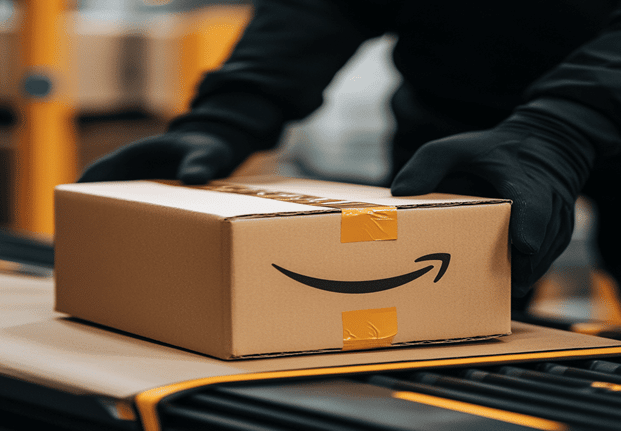
Additional bubble wrap, foam, and cushioning can increase the packaged dimensions of a product.
Instead of adding several layers automatically, assess the level of protection each item actually requires. Choose lighter alternatives where they provide adequate protection.
Do not remove essential protective materials simply to reduce costs. Damaged products can lead to refunds, replacements, negative customer experiences, and additional expenses & more Amazon Pick-and-pack fees.
9. Optimize Product and Package Dimensions
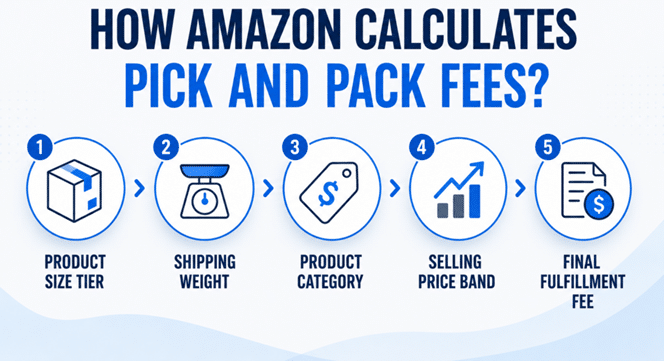
Amazon fulfillment charges are influenced by factors such as product size, shipping weight, and applicable size tiers. This makes package optimization an important part of managing fulfillment expenses.
A product may be small on its own but become significantly larger after packaging. As a result, unnecessarily large boxes or heavy materials can push an item into a more expensive fulfillment category.
Start by measuring your products after they have been fully packaged. Compare their dimensions and weight with Amazon’s current size-tier requirements to understand how they are classified.
You can then explore different ways to reduce unnecessary bulk.
For example, consider whether a smaller box, flexible mailer, or more compact packaging design would provide adequate protection. You may also be able to replace heavy packaging components with lighter alternatives.
Efficient packaging arrangements can make it easier to store and transport products while helping you avoid unnecessary dimensional increases.
For sellers with multiple product variations, reviewing each variation separately is important. Different sizes and packaging requirements may result in different fulfillment costs.
Product-level analysis can also help sellers maintain accurate product information and make more informed decisions about their inventory.
10. Complete Product Preparation Before Shipping
Preparing your products correctly before sending them to Amazon can help prevent additional handling requirements, shipment delays, and avoidable preparation expenses.
Amazon has specific preparation and labeling requirements for different product types. Sellers should review these requirements before creating shipments to ensure that inventory arrives ready for processing.
Here are a few ways to improve your preparation process:
Apply the required labels: Make sure products have the correct barcodes and identification labels before shipment.
Use suitable packaging: Prepare products according to Amazon’s packaging and protection guidelines.
Organize inventory: Group products by SKU, variation, and shipment requirements to make inventory checks easier.
Inspect products before dispatch: Check for damaged packaging, missing components, incorrect labels, and quantity discrepancies.
Sellers may also have the option to use eligible Amazon preparation services. However, these services can involve additional charges, so compare the cost of Amazon handling with the expense of preparing products yourself or through a third-party provider.
Keep in mind that:
- Amazon may charge preparation fees for units that require additional work.
- Incorrect preparation can delay inventory processing and make products unavailable for sale for longer.
- Barcode selection can affect how inventory is identified and tracked.
- Using manufacturer barcodes may have different eligibility and inventory-tracking implications compared with Amazon barcodes.
A well-organized preparation process helps reduce avoidable issues before inventory reaches Amazon’s fulfillment network and works on amazon pick-and-pack fees.
Final Thoughts
Amazon pick-and-pack expenses can have a noticeable impact on your business’s profitability, particularly when you sell products with different dimensions, weights, and packaging requirements.
The good news is that sellers have several ways to manage their fulfillment costs more effectively. Improving packaging efficiency, organizing inventory, choosing the right fulfillment method, and preparing products correctly can all contribute to a more streamlined operation.
However, reducing expenses should never come at the cost of product quality or customer satisfaction. Every adjustment should be evaluated carefully to make sure it delivers genuine savings without creating additional problems.
It is equally important to review your Amazon fee statements regularly. Small discrepancies, incorrect product measurements, and inventory-related issues can sometimes go unnoticed and affect your overall margins.
With the right strategy and professional guidance, you can identify unnecessary expenses, improve fulfillment performance, and protect your business’s profitability.
SAECOM FBA PRO supports Amazon sellers with Amazon FBA management services, Amazon listing optimization services, and FBA reimbursement audits. These services can help sellers review their operations, address fulfillment-related challenges, and build a more efficient Amazon business.