
Amazon product listings play an important role in helping shoppers discover products and make purchasing decisions. When customers search for a particular item, Amazon considers relevant product information to identify listings that match their search queries. This makes listing optimization an essential part of building visibility and improving sales.
An effective Amazon listing should do more than simply describe a product. It should incorporate relevant keywords, highlight important product features, answer potential customer questions, and encourage shoppers to complete their purchases.
Your primary objective should be to identify profitable keywords and incorporate them naturally throughout your product listing. However, keyword placement alone is not enough. Every section should provide meaningful information while supporting your overall Amazon SEO strategy.
Here are seven important areas where you can optimize your Amazon product listing to improve discoverability, strengthen customer engagement, and create more opportunities for sales.
1. Optimize Your Product Title
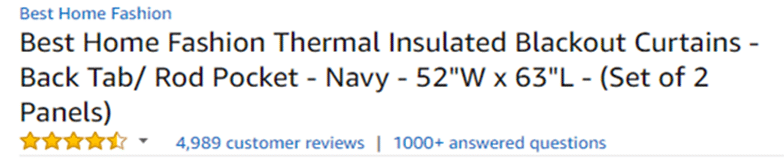
Your product title is one of the first things shoppers notice when browsing Amazon search results. It helps customers understand what you’re selling and allows Amazon to identify relevant product information when matching search queries.
A well-optimized title should include your primary keyword along with essential product details, such as the brand name, product type, model, size, color, or other distinguishing features. These details should be arranged naturally so that customers can quickly understand what the product offers.
Avoid creating unnecessarily long titles or repeating the same keywords multiple times. Amazon has introduced updated title requirements, including a 75-character limit for most non-media product categories as of July 27, 2026. Always check the applicable requirements for your marketplace and category.
Your primary keyword should appear naturally in the title wherever it accurately describes the product. Prioritize readability and relevance instead of attempting to include every keyword in this section.
A clear, informative, and properly structured title can help your listing communicate its value more effectively and make a stronger first impression on potential buyers.
2. Create Informative and Keyword-Rich Bullet Points
Bullet points provide shoppers with a convenient way to understand the most important features and benefits of your product. Many customers scan these sections before deciding whether an item meets their requirements.
Amazon generally provides several bullet points that sellers can use to highlight product specifications, functionality, materials, dimensions, compatibility, and other valuable information. Character limits vary depending on the product category, so it’s important to review the applicable listing requirements.
Rather than filling every bullet point with keywords, focus on explaining what makes your product useful. Each bullet should communicate a specific benefit or important detail while incorporating relevant search terms naturally.
For example, when selling a kitchen appliance, you might highlight its material, ease of cleaning, available settings, energy efficiency, and practical applications.
You should also structure your bullet points in an easy-to-read format. Use clear language, avoid unnecessary repetition, and prioritize the information customers are most likely to consider before making a purchase.
Well-written bullet points can improve the shopping experience by helping customers understand your product without having to search through lengthy descriptions.
3. Write a Detailed and Relevant Product Description
Although many shoppers focus primarily on product titles, bullet points, and images, the product description remains an important part of a complete listing.
This section gives you an opportunity to provide additional details that may not fit naturally into your title or bullet points. You can explain product functionality, materials, usage instructions, compatibility, specifications, and other relevant information that helps customers make informed decisions.
Your product description should be written with both shoppers and search relevance in mind. Incorporate your primary and secondary keywords naturally, but avoid making the content repetitive or difficult to understand.
Think about the questions a potential customer might have before purchasing your product. Addressing those concerns within the description can help reduce confusion and make the buying process easier.
For eligible brand owners, A+ Content can provide additional opportunities to present product information through enhanced visual layouts, comparison charts, and informative content.
Remember that Amazon may not use every word in your product description or bullet points when retrieving products for search results. Therefore, focus on providing accurate, helpful, and complete product information rather than relying on keyword repetition.
4. Pay Attention to Customer Reviews
Customer reviews are an important source of information for understanding how shoppers perceive your products. They can also reveal useful language that customers naturally use when describing product features, benefits, and experiences.
Although sellers cannot control the wording customers use in their reviews, they can analyze this feedback to identify recurring product characteristics, common concerns, and frequently mentioned benefits.
For example, customers purchasing a backpack might repeatedly mention its storage capacity, comfortable straps, durability, or lightweight design. These observations can help you understand which product features matter most to your target audience.
Use genuine customer feedback to identify opportunities for improving your listing content. When shoppers repeatedly ask about a particular feature or express confusion about a product specification, consider making that information clearer in your bullet points or description.
Respond to customer feedback professionally and follow Amazon’s communication and review policies. Never attempt to influence review wording or insert promotional keywords into responses simply to manipulate search visibility.
Customer feedback should primarily help you improve your product presentation, customer experience, and overall listing quality.
5. Make the Most of the Questions and Answers Section
The Questions and Answers section allows shoppers to ask about product features, specifications, compatibility, and other details before making a purchase.
It can provide valuable insight into the information customers need to feel confident about buying your product.
As a seller, pay attention to frequently asked questions and provide clear, accurate, and helpful answers whenever the available Amazon tools allow you to do so.
For instance, customers purchasing electronic accessories might ask about device compatibility, installation requirements, or included components. Addressing these questions clearly can remove uncertainty and help shoppers understand whether the product meets their expectations.
You can also use recurring questions as inspiration for improving your existing listing content. If several customers ask about the same feature, consider adding that information to your bullet points, product description, or A+ Content.
Avoid adding keywords to answers simply for the sake of optimization. The main purpose of this section should always be to provide useful information and improve the customer’s purchasing experience.
6. Optimize Amazon Backend Search Terms
Backend search terms are an important part of Amazon keyword optimization because they allow sellers to include relevant search phrases that aren’t necessarily visible to customers on the product detail page.
The Generic Keywords field in Seller Central gives you an opportunity to add additional relevant terms that can help Amazon match your product with customer search queries.
Start by researching keywords that accurately describe your product but may not already appear in your title, bullet points, or description. These could include synonyms, alternative product names, relevant abbreviations, and commonly used descriptive terms.
For example, a seller offering headphones might consider relevant variations such as earphones, wireless audio devices, or Bluetooth earbuds, depending on the actual product specifications.
When entering backend search terms, follow Amazon’s formatting and character limits. Avoid unnecessary repetition, punctuation, irrelevant keywords, competitor brand names, and unrelated search phrases.
The goal is to provide Amazon with additional relevant information that helps improve product discoverability without compromising the accuracy of your listing.
A properly researched backend keyword strategy can complement your visible listing content and help cover additional relevant search queries.
7. Use Relevant Image Alt Text
Product images are essential for communicating product information visually. However, image optimization involves more than selecting attractive photographs and uploading them to your listing.
For eligible visual content, particularly images used within A+ Content, Amazon provides alt-text fields that allow sellers to describe what an image represents.
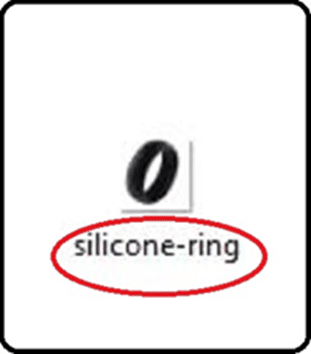
Alt text should be a short, accurate description of the image. It helps customers who use screen readers understand visual content and can also support product discoverability.
For example, an image showing a stainless-steel water bottle beside a backpack could have descriptive alt text explaining the product and its surrounding context.
Avoid treating alt text as a place to insert a long list of unrelated keywords. Instead, describe the actual contents of the image and include relevant product terminology only when it fits naturally.
Remember that alt text is not the same as a visible caption beneath every standard product gallery image. Use the fields Amazon makes available for the relevant content type.
Additional Ways to Improve Your Amazon Product Listing
Optimizing the seven areas above provides a strong foundation for your Amazon SEO strategy. However, several additional factors can also influence listing quality, customer engagement, and purchasing decisions.
Brand Name and Manufacturer Information
Accurate brand and manufacturer information helps customers identify the product they’re considering. Make sure your brand name, manufacturer details, model number, and other relevant product identifiers are entered correctly in their designated listing fields.
Brand information can also help shoppers discover products when they specifically search for a particular manufacturer or brand.
Where appropriate, include the brand name in your product title while following Amazon’s title and category requirements. Make sure all product identifiers and brand-related information are consistent with the actual item being sold.
Improve the Quality of Your Product Images
High-quality images can make a significant difference in how customers interact with your product listing. Since shoppers cannot physically examine an item before purchasing it, images help them understand its appearance, functionality, and important features.
Use clear, high-resolution product photographs that display the item accurately. Your main image should follow Amazon’s image requirements, including the applicable background and product presentation rules.
Additional images can highlight different product angles, dimensions, materials, included accessories, and practical applications.
Whenever possible, use supporting lifestyle images to demonstrate how the product looks in real-world situations. Infographics can also help communicate important specifications and benefits, provided they follow Amazon’s image policies.
Rather than uploading images simply to fill every available slot, make sure each image provides useful information and serves a specific purpose.
Understand the Role of Fulfillment by Amazon (FBA)
Fulfillment is another important consideration when building a successful Amazon business. Through Fulfillment by Amazon (FBA), sellers can send their inventory to Amazon fulfillment centers, where Amazon handles storage, packing, shipping, and eligible customer service and returns processes.
FBA can provide access to benefits such as Prime-eligible offers and convenient delivery options, which can improve the overall shopping experience.
However, sellers should not assume that using FBA automatically guarantees better search rankings. Product relevance, listing quality, customer experience, pricing, and other performance considerations remain important.
Choosing the right fulfillment method can help improve operational efficiency and support a more reliable customer experience.
For sellers who want to streamline their operations, Amazon FBA Management Services can help with inventory coordination, fulfillment processes, and other essential aspects of account management.
Conduct Proper Keyword Research
Keyword research is one of the foundations of an effective Amazon product listing optimization strategy. Even a well-written listing may struggle to attract relevant shoppers if it targets search terms that don’t match customer intent.
Start by identifying the words and phrases potential buyers use when searching for products similar to yours. Consider their search volume, relevance, competition, and commercial intent before selecting the most appropriate keywords.
Don’t focus entirely on high-volume search terms. More specific keywords can sometimes attract shoppers who have a clearer idea of what they want to purchase.
For example, a broad search term might attract a wide range of shoppers, while a product-specific phrase can reach customers looking for a particular size, material, feature, or application.
Organize your keyword research into primary, secondary, and long-tail keywords. Then distribute these terms strategically across your title, bullet points, product description, and backend search terms.
Avoid using irrelevant search phrases simply because they generate traffic. Attracting visitors who aren’t interested in your product is unlikely to produce meaningful improvements in sales.
For more effective keyword targeting and listing performance, explore SAECOM FBA PRO’s Amazon Keyword Research & Amazon Product Listing Optimization Services.
Final Thoughts
Amazon product listing optimization is an ongoing process that requires proper keyword research, compelling content, accurate product information, and a clear understanding of customer expectations.
From creating an informative product title to optimizing backend search terms and improving product images, every element should contribute to making your listing more relevant and useful to potential buyers.
However, successful optimization isn’t about inserting as many keywords as possible. It’s about understanding what customers are searching for and presenting your product in a way that meets their expectations.
Regularly review your listing performance, monitor customer feedback, identify opportunities for improvement, and update your content when necessary.
For sellers looking to improve product visibility, strengthen keyword targeting, and increase conversion opportunities, Amazon SEO Services can provide the expertise and support needed to build a more effective product listing strategy.
With a well-researched approach and consistent optimization, you can create stronger Amazon listings that attract relevant shoppers and support long-term business growth.