For Amazon sellers and vendors, winning the Buy Box can play a major role in driving sales and improving product visibility. Since customers can purchase products directly from this section, securing the Buy Box gives your offers a better opportunity to reach potential buyers.
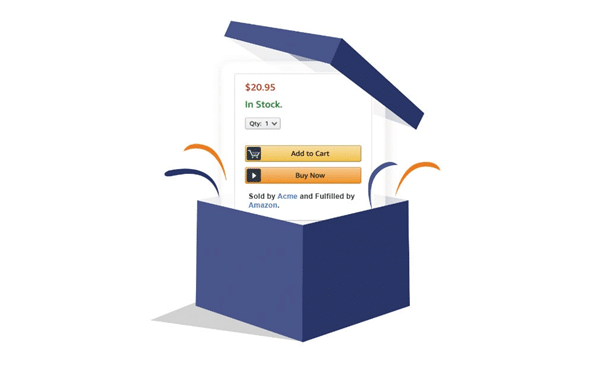
The Buy Box appears on Amazon’s product detail page and allows shoppers to add an item to their carts or purchase it immediately.
Industry estimates have suggested that a significant share of Amazon purchases comes through the Buy Box, with mobile shoppers relying heavily on this feature. Although the exact percentage can vary, its impact on conversions makes it an important priority for sellers and vendors alike.
However, with numerous businesses competing to sell identical products, earning the Buy Box is not always straightforward. The challenge can be particularly surprising for first-party vendors who supply their products directly to Amazon. Even though Amazon purchases their inventory, they are not guaranteed to retain the Buy Box.
In this guide, we will explore what the Amazon Buy Box is, why vendors may lose it, and six practical strategies to improve their chances of winning and retaining it.
What Is the Amazon Buy Box?
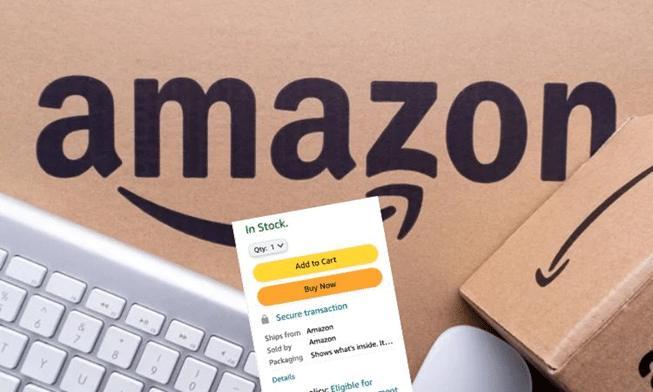
Anyone who shops on Amazon has probably encountered the Buy Box. It traditionally appears on the product detail page and contains the Add to Cart and Buy Now buttons, allowing customers to complete their purchases without navigating through multiple seller offers.
A single Amazon product listing may have several sellers offering the same item. Amazon evaluates the available offers and determines which one receives the most prominent purchasing position based on several performance and pricing considerations.
Because Amazon prioritizes the customer experience, it evaluates whether an offer provides a competitive price, dependable availability, and a convenient delivery experience before featuring it prominently.
Key Factors That Influence Buy Box Placement
Product availability: Amazon favors offers that can reliably fulfill customer orders. Low stock levels or frequent inventory shortages can reduce the competitiveness of an offer.
Competitive pricing: The product’s total price, including applicable shipping charges, can influence its attractiveness to customers and its chances of receiving the Buy Box.
Delivery and convenience: Reliable fulfillment, quick delivery, and a satisfactory purchasing experience can help an offer compete more effectively.
Beyond these factors, sellers and vendors must maintain consistent operational performance and follow Amazon’s policies. As competition increases, even established brands can struggle to maintain their position.
For vendors who sell directly to Amazon, this means that supplying the retailer does not automatically guarantee that their products will always appear as the featured offer.
Reasons Amazon Vendors Lose the Buy Box
Several issues can affect a vendor’s Buy Box performance. Pricing is one possible cause, but inventory problems, competing offers, operational difficulties, and policy violations can also contribute to a loss of visibility.
1. Low Inventory Levels
Product availability is an important part of Amazon’s purchasing experience. When a vendor cannot maintain sufficient stock or experiences repeated inventory shortages, its offer may become less competitive.
If a product is frequently unavailable, customers may turn to another seller offering the same item. In turn, Amazon may feature a different eligible offer.
Maintaining dependable inventory levels is therefore essential for vendors who want to protect their sales and reduce interruptions in product availability.
2. Uncompetitive Pricing
Amazon considers the prices of competing offers when determining which option provides the best value to customers.
If a vendor’s price is substantially higher than comparable offers, another seller may have an advantage, particularly when delivery speed and product condition are similar.
Vendors should regularly evaluate their pricing against competing offers and account for shipping expenses, fulfillment costs, promotional activity, and profit margins.
A competitive price does not necessarily mean the lowest possible price. The goal is to offer attractive value while maintaining a sustainable business model.
3. Weak Operational Performance
Amazon considers the quality and reliability of the overall purchasing experience. Delivery delays, fulfillment problems, order-related complaints, and negative customer experiences can undermine the competitiveness of an offer.
For vendors using direct fulfillment models, meeting shipping and order-confirmation requirements is especially important. Poor operational execution can affect customer satisfaction and make competing offers more attractive.
Vendors should regularly review performance reports, identify recurring problems, and address issues before they begin affecting sales.
4. Amazon Policy Violations
Amazon requires businesses to follow its rules regarding product authenticity, accurate listings, intellectual property, and acceptable selling practices.
Violations involving counterfeit merchandise, misleading product information, review manipulation, or unauthorized use of intellectual property can result in serious consequences.
Depending on the circumstances, these problems may affect listing visibility, selling privileges, or the ability to compete for the Buy Box.
Vendors should maintain accurate product information, monitor potentially unauthorized offers, and use Amazon’s approved reporting processes to address suspected violations.
6 Strategies to Win the Amazon Buy Box as a Vendor
Understanding the causes of Buy Box losses is only the first step. Vendors must also develop practical strategies to improve pricing, protect distribution channels, maintain stock availability, and control operating costs.
The following six approaches can help strengthen your position.
1. Improve Your Amazon Pricing Strategy
Pricing is an important consideration when Amazon compares competing offers. Vendors must therefore find a balance between remaining competitive and protecting their profit margins.
Reducing prices without evaluating the underlying costs can create serious financial problems. Excessive discounting may leave too little profit to cover shipping, handling, storage, and other operating expenses.
Amazon also uses the internal term CRaP, which stands for Can’t Realize a Profit, for products that are not economically viable for Amazon to sell under its cost and profitability criteria.
Products in this category may face reduced retail support or other commercial consequences, although the specific outcome depends on the product and its circumstances.
To reduce this risk, start by examining your cost structure. Review manufacturing expenses, packaging, transportation, handling, and other costs that influence the final price.
Look for opportunities to reduce expenses without compromising product quality. Better purchasing terms, more efficient packaging, and improved shipping arrangements may help you offer a competitive price while preserving profitability.
Instead of making sudden price cuts, use a structured pricing strategy based on competitor analysis, demand, total costs, and your target margins.
2. Establish a Clear Minimum Advertised Price Policy
Another approach available to brands is a Minimum Advertised Price (MAP) policy. A MAP policy generally sets the minimum price at which resellers may advertise a product, subject to the relevant agreement and applicable laws.
For example, imagine that your brand sells a premium microphone and establishes a MAP of $200 for authorized resellers.
You can monitor online marketplaces to identify advertisements that appear to violate your pricing policy. If a reseller advertises the microphone below the agreed threshold, you can investigate the situation and follow the appropriate contractual or legal procedures.
Maintaining more consistent advertised pricing may help protect a brand’s market positioning and reduce uncontrolled discounting across distribution channels.
However, MAP policies do not guarantee Buy Box placement. Amazon evaluates competing offers using several considerations, and it may not enforce a private MAP agreement simply because a listed price falls below the agreed threshold. MAP arrangements should also be reviewed for compliance with applicable competition laws.
There are practical limitations to this approach. Monitoring reseller activity can require considerable time, and unauthorized discounting may continue despite enforcement efforts.
For this reason, a MAP policy is best treated as one part of a broader pricing and distribution strategy rather than a complete solution.
3. Monitor Products That May Fall Into the CRaP Category
Products with weak profitability can create challenges for both vendors and Amazon. When shipping, handling, storage, and other costs consume too much of the selling price, the product may become commercially unattractive.
If Amazon determines that a product is not profitable enough to support its retail operations, it may reduce its direct purchasing activity or change how it handles the item.
Vendors should look for warning signs that suggest a product’s economics may be deteriorating.
These indicators can include:
- Amazon reducing or discontinuing direct purchases of the product.
- Changes in the availability of programs or features such as Subscribe & Save, where applicable.
- Repeated purchase-order reductions or a lack of new orders from Amazon.
- Persistently high fulfillment and shipping expenses relative to the selling price.
- Inconsistent stock availability or declining sales performance.
- Large pricing differences between Amazon and other retail channels.
Certain product types can be particularly difficult to manage profitably. Heavy or bulky merchandise may incur higher transportation and fulfillment expenses, while products with weak demand may generate insufficient sales to justify their operating costs.
Inconsistent pricing across retail platforms can create additional challenges, especially when Amazon is expected to compete with lower prices elsewhere.
If you notice these warning signs, review the product’s cost structure, pricing, packaging, demand, and distribution strategy. Adjusting these factors early may help improve profitability and prevent further commercial difficulties.
4. Strengthen Your Distribution Controls
Buy Box competition is not always caused by Amazon’s pricing algorithm alone. In some cases, a brand’s distribution practices contribute to the problem.
When a manufacturer supplies a product to many retailers and resellers, those businesses may compete against one another on Amazon. Some retailers may offer aggressive discounts to increase sales, making the original vendor’s offer less attractive.
As a brand owner or manufacturer, you should understand which businesses are purchasing and reselling your products. Reviewing your distribution network can help identify unauthorized sellers, unexpected pricing changes, and possible supply-chain leaks.
Consider whether your current reseller arrangements provide sufficient visibility and control. Depending on your business model and applicable laws, selective distribution arrangements or other appropriate contractual provisions may help establish clearer expectations for authorized partners.
You should also examine existing wholesale discounts, promotional allowances, and commercial agreements to ensure that your distribution structure supports sustainable pricing.
If a third-party seller consistently wins the Buy Box, investigate how that seller obtains its inventory and whether the offer is legitimate. Not every third-party seller is unauthorized, so it is important to establish the facts before taking action.
A better-controlled distribution network can make pricing easier to monitor and help your business respond more effectively to marketplace competition.
5. Improve Inventory Forecasting and Planning
Running out of stock can interrupt sales, weaken product availability, and create opportunities for competing sellers.
Effective inventory forecasting helps vendors anticipate demand and replenish products before stock becomes critically low. Rather than reacting after an item sells out, businesses should use historical sales, seasonal trends, promotional calendars, and current demand signals to plan replenishment.
Some industry estimates have suggested that a decline in in-stock rates from above 90% to below 30% may lead to a substantial sales decrease. A stockout lasting only one day can also disrupt sales momentum and may take several days to recover from, depending on the product and market conditions.
These figures should be treated as indicative rather than universal, since the effects of a stockout vary by category and demand.
To improve inventory management, monitor available inventory, sales velocity, lead times, and pending purchase orders. Account for manufacturing delays, transportation disruptions, and seasonal demand spikes when deciding how much stock to maintain.
You should also establish appropriate safety-stock levels based on your product’s demand patterns and replenishment times.
The objective is not to keep every product at a fixed inventory percentage. Instead, build a forecasting process that maintains dependable availability while avoiding excessive inventory and unnecessary storage costs.
6. Optimize Your Supply Chain
Supply-chain expenses can have a major influence on the profitability and competitiveness of an Amazon offer.
Third-party sellers and first-party vendors operate under different commercial arrangements. Marketplace sellers commonly pay referral fees and may also incur fulfillment fees when using Fulfillment by Amazon (FBA). Vendors, by contrast, generally operate under individually negotiated wholesale and supply agreements with Amazon.
These differences can affect the final economics of competing offers. A vendor may struggle to compete when its costs are high, even if its product has strong demand.
Amazon’s vendor programs and available supply-chain arrangements may provide opportunities to improve ordering, transportation, and delivery efficiency.
Depending on eligibility and the commercial relationship, vendors can explore options such as consolidated shipments, full-truckload deliveries, full-pallet orders, or direct-import arrangements. These approaches may help reduce handling requirements, improve transportation efficiency, and lower certain supply-chain costs.
Work with your vendor manager to review purchasing arrangements, operational expenses, and potential efficiency improvements. Any resulting savings can support more sustainable commercial terms and help the business maintain competitive pricing.
However, lower supply-chain costs do not automatically guarantee Buy Box placement. Pricing, availability, competing offers, and other eligibility considerations still matter.
Vendors using Direct Fulfillment or Vendor Flex should pay particular attention to operational performance. Accurate order confirmations, reliable shipping, timely dispatch, and compliance with Amazon’s requirements can help prevent avoidable fulfillment problems.
Already Lost the Amazon Buy Box? Here’s How to Recover
Losing the Buy Box can be frustrating, especially when a product has previously performed well. However, reacting with immediate price cuts may create additional problems.
Before changing your pricing, identify why the offer lost its position. Check competing prices, inventory availability, delivery promises, listing status, and any recent changes to your operations.
A clear diagnosis makes it easier to choose the right corrective action without unnecessarily damaging your profit margins.
Short-Term Strategies
Use Your Seller Account Where Appropriate
If your business also operates an eligible third-party seller account, evaluate whether selling the product through that account is commercially and contractually appropriate.
A seller account may provide another route to reach Amazon customers and maintain product availability. However, this approach requires careful consideration of channel strategy, fulfillment costs, inventory allocation, and any restrictions in your existing agreements.
Before activating a competing offer, calculate the associated costs and confirm that the approach fits your overall distribution plan.
Introduce Limited-Time Promotions
Instead of permanently reducing your standard selling price, consider a time-limited promotion when it is commercially viable.
A temporary discount or targeted offer may help stimulate demand and make the product more attractive to customers. It also gives you an opportunity to assess the impact of a promotion without immediately changing your long-term pricing structure.
Before launching an offer, calculate the expected margin after discounts, shipping, fulfillment, and other associated expenses. A promotion should support a defined business objective rather than simply respond to a competitor’s lower price.
Investigate Counterfeit and Unauthorized Offers
Some Buy Box losses may be associated with competing offers that require further investigation. These can include suspected counterfeit products, inaccurate listings, or sellers that may not have obtained inventory through an authorized channel.
Start by examining the competing offer and gathering relevant evidence. Review product identifiers, packaging, authenticity indicators, and available supply-chain records where appropriate.
If you suspect counterfeit activity or an intellectual-property violation, use Amazon’s approved reporting procedures and applicable brand-protection tools. Brand owners may also investigate how the product entered the distribution network and consult legal professionals when necessary.
Do not assume that every third-party seller is unauthorized simply because its price is lower. Establishing the nature of the problem will help you choose the most effective response.
Long-Term Strategies
Sustainable Buy Box performance depends on consistent operational improvements rather than temporary adjustments alone.
Review inventory planning, procurement, shipping arrangements, product pricing, and order fulfillment regularly. Identify recurring bottlenecks and develop processes that help your business respond to changes in demand and competition.
You should also monitor your product listings and competing offers, evaluate profitability by product, and maintain clear communication with relevant Amazon contacts.
By addressing underlying issues and measuring the results of each improvement, vendors can make better decisions about pricing, inventory, and distribution.
Final Thoughts
Winning and retaining the Amazon Buy Box requires more than offering a low price. Vendors must maintain reliable stock availability, operate efficiently, manage distribution channels, and offer competitive value without sacrificing profitability.
When a product loses the Buy Box, avoid making rushed decisions that could undermine your margins. Begin by identifying the reason for the change, then implement corrective measures based on the evidence.
Over time, stronger inventory forecasting, better supply-chain management, consistent pricing, and improved operational performance can help your business compete more effectively.
Although there is no guaranteed method for winning the Buy Box, a structured and data-driven approach can improve your chances of maintaining product visibility and building sustainable sales on Amazon.