Are you planning to become an Amazon third-party seller but unsure how to get started? You are not alone. As third-party selling continues to play a major role in Amazon’s marketplace, it presents an opportunity for businesses to introduce their products, build brand awareness, and reach a wider audience. However, establishing a profitable third-party selling business requires the right strategy, careful preparation, and consistent optimization.
This guide explores the differences between Amazon’s first-party (1P) and third-party (3P) selling models. We will examine the advantages and disadvantages of each approach, explain how to establish a third-party seller account, and discuss the essential factors to consider before launching and growing your Amazon business.
Amazon 1P vs. 3P: Understanding the Two Selling Models
Before deciding which approach suits your business, it is important to understand how Amazon’s first-party and third-party selling arrangements work.
What Is an Amazon 1P Seller?
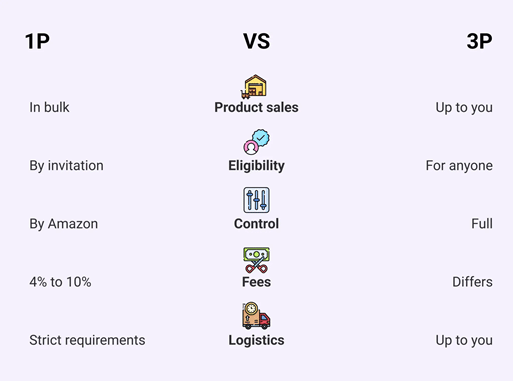
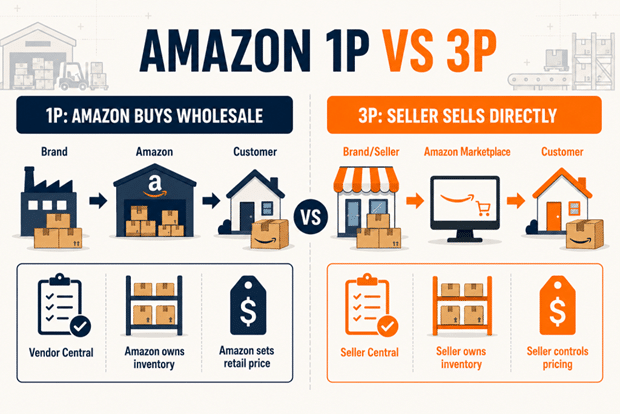
An Amazon first-party seller operates through a wholesale relationship with Amazon. Instead of selling products directly to individual customers, the business supplies inventory to Amazon, which then sells those products to consumers through its marketplace.
Products sold under this arrangement typically display the “Ships from and sold by Amazon.com” label on their product detail pages, although the exact fulfillment and seller information can vary.
In this model, your business acts as a supplier to Amazon rather than managing direct retail transactions with customers. Businesses generally use Amazon Vendor Central to manage their wholesale relationship, and access to this platform is typically invitation-based.
Advantages and Disadvantages of Amazon 1P Selling
Working with Amazon as a first-party vendor offers several benefits, particularly for businesses that prefer a wholesale arrangement over managing individual customer orders.
Advantages of Amazon 1P Selling
One of the biggest advantages is access to Amazon’s established customer base. Once a vendor relationship is established, Amazon can place purchase orders for products that it intends to sell through its marketplace.
Another benefit is reduced involvement in day-to-day retail operations. Amazon generally manages the customer-facing selling process, including order fulfillment and customer service, depending on the terms of the vendor agreement.
This arrangement can be useful for smaller brands or manufacturers that have limited resources for managing online retail operations. Rather than handling every aspect of selling directly, businesses can concentrate on manufacturing, product development, and supplying inventory.
Disadvantages of Amazon 1P Selling
Despite these benefits, the first-party model gives businesses less control over several important areas. Amazon generally determines wholesale purchasing terms, and vendors have limited influence over the final retail price and how products are presented to customers.
Profit margins can also become less predictable. Amazon may negotiate lower wholesale prices or introduce additional commercial requirements and deductions that affect the amount a vendor ultimately earns.
Shipping inventory to Amazon’s facilities can create further expenses. Depending on the agreement, vendors may also encounter operational charges, compliance requirements, or other costs associated with supplying Amazon.
Inventory management presents another challenge. If Amazon returns unsold inventory under the applicable terms, the vendor may need to arrange storage, transportation, or resale through other channels.
Additionally, Amazon may expect vendors to maintain sufficient production capacity and reliably fulfill purchase orders. Businesses that cannot meet demand may face supply shortages, higher operating costs, or difficulties maintaining a strong vendor relationship.
For these reasons, the 1P approach may work best for established suppliers that can handle wholesale demand and are comfortable giving Amazon greater control over retail operations.
What Is an Amazon 3P Seller?
An Amazon third-party seller is a business or individual that sells products directly to customers through Amazon’s marketplace using Seller Central.
Unlike the first-party model, becoming a third-party seller generally does not require an invitation from Amazon. Eligible sellers can register through Seller Central, complete the verification process, and create listings in accordance with Amazon’s requirements.
Third-party sellers maintain greater responsibility for their businesses, including product selection, pricing, inventory planning, and sales strategy. They can also choose how orders are fulfilled.
For example, sellers may use Fulfillment by Amazon (FBA), through which Amazon handles many storage, packing, shipping, and customer service functions, or Fulfillment by Merchant (FBM), where the seller manages fulfillment directly or through a logistics partner.
This flexibility makes third-party selling an appealing option for businesses that want to maintain greater ownership of their brand and day-to-day decisions.
Advantages and Disadvantages of Amazon 3P Selling
Key Benefits of Becoming an Amazon 3P Seller
1. Greater Control Over Your Business
One of the main benefits of third-party selling is the ability to make more independent business decisions. Sellers generally have greater control over product pricing, inventory planning, advertising campaigns, fulfillment arrangements, and brand presentation, subject to Amazon’s marketplace policies.
This control allows businesses to adjust their strategies according to market demand, competitor activity, and profitability goals.
2. Multiple Fulfillment Options
Amazon third-party sellers can select a fulfillment method that aligns with their operational needs.
With FBA, Amazon stores eligible inventory and handles order picking, packing, shipping, and many customer service and returns processes. With FBM, sellers arrange shipping themselves or work with an external logistics provider.
Eligible sellers may also qualify for Seller Fulfilled Prime, which allows them to fulfill orders from their own facilities while meeting Amazon’s applicable Prime delivery and performance requirements.
Having several options makes it easier to compare costs, manage inventory, and choose a fulfillment strategy that supports business growth.
3. Access to Selling and Business Management Tools
Seller Central provides tools for managing listings, monitoring orders, tracking inventory, reviewing performance, and evaluating sales activity.
Depending on eligibility and account access, sellers may also use advertising solutions, reporting features, automated pricing tools, and brand-related resources to improve their operations.
These features can help sellers identify opportunities, understand customer demand, and make more informed decisions about pricing and marketing.
4. Opportunities to Develop Your Brand
The third-party model gives businesses more opportunities to shape their brand identity on Amazon.
Eligible brand owners can use features such as Amazon Brand Registry and A+ Content to enhance their product detail pages and communicate their brand’s value. Sellers can also develop promotions, create product bundles where permitted, and improve their visual content to distinguish their offers from competing listings.
By maintaining greater control over the customer-facing presentation, businesses can work toward building brand recognition and encouraging repeat purchases.
Challenges Faced by Amazon 3P Sellers
Although third-party selling offers flexibility, it also comes with responsibilities that require time, resources, and careful planning.
1. Strong Marketplace Competition
Amazon hosts a large number of sellers offering products across similar categories. As a result, gaining visibility and attracting customers can be difficult, particularly when entering a competitive market.
Sellers need to differentiate their offers through product quality, competitive pricing, compelling listings, relevant keywords, and effective advertising. Without a clear strategy, even useful products may struggle to generate consistent sales.
2. Compliance and Intellectual Property Risks
Third-party sellers must follow Amazon’s selling policies, product requirements, and applicable legal obligations. Businesses also need to respect intellectual property rights, including trademarks, copyrights, and other protected assets.
Policy violations or intellectual property complaints can result in listing restrictions, account warnings, or suspension. Maintaining accurate documentation, sourcing products from legitimate suppliers, and reviewing compliance requirements can help reduce these risks.
3. Fees and Operating Expenses
Third-party sellers must account for several types of Amazon fees, along with their own business expenses. Depending on the product and selling arrangement, these may include subscription charges, referral fees, fulfillment fees, storage fees, returns-related costs, advertising expenses, and shipping charges.
Common fee categories include:
- Individual selling plan: Traditionally priced at $0.99 per item sold.
- Professional selling plan: Traditionally priced at $39.99 per month.
- Referral fees: Percentage-based charges that vary by product category and may range significantly across categories.
- FBA fulfillment fees: Charges based on factors such as package dimensions, shipping weight, and the applicable fulfillment program.
- Storage fees: Charges based on inventory volume, storage duration, and applicable inventory conditions.
- Media closing fees: Additional charges may apply to eligible media products.
These figures are illustrative rather than guaranteed current rates. Amazon’s fees and policies can change, so sellers should consult the current fee schedule in Seller Central before calculating profitability.
Ultimately, the third-party model can offer greater independence and brand-building opportunities. The first-party model may be more suitable for suppliers that prefer wholesale transactions and are willing to give Amazon more control over retail activities.
How to Become an Amazon Third-Party Seller
Third-party sellers account for a substantial portion of Amazon’s marketplace activity. In the first quarter of 2024, approximately 61% of paid units sold on Amazon came from third-party sellers, demonstrating the importance of this business model at that time.
For businesses interested in entering the marketplace, third-party selling can provide a route to reach customers without needing a wholesale vendor invitation. However, long-term success depends on more than account registration. Sellers need a suitable product, well-prepared listings, reliable fulfillment, and a sustainable marketing strategy.
Here are the main steps to get started.
Step 1: Create an Amazon Seller Central Account
Your first step is to register for an Amazon Seller Central account. This platform serves as the primary dashboard for managing your selling activities, including product listings, orders, inventory, payments, and performance information.
During registration, Amazon may request details such as your business information, contact details, identity documents, payment information, and tax-related information, depending on your location and circumstances.
You will also need to review Amazon’s seller policies and complete any required verification procedures.
Once your account is approved, make sure your seller profile and business details are accurate. Customers may use the information available on your selling account to understand who they are buying from and review relevant seller information.
Step 2: Select the Right Selling Plan
Amazon generally offers Individual and Professional selling plans, although plan availability and terms may vary by marketplace.
The Individual plan typically charges a fee for each item sold, making it a potential option for people testing a product idea or selling relatively small quantities.
The Professional plan charges a recurring subscription fee and provides access to additional selling features. It is often worth considering for businesses expecting higher sales volumes or planning to use a wider range of selling and advertising tools.
Rather than choosing a plan based solely on its initial cost, estimate your expected monthly sales and compare the relevant fees and features. This will help you select a plan that matches your business goals.
After choosing your plan, complete your seller profile and review your shipping, returns, and customer service processes. Clear and accurate information helps establish customer confidence and supports a more professional shopping experience.
Step 3: Prepare Your Products and Create Listings
Product preparation is a critical part of launching a successful Amazon business. Work with your manufacturer or supplier to confirm product quality, availability, packaging, lead times, and inventory requirements before launching.
Once your products are ready, create product detail pages that clearly communicate their main features and benefits.
Focus on the following listing elements:
- Product titles: Use relevant keywords and describe the product accurately.
- Bullet points: Explain key features, practical benefits, dimensions, materials, and other important details.
- Product images: Include clear, high-quality images that follow Amazon’s category requirements.
- Product descriptions: Provide useful information that addresses common customer questions.
- Search optimization: Incorporate relevant search terms naturally without keyword stuffing.
- Product identifiers: Use an eligible product identifier, such as a UPC, when required, or confirm whether an exemption applies.
Eligible brand owners should also consider enrolling in Amazon Brand Registry. This can provide access to brand protection resources and additional content and marketing features, subject to eligibility.
Research competitors and evaluate the value your product offers before setting your launch price. Competitive pricing can support conversion and help make an offer more attractive, but lowering prices without understanding your costs can quickly erode margins.
Your pricing strategy should account for product costs, Amazon fees, shipping, advertising, returns, and other operating expenses. Automated repricing tools may help sellers respond to market changes, but pricing rules should be configured carefully to avoid selling below a sustainable profit level.
Step 4: Choose a Fulfillment Strategy
After preparing your listings, decide how you will store inventory and deliver orders.
With Fulfillment by Amazon, inventory is sent to Amazon’s fulfillment network. Amazon then handles storage and many of the processes involved in picking, packing, shipping, customer service, and returns.
This option can reduce the amount of operational work managed directly by the seller. Eligible offers may also benefit from Amazon’s delivery programs, depending on the marketplace and product requirements.
Fulfillment by Merchant gives you greater direct involvement in storing products, processing orders, and arranging shipping. Sellers can manage these tasks themselves or outsource some activities to a third-party logistics provider.
The right approach depends on your product dimensions, sales volume, cash flow, storage needs, shipping requirements, and operational capacity. Compare the total costs of each option instead of assuming that one method is always cheaper.
Step 5: Promote Your Products Through Advertising
Publishing a product listing does not guarantee that customers will discover it. Sellers must actively work to increase visibility, attract relevant shoppers, and improve conversion.
Amazon’s pay-per-click advertising options, including Sponsored Products for eligible sellers and listings, can help products appear in relevant shopping placements. Campaigns can be developed around targeted keywords, customer search behavior, and relevant product placements.
Start with a clear advertising budget and defined performance goals. Monitor impressions, clicks, conversion rates, advertising cost of sales, and overall profitability to understand whether your campaigns are contributing to business growth.
Advertising works best when supported by relevant keywords, strong images, competitive offers, accurate product information, and a positive customer experience.
Continue refining your campaigns based on performance data. Adjust bids, review targeting, pause ineffective keywords, and invest more carefully in campaigns that generate profitable results.
Can You Be Both an Amazon 1P and 3P Seller?
Yes, a business may be able to operate as both an Amazon vendor and a third-party seller, provided it meets Amazon’s applicable requirements and follows the terms governing each arrangement.
However, managing both models can introduce additional complexity. Each involves different processes, commercial arrangements, pricing considerations, inventory responsibilities, and operational expectations.
Before expanding into both selling methods, establish a clear understanding of the requirements associated with each one. Businesses should also assess whether their products, sales channels, and internal resources can support the additional workload.
Some companies prefer to concentrate on one Amazon selling model while expanding to other marketplaces or sales channels. For example, a business operating as a third-party seller on Amazon may also sell through other ecommerce platforms.
There is no single approach that works for every business. The right decision depends on the company’s objectives, available resources, product strategy, and relationship with Amazon.
Amazon Third-Party Seller Scams: Common Risks and Warning Signs
Amazon’s marketplace includes many legitimate sellers, but online shoppers and businesses should remain alert to suspicious activity. Third-party selling can sometimes be associated with counterfeit goods, misleading offers, manipulated listings, and fraudulent seller accounts.
Understanding these risks can help buyers make more informed purchasing decisions.
Common Types of Third-Party Seller Scams
Counterfeit Products
Some sellers may offer imitation products while presenting them as genuine branded merchandise. These products may not meet the original manufacturer’s quality, safety, or performance standards.
Manipulated Product Listings
In certain cases, a product listing with an established review history may be altered or used to market a different item. Buyers should check whether the product description, specifications, brand, and images match the item they intend to purchase.
Misleading Pricing Offers
Suspicious sellers may advertise products at unusually low prices to attract attention. The actual offer may involve misleading product details, unexpected conditions, or an item that differs from what the customer expected.
Fraudulent Seller Accounts
Fraudulent accounts may use misleading product information or questionable selling practices to collect orders without reliably delivering the advertised items. Buyers should look for warning signs before completing a purchase.
How Customers Can Reduce the Risk of Being Scammed
Before buying from an unfamiliar seller, review the seller’s ratings, feedback, and available transaction history. Product ratings alone may not reveal problems related to a particular seller.
Be cautious when a price appears substantially lower than comparable offers. Check product specifications, images, and descriptions against the manufacturer’s official information whenever possible.
It is also helpful to research the brand’s official website and other reliable sources to confirm that the product and seller information appear legitimate.
Third-party review-analysis tools may offer additional information about review patterns, but their results should not be treated as definitive proof that a product or seller is trustworthy.
Choosing an order fulfilled by Amazon may provide access to Amazon-managed fulfillment and applicable customer service or return processes. However, fulfillment method alone does not guarantee product authenticity or eliminate every risk.
If a purchase appears fraudulent, contact the seller through Amazon’s official messaging system and retain relevant order information and evidence. If the issue remains unresolved, review Amazon’s applicable refund and buyer-protection procedures, including the A-to-z Guarantee where eligible.
Avoid sharing passwords, payment credentials, or unnecessary personal information outside Amazon’s approved processes.
Although marketplaces use systems to identify suspicious behavior, buyers should still evaluate offers carefully and report suspected violations through the appropriate channels.
Important Factors to Consider Before Becoming an Amazon 3P Seller
Before launching a third-party selling business, evaluate the practical requirements involved in managing inventory, fulfilling orders, maintaining account health, and protecting your brand.
1. Fulfillment and Logistics
Third-party sellers generally choose between FBA, FBM, and eligible external logistics solutions. Each option has different cost structures, service requirements, and operational responsibilities.
Evaluate shipping expenses, storage capacity, delivery expectations, inventory turnover, and the amount of time you can dedicate to fulfillment. Your decision should support both customer satisfaction and long-term profitability.
2. Seller Performance Requirements
Amazon monitors seller performance and account health. Failure to meet applicable performance standards or comply with marketplace policies can lead to warnings, listing restrictions, or account deactivation.
Metrics to monitor may include order defect rate, pre-fulfillment cancellation rate, and late shipment rate. The applicable thresholds and measurement rules should be checked in Seller Central because requirements can vary or change.
Rather than waiting for a problem to occur, review your account health regularly, respond to customer issues promptly, maintain sufficient inventory, and use reliable shipping processes.
3. Day-to-Day Operational Responsibilities
Compared with the wholesale model, third-party selling usually requires more direct involvement in business management.
You may need to oversee inventory, pricing, advertising, customer inquiries, returns, listing updates, and performance monitoring. These responsibilities can become increasingly demanding as the business grows.
Establish clear procedures and use suitable tools to organize daily tasks. Efficient processes can reduce mistakes, save time, and make it easier to scale your operations.
4. Cash Flow and Working Capital
Cash flow planning is essential for a sustainable Amazon business. Sellers must often pay suppliers, shipping providers, advertising expenses, and other operating costs before receiving the proceeds from their sales.
Payment timing can vary according to Amazon’s disbursement policies, account status, transaction activity, and other factors. Consequently, sellers should not assume that revenue will be available immediately after a customer places an order.
Prepare a cash flow forecast that covers inventory purchases, fulfillment, advertising, refunds, and unexpected expenses. Maintaining a suitable financial reserve can help you manage delays and avoid running out of working capital during periods of growth.
5. Brand Protection and Intellectual Property
Brand protection becomes increasingly important as your product catalog and marketplace presence expand.
Eligible brand owners should consider Amazon Brand Registry and maintain the documentation needed to establish their ownership of a brand. Keep supplier invoices, product authorization records, and relevant intellectual property documents organized.
Before launching a product, check that your product design, packaging, images, and listing content do not infringe another company’s intellectual property rights.
Proactive brand management can help reduce avoidable disputes and give your business a stronger foundation for long-term marketplace growth.
Final Thoughts
Succeeding as an Amazon third-party seller requires more than registering an account and publishing product listings. Businesses need to understand their customers, offer competitive products, manage costs carefully, and continually improve their operations.
A well-planned advertising strategy can help attract shoppers, but sustained growth also depends on listing quality, dependable fulfillment, account health, product reliability, and customer satisfaction. Pay attention to customer feedback and use it to identify opportunities to improve your products and shopping experience.
Choosing between Amazon 1P and 3P ultimately comes down to your business priorities. The first-party model may suit suppliers that prefer selling inventory wholesale and letting Amazon manage much of the retail process. The third-party model may be a better fit for businesses that want greater control over pricing, marketing, inventory, and brand development.
Before making a decision, evaluate your budget, production capacity, fulfillment options, expected margins, available staff, and long-term growth objectives. By matching your selling model to your resources and goals, you can build a more informed strategy for operating successfully on Amazon.