
Did you know that Amazon allows sellers to monitor and manage their account health directly? Have you ever performed a full health checkup of your seller account?
With continuous updates in Seller Central, maintaining strong account health has become more critical than ever. Keeping your account in good standing is no longer optional—it’s essential for consistent sales and long-term success.
In this guide, we’ll walk through everything you need to know about managing your Amazon account health effectively.
How to Check Your Amazon Account Health
Finding your account health metrics is simple and straightforward.
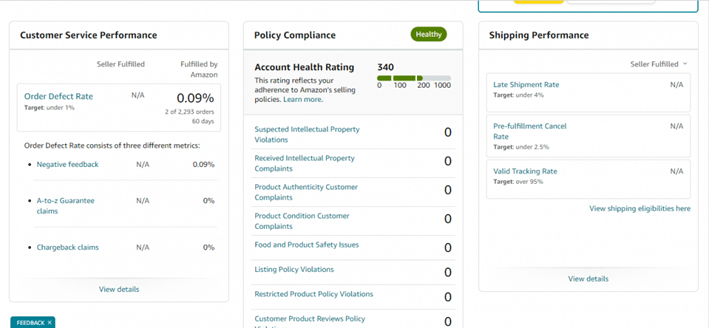
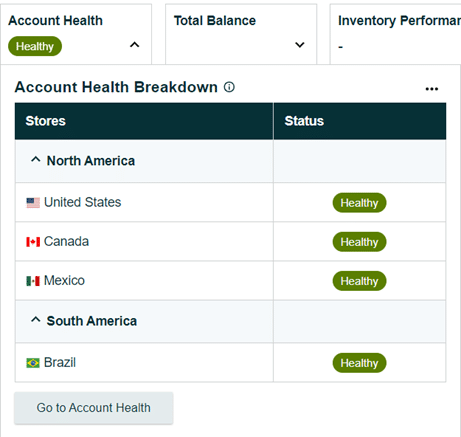
Start by logging into your Seller Central dashboard. From there, navigate to the Performance section and select Account Health. This section provides a complete overview of your account’s performance and any issues that need attention.
Understanding Amazon Account Health Rating (AHR)
The Amazon Account Health Rating (AHR) is a system designed to help sellers track the overall condition of their account. It evaluates how well you follow Amazon’s policies and guidelines.
This rating is mainly influenced by unresolved policy violations within a specific timeframe. Currently, the feature is available to professional sellers.
Amazon continues to refine this system, emphasizing the importance of maintaining compliance. Sellers are expected to keep their accounts in good standing and resolve any issues promptly.
According to Amazon’s guidelines:
- A “Good” rating indicates your account is in safe condition.
- “At Risk” or “Critical” ratings may lead to account deactivation.
To avoid these risks, sellers must follow Amazon’s rules and monitor key performance metrics closely.
Key Metrics You Must Track
Amazon highlights six essential metrics that sellers should regularly monitor. Among these, three are especially critical for account health.
The primary benchmarks include:
- Order Defect Rate below 1%
- Pre-fulfillment Cancellation Rate below 2.5%
- Late Dispatch Rate below 4%
Maintaining these thresholds is crucial to avoid warnings or penalties.
Seller Account Status Explained
Amazon evaluates your performance regularly to ensure a high-quality customer experience. Based on this evaluation, your account status can fall into one of the following categories:
Active: Your account is fully operational, and payments are processed as usual.
Under Review: You can continue selling, but your funds may be temporarily held while Amazon reviews your account.
Suspended: Selling privileges are removed, and funds are withheld until further notice.
Understanding these statuses helps you take timely action if any issues arise.
Detailed Breakdown of Amazon Account Health Metrics
Order Defect Rate (ODR)
The Order Defect Rate measures how well you meet customer expectations. It reflects the percentage of orders that result in negative experiences over a 60-day period.
An order is considered defective if it includes:
- Negative feedback
- A chargeback request
- A successful A-to-Z claim
Amazon requires sellers to keep their ODR below 1%. Exceeding this limit can put your account at risk of deactivation.
Cancellation Rate (CR)
The Cancellation Rate applies to seller-fulfilled orders and tracks how many orders are canceled by the seller within a 7-day period.
It only includes cancellations initiated by the seller, not those made by customers.
Amazon recommends maintaining a cancellation rate below 2.5%. Going beyond this threshold can negatively impact your account status.
Late Dispatch Rate (LDR)
The Late Dispatch Rate indicates how often shipment confirmations are submitted after the expected shipping date. This is measured over both 10-day and 30-day periods.
Late confirmations can lead to customer dissatisfaction, increased complaints, and negative feedback.
To stay compliant, sellers must keep their LDR under 4%. Higher rates may result in warnings or account suspension.
On-Time Delivery Rate (OTDR)
The On-Time Delivery Rate reflects the percentage of orders delivered within the promised timeframe. This applies only to tracked, seller-fulfilled shipments.
Amazon suggests maintaining an OTDR above 97% to ensure a positive customer experience. Currently, there are no strict penalties for falling short, but it is still an important performance indicator.
Valid Tracking Rate (VTR)
The Valid Tracking Rate measures how many of your shipments include accurate and valid tracking information. This metric is calculated over a 30-day period.
Providing valid tracking improves transparency and customer trust, making it a key component of account health.
Return Dissatisfaction Rate (RDR)
The Return Dissatisfaction Rate evaluates how satisfied customers are with your return process.
A return is considered unsatisfactory if:
- Customers leave negative return feedback
- You fail to respond within 48 hours
- A return request is incorrectly rejected
Amazon recommends keeping your RDR below 10% to maintain a positive customer experience.
Invoice Defect Rate (IDR)
Introduced to improve the experience for business buyers, the Invoice Defect Rate tracks whether sellers provide proper invoices on time.
This metric measures the percentage of orders where a valid tax invoice is not uploaded within one business day after shipment confirmation.
Maintaining compliance with invoicing policies is especially important for serving Amazon Business customers effectively.
Final Thoughts
Regularly reviewing your Amazon account health is essential for long-term growth on the platform. A consistent checkup helps you identify potential risks, fix performance issues, and stay aligned with Amazon’s policies.
By monitoring key metrics and resolving issues quickly, you can protect your account from suspension and create a better experience for your customers—ultimately leading to improved sales and sustainable success.