
Your success on Amazon largely depends on two things—how well your products geo ranking for relevant keywords and how effectively you use PPC campaigns to scale your business.
However, as more sellers continue to invest in advanced advertising strategies, cost-per-click (CPC) rates are steadily increasing. While Amazon PPC can support your organic rankings, relying entirely on Sponsored Ads is not a sustainable way to grow profits. That’s why focusing on strong SEO fundamentals is more important than ever.
Let’s explore modern strategies to improve product rankings on Amazon.
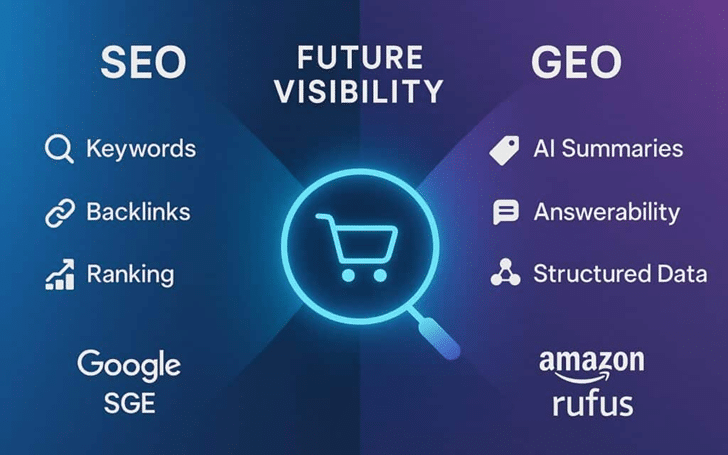
The Changing Landscape of Amazon Rankings
In 2026, finding completely untapped niches on Amazon has become extremely rare. Most categories are highly competitive, pushing sellers to discover smarter and more efficient ways to improve their organic rankings.
Rather than using aggressive or risky tactics, experienced sellers now focus on safer, data-driven strategies that enhance rankings without violating Amazon’s policies. Below are some proven techniques to help you adapt to the latest ranking trends.
Amazon Product Ranking Tips
Search, Find, Buy Strategy
One of the most talked-about methods is the Search, Find, Buy (SFB) strategy.
This approach uses external traffic sources, such as Facebook Ads, to drive potential customers to your Amazon listings. By targeting users based on their interests and demographics, sellers can attract highly relevant buyers.
Many private label sellers benefit from this strategy by guiding users to search for a product, locate it, and complete the purchase—ultimately improving keyword rankings.
Using Chatbots for Marketing Automation
To make your campaigns more efficient, you can integrate messenger chatbots into your marketing funnel.
Chatbots are powerful yet often underutilized tools that help you engage with customers in real time. They simplify communication, reduce friction in the buying journey, and automate responses across multiple channels. Ready-made chatbot templates are widely available, making implementation easier.
Offer Rebates Strategically
Using payment gateways to offer rebates can also help increase conversions. However, relying solely on full-rebate promotions may not give you a competitive edge.
Amazon’s algorithm favors full-price purchases because they reflect genuine buying behavior. When customers search for a keyword, find your product, and purchase it at full price, it positively impacts your keyword rankings and organic visibility.
Additional Ranking Factors to Consider
Tip #1 – Leverage High-Authority Traffic Sources
Driving traffic from high-authority platforms to your Amazon listings can improve your rankings.
For example, platforms like Pinterest and YouTube can be used to redirect potential customers to your product pages. Since Amazon values external traffic from trusted sources, this strategy can strengthen your listing performance.
Tip #2 – Understand and Use Geo Ranking
So, what exactly is geo ranking?
Amazon evaluates data based on regional performance, including customer behavior, demand patterns, and inventory proximity. This means your product rankings can vary depending on the customer’s location.
To benefit from this, sellers should focus on increasing sales in regions where their inventory is stored. External marketing campaigns targeted at these locations can significantly improve visibility and rankings.
Additionally, analytics tools can help you better understand regional performance and optimize accordingly.
Tip #3 – Increase Inventory Levels
Maintaining higher inventory levels can also boost your sales performance.
When your products are stocked closer to customers, Amazon is more likely to prioritize your listings due to faster and more cost-efficient delivery. This not only improves customer experience but also enhances your ranking potential.
How Amazon’s SERP Algorithm Is Evolving
Amazon’s search algorithm continues to evolve, with multiple factors influencing product rankings. Two of the most impactful elements today are inventory placement and shipping efficiency.
Geo ranking also plays a key role, as it aligns your products with regional demand and customer preferences. In 2026, these updates have created more opportunities for sellers to grow by optimizing their operations strategically.
What Is Amazon Geo Ranking?
Since the major algorithm updates leading into 2025, geo ranking has become a significant factor in how products are displayed on Amazon.
This means that a customer’s location now directly affects search results. Products that are closer to the buyer or more relevant to that region may rank higher than others.
Why Geo Ranking Matters for Sellers
For sellers, geo ranking opens up new possibilities for targeted growth.
It allows you to refine your product research, focus on specific regions, and tailor your strategies to areas where demand is highest. This localized approach can significantly improve both visibility and conversions.

How to Use Geo Ranking to Increase Sales
At the Inventory Level
Avoid running out of stock, especially in high-demand regions. Keeping your inventory well-stocked ensures that your products remain available and competitive.
You can track inventory performance through Seller Central reports by navigating to:
Reports → Inventory → Fulfillment → Daily Inventory History
This data helps you understand where your products are stored and how they are performing across different fulfillment centers.
At the Product Listing Level
Optimizing your product listings based on your target audience is essential.
Consider regional preferences, language variations, and buying behavior when crafting your titles, bullet points, and descriptions. Tailoring your content to specific audiences can result in higher engagement and better conversion rates.
On Amazon Advertising
Amazon DSP (Demand-Side Platform) allows advertisers to target specific geographic regions.
This feature enables you to run highly targeted campaigns, ensuring your ads reach the most relevant audience segments within selected locations.
Off-Amazon Marketing
External platforms like Facebook Ads and Google Ads can also be used to target specific regions.
Instead of targeting an entire country, focus on particular states or areas with high potential or lower competition. This approach helps you identify untapped opportunities and maximize your return on investment.
Final Thoughts
As competition continues to grow, relying solely on PPC campaigns is no longer enough to scale your Amazon business.
To stay ahead, sellers must diversify their strategies by incorporating SEO, geo ranking, and targeted marketing efforts. Understanding where to expand and who to target plays a crucial role in long-term success.
Ultimately, optimizing your listings for both customer intent and Amazon’s algorithm will help you reach a wider audience and drive consistent sales growth.