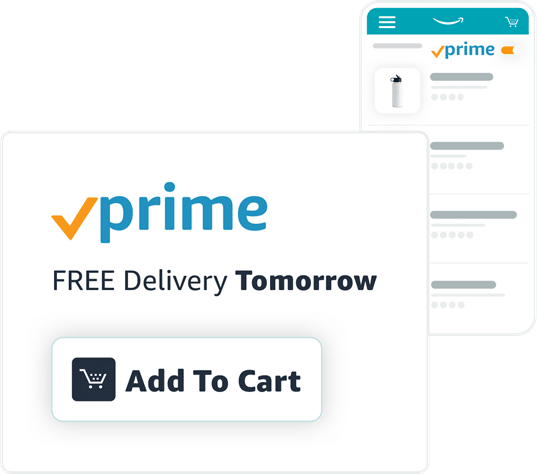
For Amazon sellers, the Prime badge is more than a small symbol displayed beside a product. It communicates that an offer is eligible for the fast and convenient delivery experience associated with Amazon Prime. Amazon states that Prime badges can appear on qualified listings through programs such as Fulfillment by Amazon (FBA) and Seller Fulfilled Prime (SFP).
Fast delivery can have a major effect on the way shoppers evaluate products. Customers often look for offers that provide dependable delivery dates, and the Prime badge can make an offer more noticeable and appealing during the buying process. For sellers operating in competitive categories, understanding how Prime eligibility works can therefore be an important part of fulfillment planning.

What Is the Amazon Prime Badge?
The Amazon Prime badge is a visual indicator shown on eligible product offers for Prime customers. It is associated with benefits such as fast delivery and the broader Prime shopping experience. However, receiving the badge is not simply a matter of turning on a setting inside Seller Central.
A seller needs to meet the requirements of the fulfillment method being used. For most sellers, the two primary routes are FBA and Seller Fulfilled Prime. FBA involves Amazon handling fulfillment, while SFP allows sellers to fulfill qualifying Prime orders themselves.
The badge can also affect the customer’s perception of an offer. A listing that clearly communicates a reliable delivery option may reduce hesitation and make the purchasing decision easier, particularly when shoppers are comparing several similar products.
Why the Prime Badge Matters for Amazon Sellers
One of the biggest advantages of Prime eligibility is the convenience it offers shoppers. Prime customers are accustomed to fast delivery, and an offer that meets those expectations can have an advantage during product comparison.
The badge can also support sales opportunities by making the offer more attractive to Prime shoppers and potentially improving its ability to compete for the Featured Offer. Amazon specifically notes that Seller Fulfilled Prime can help sellers increase their chances of becoming the Featured Offer and gaining visibility that can lead to higher sales.
However, the badge should not be treated as a replacement for good listing optimization. Product quality, pricing, reviews, images, availability, and conversion performance still play important roles in marketplace success.
Main Ways to Get the Amazon Prime Badge
There are two important fulfillment routes for displaying Prime branding on Amazon: FBA and Seller Fulfilled Prime.
Fulfillment by Amazon
FBA is often the most straightforward option for sellers who want Amazon to manage their fulfillment operations. With FBA, inventory is sent to Amazon fulfillment centers, where Amazon handles storage, order processing, packing, shipping, and related customer service responsibilities.
Once an eligible product is being fulfilled through FBA, Prime eligibility can become part of the offer without the seller having to independently manage every shipment. Amazon confirms that FBA is one of the fulfillment methods through which sellers can obtain Prime eligibility.
The main consideration is cost. FBA fees vary according to factors such as product dimensions, weight, storage requirements, and other fulfillment conditions. Sellers should calculate their expected margins before moving products into FBA.
Seller Fulfilled Prime
Seller Fulfilled Prime is designed for businesses that want to keep control over their own fulfillment operations while still offering Prime benefits on eligible products.
Amazon requires sellers to prequalify, complete a 30-day trial, and continue meeting the program’s performance requirements after enrollment. The program is intended for sellers who can consistently provide the delivery experience expected by Prime customers.
This approach can provide greater control over inventory and packaging, but it also places more responsibility on the seller. Shipping systems, carrier performance, warehouse processes, staffing, and order management all need to work together.
Preparing for FBA
Before sending products to Amazon fulfillment centers, sellers should make sure their account, products, and listings are ready.
Start by reviewing account health and confirming that the products are eligible for the intended fulfillment process. Restricted products or categories may require additional approvals, so these issues should be addressed before inventory is shipped.
Product preparation is equally important. Units need the correct identification and labeling, packaging should meet Amazon’s requirements, and products with expiration dates or special handling requirements may have additional conditions.
Financial planning should also happen before enrollment. Sellers should calculate the expected FBA fees, storage costs, fulfillment charges, selling price, and other expenses to determine whether the product remains profitable after fulfillment.
Inventory Planning for Prime Eligibility
Inventory management plays a major role in maintaining reliable delivery promises.
Simply sending inventory to Amazon does not guarantee that every customer will see the same delivery experience. Inventory availability and placement can influence the delivery options presented to shoppers in different locations.
This is why sellers should forecast demand carefully and avoid sending extremely small quantities that can quickly run out. Running low on stock can lead to missed sales opportunities and make it more difficult to maintain consistent fulfillment performance.
Seasonal sellers should be especially cautious. Demand can rise quickly during major shopping periods, so inventory planning should account for increased sales volume as well as additional time required for inbound shipments and receiving.
Optimize the Listing Before Activating FBA
A Prime badge cannot compensate for a poorly optimized listing.
Before moving inventory into FBA, review the title, bullet points, product description, images, keywords, variations, and other listing elements. Shoppers should immediately understand what the product is, what problem it solves, and why it is worth purchasing.
High-quality product photography is particularly important. A strong main image should clearly display the product, while supporting images can explain features, dimensions, usage, and benefits.
Listing optimization should also extend to backend search terms and category selection. The goal is to create a complete listing that can turn increased visibility into actual sales.
Sending Inventory to Amazon
Once the product and listing are ready, sellers can create an FBA shipment through Seller Central.
The shipment process involves confirming preparation requirements, labeling units correctly, packaging cartons appropriately, and selecting a suitable shipping method.
Errors at this stage can create unnecessary delays. Incorrect labels, poorly printed barcodes, unsuitable packaging, or inaccurate shipment information may interfere with the receiving process.
Sellers should therefore check every shipment carefully before handing it over to the carrier.
How Long Does It Take to Receive the Prime Badge Through FBA?
There is no single guaranteed timeline for every FBA shipment. The inventory has to reach Amazon, be received, processed, and become available for fulfillment before the offer can receive Prime eligibility.
Processing speed can vary depending on factors such as shipping conditions, fulfillment-center capacity, inventory status, and the time of year. Rather than planning around an exact number of days, sellers should build reasonable receiving time into their inventory schedule.
Once the inventory is available and the offer qualifies, Prime eligibility can appear without the seller needing to manually add the badge.
Preparing for Seller Fulfilled Prime
SFP requires much more operational preparation because the seller remains responsible for delivering Prime orders.
Amazon requires sellers to prequalify based on their account and fulfillment performance before entering the trial. Sellers then need to complete a 30-day trial while continuing to meet the required performance standards.
Before applying, review important metrics such as shipment performance, valid tracking, and cancellations. Strong historical performance can help determine whether your operation is ready for the demands of Prime fulfillment.
Your warehouse and shipping setup should also be able to handle rapid order processing, including the shipping schedules associated with Prime delivery promises.
Building a Reliable SFP Shipping System
Successful Seller Fulfilled Prime operations generally require more than simply having inventory in a warehouse.
Sellers need dependable carriers, accurate order processing, appropriate packaging, reliable tracking, and systems capable of integrating with Amazon’s shipping requirements.
Amazon recommends using its approved shipping and fulfillment processes, and sellers can use tools such as Amazon Buy Shipping to purchase eligible shipping labels and manage fulfillment more efficiently.
Backup plans are also valuable. Carrier disruptions, staffing shortages, inventory errors, and unexpected order spikes can quickly affect fulfillment performance.
The 30-Day Seller Fulfilled Prime Trial
The trial period is designed to demonstrate that a seller can consistently deliver the required customer experience.
During the trial, sellers need to monitor their fulfillment metrics closely and make sure orders are processed within the required delivery windows. Amazon states that the trial lasts 30 days and that sellers must meet the applicable performance requirements to become enrolled.
This is not the stage to experiment with an unreliable workflow. Sellers should have their inventory counts, packing process, carrier arrangements, tracking system, and staffing ready before beginning.
Daily monitoring can help identify problems before they develop into repeated performance issues.
Maintaining Prime Eligibility
Getting the Prime badge is only the beginning. Sellers must continue meeting the applicable fulfillment and performance standards to retain Prime eligibility.
Amazon reviews Seller Fulfilled Prime performance on an ongoing basis, including through weekly performance evaluations. Continued failure to meet requirements can result in Prime offers being disabled or the seller being removed from the program.
Amazon has also introduced changes to the way SFP eligibility is evaluated. For example, product-size tiers can be evaluated separately, allowing sellers to qualify based on their ability to fulfill different types of products. Another important consideration is order volume. Amazon has explained that sellers who do not consistently meet the expected volume of Prime shipments may have their maximum daily Prime order volume limited rather than automatically losing eligibility.
Prime Badge and Customer Experience
The Prime badge should ultimately be viewed as part of a broader customer-experience strategy.
Fast shipping matters, but customers also expect accurate product information, dependable packaging, sufficient inventory, simple returns, and products that match their descriptions.
A seller that focuses exclusively on obtaining the badge without improving these areas may struggle to turn Prime eligibility into long-term growth.
Prime fulfillment works best when it is supported by strong inventory forecasting, reliable operations, competitive pricing, and a well-optimized listing.
Final Thoughts
The Amazon Prime badge can play an important role in helping sellers offer the fast fulfillment experience many Prime shoppers expect.
For sellers using FBA, Amazon takes care of much of the fulfillment infrastructure, making the process more streamlined. For businesses with established warehouses and strong shipping operations, Seller Fulfilled Prime offers another route to Prime branding while keeping fulfillment under the seller’s control.
The right approach depends on the product, margins, inventory needs, fulfillment capabilities, and operational resources of the business. Rather than pursuing the badge alone, sellers should consider the full cost and performance requirements involved in maintaining a reliable Prime customer experience.
When fulfillment, inventory, listing quality, and account performance work together, Prime eligibility can become a useful part of a broader Amazon growth strategy.