
Amazon review are undeniably important, but many new sellers are surprised by just how much influence they can have. Reviews impact more than your sales numbers. They can also affect product visibility, Best Sellers Rank, customer trust, and even how effectively you plan your inventory. In a highly competitive marketplace, positive reviews provide valuable social proof that can help shoppers feel confident about purchasing your product.
Whether you view them as helpful or frustrating, reviews are a major part of selling on Amazon. Building a successful product without establishing a strong review profile can be extremely challenging.
Knowing that reviews matter is only the first step. The real challenge is finding effective and policy-compliant ways to encourage customers to leave them. Below, we’ll explore some of the most effective Amazon review strategy methods, along with practical advice for handling negative reviews when they appear.
5 Ways to Increase Your Amazon Reviews
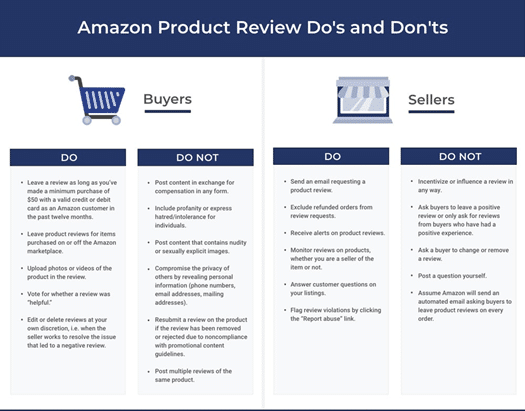
Getting more Amazon reviews can be challenging, particularly for new sellers. However, there are several legitimate ways to encourage customers to share their experiences. Amazon does permit sellers to request reviews, provided they follow the platform’s rules and avoid practices designed to manipulate customer feedback.
With that in mind, here are five strategies you can use to increase the number of reviews your products receive.
Amazon’s Request a Review Button
Amazon’s Request a Review feature in Seller Central allows sellers to send a standardized review request to eligible customers. The message can request both seller feedback and a product review, making it a convenient option for encouraging customers to share their experiences.
One of the biggest advantages of this feature is that Amazon manages the communication format and translation automatically. Because the message is generated through Amazon’s own system, sellers have less risk of accidentally including language that violates review policies. For that reason, it remains one of the simplest methods for requesting reviews.
Amazon’s Buyer-Seller Messaging System
Amazon’s Buyer-Seller Messaging system provides another way to communicate with customers about their orders. Sellers can access relevant orders through Seller Central and send permitted messages to buyers, including review requests where appropriate.
The system offers more flexibility than Amazon’s standard Request a Review button, but that flexibility also creates additional responsibility. Sellers need to ensure that their messages comply with Amazon’s communication and review policies. Avoid language that pressures customers, asks specifically for positive feedback, or offers incentives in exchange for reviews.
Automated Review Requests
Manually sending review requests for every order can quickly become time-consuming, especially as your sales volume increases. Automated review request tools can help streamline this process by allowing sellers to schedule and manage customer communications more efficiently.
With automation, you can establish predefined campaigns that send requests at appropriate points after an order is delivered. Some tools also provide reporting and analytics, allowing sellers to monitor response rates, review activity, and customer engagement. This can make it easier to refine your review strategy over time.
Product Inserts
Product inserts can provide another opportunity to remind customers that their feedback is valuable. A small card placed inside the package can direct customers toward appropriate ways to share their experience with the product.
However, sellers need to be extremely cautious when using inserts. The wording must remain neutral and comply with Amazon’s policies. You should never ask customers specifically for a five-star review, offer rewards for positive feedback, or discourage customers from leaving negative reviews. A policy violation could result in serious consequences for your seller account.
Amazon Vine Program
Amazon Vine is Amazon’s official program for helping eligible brands generate reviews for new products. Through the program, selected Vine Voices receive products and provide honest feedback based on their experience.
Vine can be particularly helpful for newly launched products that have little or no review history. However, sellers need to meet Amazon’s eligibility requirements and provide products to participating reviewers at no cost. While it may not be appropriate for every seller or product, Vine can be an effective way to build an initial review base.
When to Send a Review Request
A strong Amazon review strategy involves more than simply asking customers for feedback. Timing also plays an important role. The right moment to request a review depends heavily on the type of product you sell and how long customers typically need to use it before forming an opinion.
Amazon review requests should be sent within the period permitted by Amazon’s policies. Asking too soon can be counterproductive because the customer may not have had enough time to properly use the product. For products that require testing or repeated use, an early request could result in a customer leaving feedback before they understand the product’s full value.
On the other hand, waiting too long can also reduce the likelihood of getting a response because the purchase may no longer be fresh in the customer’s mind.
The Best Approach for Requesting Amazon Reviews
The best approach is to determine when your customer is most likely to recognize the value of your product before sending a review request.
In general, the timing can be adjusted based on the product category:
- 5–7 days after delivery: Suitable for smaller consumable products that can be used quickly.
- 8–10 days after delivery: A good timeframe for products that customers may need several days or a weekend to experience, such as sports and outdoor products.
- 14–21 days after delivery: More appropriate for durable products such as electronics, furniture, footwear, and other items that require more time to use.
- Around 30 days after delivery: Useful for products where customers need an extended period before they can properly evaluate the results, such as certain wellness products.
Seasonality should also be considered when deciding when to request reviews. Products such as Halloween costumes, holiday decorations, and other seasonal items may have a much shorter period of relevance than everyday products.
The Q4 shopping season presents another challenge. Many Amazon orders placed during the holiday season are gifts, and the person who receives the product may not be the person who purchased it. During the weeks leading up to Christmas, it can make sense to adjust your timing so buyers have enough time to receive or use the item before being asked for feedback.
The right timing can improve not only the number of reviews you receive but also the usefulness and quality of the feedback customers provide.
How to Manage Negative Reviews
Even the best Amazon review strategy cannot guarantee that every customer will leave a positive rating. Negative reviews are a normal part of selling online and can happen even when your product and customer service are strong.
In fact, a product with a mixture of positive and negative experiences can sometimes appear more authentic to shoppers. A listing with hundreds of perfect five-star reviews and no criticism at all may seem less believable than one that contains a realistic range of customer opinions.
The important thing is to prevent negative reviews from becoming a consistent pattern. Rather than ignoring poor feedback, sellers should analyze it carefully and identify whether there are recurring problems that can be addressed.
Conduct an Amazon Review Analysis
Review analysis simply means examining customer feedback to understand why shoppers are dissatisfied. Look for repeated complaints, common product issues, and patterns that appear across multiple reviews.
Once you identify recurring problems, you can take several steps to improve the customer experience.
Improve Your Products:
If multiple customers complain about the same design issue, material problem, durability concern, or functionality limitation, consider discussing the issue with your supplier. Depending on the severity, you may need to modify the product, improve quality control, or find a different supplier.
Update Your Amazon Product Detail Page:
Sometimes negative reviews are caused by a mismatch between customer expectations and the actual product. If your listing contains unclear descriptions, confusing instructions, inaccurate specifications, or misleading images, customers may purchase the product expecting something different.
Review your product title, bullet points, images, description, and other listing content to make sure everything accurately represents what customers will receive.
Refine Your Shipping Practices:
Shipping-related problems can also contribute to poor reviews. Customers may become frustrated when products arrive damaged, incomplete, incorrect, or inadequately packaged.
If you regularly fulfill your own orders, review your packing and shipping procedures to identify where mistakes are happening. Even when using a fulfillment provider, recurring issues should be investigated so you can determine the appropriate corrective action.
Negative reviews can also provide valuable insight into future product opportunities. Customer complaints may reveal features that shoppers want, problems with competing products, or gaps in the current market. Reading both your own reviews and competitor reviews can help uncover potential product improvements and new ideas.
It is also important to determine whether suspicious reviews violate Amazon’s policies. Fake or manipulated reviews can distort a product’s reputation and should be reported to Amazon through the appropriate channels when there is credible evidence of policy violations.
Contact Buyers Following Negative Reviews
For eligible brand-registered sellers, Amazon provides tools that allow sellers to interact with customers who have left critical reviews. This gives brands an opportunity to address legitimate customer concerns and provide appropriate assistance.
Depending on the circumstances, sellers may be able to contact customers for reasons such as offering a courtesy refund or replacement, or attempting to better understand and address an issue highlighted in the review.
Although sellers cannot simply ask customers to change or remove a review in exchange for compensation, communicating appropriately about genuine product problems can help improve the overall customer experience.
This capability is particularly useful because it gives brands another way to identify recurring problems and demonstrate that they take customer concerns seriously.
Fine-Tune Your Amazon Review Strategy Today
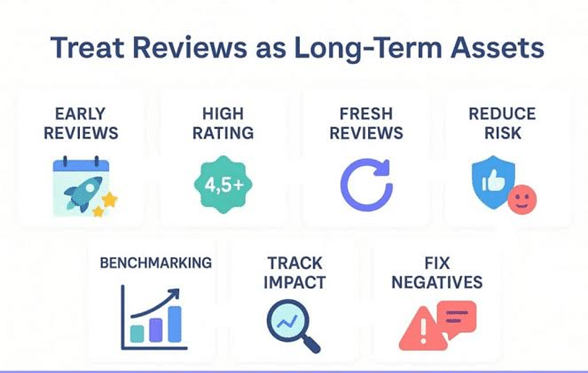
An effective Amazon review strategy is about much more than collecting as many five-star ratings as possible. The goal should be to consistently encourage authentic feedback from customers while using that information to improve your products, listings, fulfillment process, and overall customer experience.
A steady flow of recent and genuine reviews can help build trust with shoppers while giving you valuable insight into how customers perceive your brand. At the same time, monitoring negative feedback can help you identify problems before they become widespread.
The most effective approach is to combine compliant review requests, appropriate timing, careful review monitoring, and continuous product improvement. Over time, these efforts can help you build a stronger reputation and a more competitive presence on Amazon.
If your current review strategy is inconsistent or ineffective, now is the time to refine it. A well-planned approach can turn customer feedback into one of your most valuable tools for growing your Amazon business.