Amazon B2B Business has created new opportunities for companies looking to expand their reach in the e-commerce marketplace. Designed specifically for business buyers and sellers, this platform makes purchasing and selling products more convenient by providing features that support bulk orders, business accounts, and flexible purchasing requirements.
One of the biggest advantages of selling through Amazon Business is that sellers can reach two different customer segments through the same marketplace: individual consumers and business buyers. This allows brands, manufacturers, wholesalers, and distributors to explore additional sales opportunities without having to manage entirely separate online stores.
With a growing number of businesses using online marketplaces to purchase supplies, equipment, and everyday essentials, Amazon Business offers sellers another channel to increase product visibility and reach potential customers.
For sellers looking to grow beyond traditional retail sales, understanding how Amazon B2B works and developing a suitable selling strategy can help unlock new business opportunities. In this guide, we will explore the benefits of Amazon Business, how to get started, and the strategies you can use to improve your B2B sales.
What Is Amazon Business?
Amazon Business is a dedicated business-to-business marketplace that operates alongside Amazon’s traditional retail platform. It is designed to meet the purchasing requirements of organizations, companies, educational institutions, government departments, and other professional buyers.
Unlike standard consumer shopping, business purchasing often involves larger quantities, multiple purchasing accounts, specific payment arrangements, and detailed product requirements. Amazon Business addresses these needs by offering features that make the buying process more suitable for professional customers.
The platform provides businesses with access to a wide selection of products, competitive pricing, convenient delivery options, and purchasing tools. Sellers can also make their products available to both individual shoppers and business customers through the Amazon marketplace.
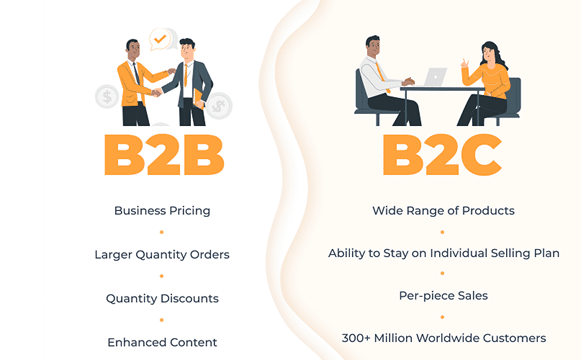
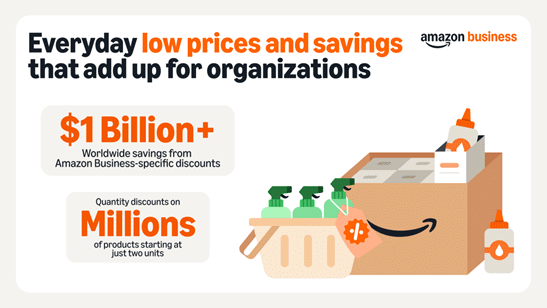
Another important advantage is the flexibility available to sellers. Depending on eligibility and marketplace availability, sellers can offer business-specific pricing, quantity discounts, and product information that helps organizations make informed purchasing decisions.
Should You Consider Selling on Amazon B2B?
Amazon B2B Business can be an attractive sales channel for companies looking to reach a wider audience. Its established customer base, marketplace visibility, and fulfillment infrastructure provide sellers with an opportunity to connect with buyers who may not otherwise discover their products.
However, joining Amazon Business is not necessarily the right decision for every seller. The potential benefits depend on several factors, including your product category, industry competition, profit margins, inventory capacity, and ability to meet Amazon’s seller requirements.
For example, products commonly purchased by offices, schools, hospitals, manufacturers, and other organizations may have strong B2B potential. These can include office supplies, electronics, industrial equipment, cleaning products, furniture, packaging materials, and safety equipment.
Before entering the B2B marketplace, evaluate whether your products solve the purchasing needs of professional customers. Consider the typical order size, frequency of purchases, pricing expectations, and the level of product information buyers require.
A well-planned B2B strategy can help you identify opportunities that may not be immediately apparent when focusing exclusively on individual consumers.
I Already Have a B2B Business. Should I Join Amazon Business?
If you already operate a wholesale, manufacturing, distribution, or other B2B business, Amazon Business can provide another channel for reaching potential customers.
You may already have an established network of business clients, but selling through Amazon can help you expand beyond your existing customer base. Organizations that regularly purchase supplies online may discover your products through Amazon Business, creating opportunities to generate additional orders.
Some companies also prefer purchasing through Amazon because it allows their employees and purchasing departments to manage orders through a familiar marketplace. This makes the platform relevant to businesses of different sizes, from small companies to large organizations.
However, moving your existing B2B operations to Amazon requires careful planning. You should review your pricing structure, fulfillment capabilities, inventory levels, product margins, and customer service processes before expanding.
If your products are suitable for business purchasing, maintaining a presence on both traditional retail and B2B channels can help diversify your sales opportunities and reduce dependence on a single customer segment.
How Can Amazon Business Benefit Your Selling Strategy?
Understanding customer demand is an important part of building a successful Amazon B2B business. Instead of simply uploading your existing product catalog, you should identify which products have the strongest potential among professional buyers.
Start by reviewing your current sales data and identifying products that are frequently purchased in larger quantities. Pay attention to categories that are relevant to businesses, including workplace supplies, commercial equipment, tools, electronics, and maintenance products.
You can also use available Amazon seller reports and marketplace insights to evaluate product demand and identify potential opportunities. Depending on the tools and reports available to your account, these insights may help you understand purchasing trends, product performance, and customer requirements.
Identifying New B2B Product Opportunities
Product research should go beyond identifying items that already perform well in the consumer marketplace. Business customers may have different requirements, and some products may be more attractive when offered in bulk or with business-specific pricing.
For example, an office supply product that receives regular individual orders may also appeal to companies purchasing supplies for multiple departments. Similarly, industrial accessories, protective equipment, and replacement parts may have demand among organizations that need to replenish their inventory regularly.
By studying your existing catalog, analyzing customer demand, and researching competing offers, you can identify products that may be suitable for business buyers.
At SAECOM FBA PRO, our Amazon product research and market analysis services can help sellers evaluate product opportunities, assess competition, identify relevant keywords, and develop a strategy based on marketplace demand.
How to Start Selling on Amazon Business
Getting started with Amazon Business can be relatively straightforward for sellers who already have an active Amazon seller account. New sellers can begin by registering through Amazon Seller Central and selecting a selling plan that meets their business requirements.
Existing sellers can review the available Business selling features and enrollment requirements within Seller Central.
Here are some important steps to consider when preparing your business for Amazon B2B:
1. Register or Review Your Professional Seller Account
Start by creating an Amazon seller account or reviewing your existing Professional selling account. Make sure your business information, tax details, and account documentation are accurate and up to date.
Amazon’s enrollment requirements and available features may differ depending on the marketplace and seller eligibility.
2. Set Up Your Business Profile
A complete business profile helps professional buyers understand your company and the products you offer. Include relevant business information, company credentials, certifications, and other details that demonstrate your experience and product expertise.
A clear and professional profile can help establish confidence among organizations considering larger purchases.
3. Upload Your Product Catalog
Add your products to the Amazon marketplace and ensure that each listing contains accurate and useful information.
Business customers often need more than basic product descriptions before making a purchasing decision. Depending on the product category, you may want to provide technical specifications, product manuals, instructional documents, brochures, safety information, and relevant certifications.
Make sure your listings explain the product’s features, dimensions, materials, compatibility, and intended applications wherever applicable.
4. Review Your Business Pricing Options
Business buyers may purchase products in larger quantities, so your pricing strategy should account for order volume and profitability.
Where available, consider offering business-specific prices and quantity discounts. Before setting discounts, calculate your product costs, referral fees, fulfillment expenses, and other applicable charges to ensure that larger orders remain profitable.
5. Explore Advertising and Promotional Opportunities
Once your products are available, consider using suitable Amazon advertising options to increase their visibility.
Sponsored advertising, relevant keywords, competitive pricing, and promotional offers can help customers discover your products. Your advertising strategy should focus on reaching the right audience rather than simply increasing impressions.
6. Prepare Your Fulfillment and Order Management Process
Business customers often have specific delivery and documentation requirements. Make sure your order processing system can handle larger quantities, accurate shipment tracking, and appropriate packaging.
Depending on the fulfillment method and marketplace requirements, you may also need to provide relevant order documentation, purchase order information, and tax-exemption handling.
Before enrolling, review Amazon’s applicable seller performance standards and ensure that your business can consistently meet its operational requirements.
Advantages of Selling on Amazon B2B
Selling through Amazon Business can provide several advantages for brands and sellers looking to expand their operations. Beyond reaching a new customer segment, the platform offers opportunities to improve product visibility, attract repeat buyers, and simplify certain aspects of online selling.
Let’s look at some of the key benefits.
1. Access to a Wider Business Customer Base
One of the biggest advantages of Amazon Business is the opportunity to reach organizations that regularly purchase products online.
Business customers come from different industries and may require everything from office furniture and electronic equipment to stationery, tools, safety supplies, and maintenance products.
By making your products available to professional buyers, you can expand your potential customer base beyond individual consumers.
This is particularly useful for manufacturers, wholesalers, and distributors whose products are suitable for both personal and commercial use.
2. Opportunities for Repeat Orders
Many business customers purchase the same products repeatedly as part of their regular operations. Offices need to replenish stationery, manufacturers require replacement components, and organizations regularly purchase cleaning and maintenance supplies.
This creates an opportunity for sellers whose products are associated with recurring business needs.
Amazon Business provides purchasing features that support business procurement, including tools that can make repeat purchasing more convenient for eligible buyers.
However, recurring orders are not guaranteed. Sellers need to maintain competitive pricing, consistent product quality, reliable inventory levels, and a positive customer experience to encourage repeat business.
3. Easier Entry Into Online B2B Selling
Building an independent B2B e-commerce store can involve substantial investment in website development, payment systems, order management, logistics, and marketing.
Amazon Business provides an established marketplace where eligible sellers can offer their products without building every part of an e-commerce infrastructure from scratch.
This can make it easier for small and medium-sized businesses to explore online B2B selling while using Amazon’s existing marketplace facilities.
Sellers still need to manage their product listings, pricing, inventory, account health, and other business responsibilities, but the platform can reduce some of the barriers associated with launching a separate online store.
4. Access to Amazon’s Business Purchasing Features
Business buyers often have purchasing requirements that differ from those of individual shoppers. They may need multiple users on one account, suitable payment options, purchasing controls, and access to relevant order information.
Amazon Business provides features designed to support these requirements, helping organizations manage their purchasing activities more efficiently.
For sellers, this means their products can be presented within a marketplace built to serve professional customers.
Depending on the selected fulfillment method, sellers may also be able to use Amazon’s fulfillment infrastructure to support shipping, warehousing, and eligible customer service and returns processes.
5. Benefit From Amazon’s Established Brand Reputation
Trust plays an important role in B2B purchasing decisions. Businesses may be cautious when selecting unfamiliar suppliers, especially when orders involve large quantities or significant costs.
Amazon’s established marketplace provides an environment that many professional buyers already recognize and use.
This familiarity can make it easier for customers to discover and purchase products from sellers operating on the platform.
However, a recognizable marketplace does not replace the need to build your own credibility. Accurate product information, consistent quality, competitive pricing, and reliable fulfillment remain essential for developing long-term business relationships.
How Can You Increase Sales on Amazon Business?
Growing B2B sales requires more than simply making your products available to business customers. You need to understand how organizations evaluate suppliers and what information they require before approving a purchase.
Unlike many individual shoppers, business buyers often follow structured purchasing procedures. Their decisions may involve multiple departments, budget approvals, product specifications, and supplier requirements.
They may also prioritize vendors that provide particular certifications, technical documentation, or evidence that products meet relevant industry standards.
To improve your chances of converting business customers, consider the following strategies.
Provide Detailed Product Information
Business customers usually want to understand exactly what they are purchasing before placing an order.
Your product listings should include accurate specifications, dimensions, materials, compatibility details, usage instructions, and other relevant information.
For technical, industrial, and safety-related products, additional documentation may be particularly important. Depending on the category, consider making relevant product manuals, brochures, instructional materials, and certification details available.
The more clearly you communicate your product’s specifications and applications, the easier it becomes for buyers to assess whether it meets their requirements.
Offer Competitive Business Pricing
Price is an important consideration for businesses purchasing products in large quantities.
Review your competitors’ offers and determine whether your pricing is attractive to professional buyers. Where available, consider using business-specific pricing and quantity discounts to encourage larger orders.
However, avoid offering discounts without understanding their effect on profitability. Account for product costs, Amazon fees, shipping expenses, storage charges, and other operating costs before finalizing your pricing structure.
Make Bulk Purchasing Convenient
Many organizations prefer placing fewer, larger orders instead of repeatedly purchasing small quantities.
Where appropriate, make sure your inventory planning and product variations support bulk purchasing requirements.
You should also evaluate whether your packaging, shipping arrangements, and fulfillment process can handle larger orders without affecting delivery performance.
Optimize Your Product Listings for Business Buyers
Listing optimization is just as important for B2B products as it is for consumer products.
Use relevant search terms in your product titles, bullet points, descriptions, and other available listing fields. Focus on keywords that reflect how professional customers search for products, including product specifications, commercial applications, sizes, materials, and industry-specific terminology.
High-quality images and informative product content can also help buyers evaluate your offers.
A properly optimized listing improves the overall shopping experience and gives your products a better opportunity to appear in relevant searches.
Maintain Reliable Inventory and Fulfillment
Business customers may depend on products for their daily operations. Running out of stock or repeatedly missing delivery expectations can affect customer satisfaction and future purchasing decisions.
Monitor your inventory levels, forecast demand, and maintain an appropriate replenishment schedule.
Choose a fulfillment method that suits your product type, order volume, and operational capacity. Make sure you understand the relevant Amazon fulfillment requirements and maintain strong seller performance.
Build a Professional and Credible Business Presence
Professional buyers often evaluate suppliers based on more than price alone. They may consider product quality, business credentials, documentation, customer feedback, and fulfillment reliability.
Keep your business profile complete and ensure that your product information accurately represents what you are selling.
Respond to customer issues appropriately, maintain consistent service standards, and regularly review your account performance.
These practices can help strengthen your business reputation and support long-term growth on Amazon.
How SAECOM FBA PRO Can Help You Grow on Amazon
Expanding into Amazon B2B requires a clear understanding of marketplace opportunities, product positioning, listing optimization, and account management. Managing these areas alongside your regular business operations can become challenging, particularly when you are trying to grow in multiple Amazon marketplaces.
SAECOM FBA PRO provides Amazon-focused services designed to help sellers improve their marketplace performance and develop a more effective selling strategy.
Our services include:
- Amazon Account Management: Support with day-to-day account operations, performance monitoring, and seller account management.
- Amazon Product Research: Identifying suitable product opportunities through demand analysis, competition research, and market evaluation.
- Amazon Listing Optimization: Improving product titles, bullet points, descriptions, backend search terms, and listing content to support visibility and conversions.
- Amazon SEO Services: Keyword research and listing strategies designed to improve organic product discoverability.
- Amazon PPC Management: Campaign planning, advertising optimization, and performance analysis to help sellers manage their advertising investment.
- FBA Reimbursement Audits: Reviewing eligible FBA-related discrepancies and helping sellers identify potential reimbursement opportunities.
- Inventory and Business Growth Support: Assisting with inventory planning, marketplace performance, and strategies for expanding your Amazon business.
Whether you are an established seller looking to explore B2B opportunities or a growing brand planning to reach more customers, SAECOM FBA PRO can help you build a strategy around your business goals.
Final Thoughts
Selling through Amazon Business can create valuable opportunities for sellers who want to expand beyond traditional consumer sales. By connecting with organizations, companies, and professional buyers, you can introduce your products to a wider audience and explore additional sources of revenue.
However, success in the B2B marketplace requires more than simply enrolling your seller account. You need to understand business purchasing behavior, offer competitive pricing, provide detailed product information, maintain sufficient inventory, and deliver a reliable customer experience.
Start by evaluating your existing product catalog and identifying items that are suitable for business customers. From there, focus on improving your listings, reviewing your pricing strategy, and preparing your fulfillment process for larger orders.
With the right approach and consistent marketplace management, Amazon Business can become a valuable part of your overall Amazon growth strategy.